
The San Pedro cactus is more than a striking columnar plant—it is a living bridge between ancient botanical knowledge and modern ornamental cultivation. Revered for thousands of years in the Andean regions of South America and admired today by gardeners and collectors worldwide, San Pedro has earned its place as one of the most iconic cacti ever cultivated. Its fast growth, sculptural form, and resilience make it a standout addition to both outdoor landscapes and indoor plant collections.
At trippybloom.com, our mission is to provide accurate, well-researched, and responsible information about botanicals that carry deep cultural and historical significance. This guide is designed to educate readers about the San Pedro cactus from a horticultural, historical, and legal perspective, while helping plant enthusiasts make informed decisions when adding this remarkable species to their collection.
San Pedro cactus—scientifically known as Echinopsis pachanoi—has long been intertwined with Andean traditions, where it was respected as a sacred plant and valued for its role in ceremonial and healing contexts. Today, its appeal has expanded far beyond its region of origin. Gardeners appreciate its ability to grow quickly and tolerate a wide range of conditions, collectors seek out rare cultivars and growth forms, and landscape designers value its bold architectural presence.
Important disclaimer: This article is provided strictly for educational and ornamental purposes. While San Pedro cactus contains naturally occurring compounds that are discussed in historical and academic contexts, trippybloom.com does not encourage or promote any illegal activity. In many countries, including the United States, San Pedro cactus is legal to buy, sell, and cultivate as an ornamental plant, but processing or consuming it for non-ornamental purposes may be illegal depending on local laws. Readers are responsible for understanding and complying with regulations in their own jurisdiction.
Throughout this guide, you’ll learn how to identify San Pedro cactus, understand its cultural background, care for it successfully, propagate it responsibly, and navigate the legal considerations surrounding its ownership. Whether you are a first-time cactus owner or a seasoned collector, this resource is structured to give you clarity, confidence, and practical knowledge.
When you’re ready to add San Pedro cactus to your collection, trippybloom.com offers carefully selected, healthy ornamental specimens, backed by expert guidance and secure shipping. Our goal is not just to sell plants, but to help you cultivate a long-lasting connection with one of the world’s most fascinating cacti—responsibly, legally, and with respect for its rich botanical heritage.
The San Pedro cactus is a fast-growing, columnar cactus native to the high-altitude regions of the Andes Mountains in South America, primarily across Peru, Ecuador, Bolivia, and parts of Colombia. Scientifically classified as Echinopsis pachanoi (formerly Trichocereus pachanoi), this species has adapted over thousands of years to mountainous environments characterized by intense sunlight, cool nights, seasonal rainfall, and rocky soils.
Unlike many desert cacti that grow slowly and remain compact, San Pedro is known for its remarkable growth rate and vertical stature. Under proper cultivation, it can grow anywhere from 10 to 20 feet tall, with wild specimens occasionally exceeding that height. In favorable conditions, San Pedro can add up to a foot of growth per year, making it one of the fastest-growing columnar cacti commonly cultivated today.
Visually, San Pedro is distinguished by its smooth, green to bluish-green skin and its rounded ribs—typically six to eight, though this can vary depending on genetics and growing conditions. The ribs are broad and gently scalloped rather than sharply angled, giving the cactus a softer, more sculptural appearance compared to other columnar species. Along these ribs are evenly spaced areoles, from which small clusters of short spines emerge. Many cultivated specimens develop very minimal spination or appear nearly spineless, further enhancing their ornamental appeal.
San Pedro belongs to a broader group of South American columnar cacti often referred to collectively as “Trichocereus types,” which include closely related species such as Trichocereus bridgesii and Trichocereus peruvianus. While these species share similar growth habits, San Pedro (Echinopsis pachanoi) is particularly valued for its balanced proportions, resilience, and ease of care, making it an ideal entry point for new cactus growers.
Another defining characteristic of San Pedro is its longevity. When properly cared for, a single plant can live for decades, continuously branching and thickening over time. Mature specimens often form multiple columns from the base or along the main stem, creating impressive clumping displays that become more dramatic with age.
In modern cultivation, San Pedro is primarily grown as an ornamental and collector’s cactus. Its architectural form makes it popular in xeriscaping, container gardening, conservatories, and cactus collections worldwide. While its historical and cultural background is often discussed, contemporary ownership centers on its value as a living botanical specimen—one that combines visual impact, adaptability, and deep historical roots.
Understanding what San Pedro cactus is at its core—a resilient Andean plant shaped by extreme environments—provides the foundation for appreciating how to grow it successfully, recognize healthy specimens, and choose the right variety for your space.
San Pedro cactus is prized not only for its cultural history but also for its distinct botanical features that set it apart from many other columnar cacti. Its physical structure reflects thousands of years of adaptation to the Andean highlands, where fluctuating temperatures, seasonal rains, and intense sunlight shaped a plant that is both resilient and visually striking.
The stems of San Pedro are typically cylindrical and upright, with a diameter ranging from 6 to 15 centimeters depending on age, genetics, and growing conditions. Each stem is divided into rounded ribs—most commonly six to eight, though some specimens may display more as they mature. These ribs are broad and gently contoured rather than sharply defined, giving the cactus a smooth, sculptural appearance that many collectors prefer over more aggressively spined species.
Along the ribs are evenly spaced areoles, which are small, slightly fuzzy nodes from which spines, flowers, and new growth emerge. In San Pedro, the areoles are relatively subtle and often produce only short, fine spines. Many cultivated varieties develop very few spines or appear nearly spineless, making them safer and more practical for home gardens, patios, and indoor spaces.
Coloration is another defining trait. Healthy San Pedro cacti range from bright green to deep bluish-green, sometimes developing a waxy, glaucous coating that helps reduce water loss and reflect intense sunlight. This natural bloom can become more pronounced in outdoor-grown plants exposed to full sun, while indoor-grown specimens may retain a more vivid green tone.
One of the most notable growth traits of San Pedro is its speed. Compared to many cacti that grow slowly over years, San Pedro is considered fast-growing. When provided with sufficient light, water, and nutrients during the active growing season, it can add 20 to 30 centimeters of height per year. This rapid growth makes changes in care—both good and bad—visible relatively quickly, allowing growers to fine-tune conditions more easily than with slower species.
As the plant matures, it often begins to branch. New columns may emerge from the base or from higher points along the stem, especially after pruning, damage, or natural aging. Over time, this branching habit can create large, multi-column specimens that become true focal points in a landscape or collection.
San Pedro is also known for its longevity. With proper care, it can live for several decades, continuously growing, thickening, and producing new stems. This long lifespan, combined with its ease of propagation, means a single plant can be passed down, shared, or expanded into an entire collection over time.
Understanding these botanical characteristics is essential for recognizing a healthy San Pedro cactus, choosing the right growing environment, and appreciating how its form will evolve over the years. These traits also explain why San Pedro has become one of the most widely cultivated and admired columnar cacti in the world.
One of the most rewarding stages in the life cycle of a San Pedro cactus is when it reaches maturity and begins to flower. While the plant is often admired for its tall, architectural form, its blooms are what truly set it apart from many other columnar cacti. Flowering is a sign that the cactus is healthy, well-established, and receiving appropriate care.
San Pedro produces large, trumpet-shaped flowers that typically emerge during late spring through summer once the plant has reached sufficient age and size. These flowers are most often white, though subtle variations in tone can occur depending on genetics and environmental conditions. A single bloom can measure 20 to 23 centimeters (8 to 9 inches) in diameter, making it exceptionally striking against the smooth green columns of the cactus.
Unlike daytime-blooming ornamental flowers, San Pedro flowers open at night. This nocturnal blooming habit reflects the plant’s natural relationship with nighttime pollinators such as moths and bats in its native Andean environment. The flowers emit a strong, sweet fragrance after sunset, which helps attract these pollinators. Each bloom usually lasts for only one to two nights before wilting, adding to the sense that flowering is a rare and special event.
Flower buds typically form near the upper portion of mature columns, emerging from areoles along the ribs. Once buds appear, they develop relatively quickly, often swelling and elongating over the course of several weeks before opening. During this stage, consistent care—especially stable temperatures and proper watering—is important, as sudden stress can cause buds to abort before blooming.
If pollination occurs, the flowers may develop into fruit. San Pedro fruit is generally oblong to oval in shape, with a green outer skin that sometimes develops a darker tone as it matures. The fruit usually measures around 3 centimeters wide and 5 to 6 centimeters long. Inside, it contains numerous small black seeds embedded in a soft, pale interior. While fruiting is less common in cultivated plants—especially those grown indoors—it can occur when compatible plants flower simultaneously or when pollinators are present outdoors.
It’s important to note that flowering does not happen quickly. San Pedro cacti grown from cuttings may flower in several years under optimal conditions, while seed-grown plants often take longer—sometimes six to ten years or more. Factors such as sunlight intensity, temperature cycles, seasonal dormancy, and overall plant health all influence whether and when flowering occurs.
For growers and collectors, flowering is not just visually impressive; it also serves as confirmation that the cactus is thriving in its environment. With patience and consistent care, San Pedro’s blooms become one of the most memorable rewards of cultivation, adding another layer of appreciation to this already remarkable plant.
The San Pedro cactus holds a deeply rooted place in the cultural history of South America, where it has been respected and symbolically important for thousands of years. Long before modern botanical classification, Indigenous Andean civilizations recognized this cactus as a powerful plant ally, integrating it into spiritual, medicinal, and ceremonial traditions that shaped their societies.
Archaeological evidence shows that San Pedro cactus was used by some of the earliest complex cultures in the Andes. Stone carvings, pottery, and temple reliefs from civilizations such as the Cupisnique, Chavín, Moche, and later Andean groups depict human figures holding columnar cacti believed to represent San Pedro. Some of these artifacts date back more than 3,000 years, making San Pedro one of the longest continuously referenced sacred plants in human history.
In Indigenous Andean languages, San Pedro is commonly known as Huachuma or Wachuma. The name reflects the cactus’s traditional role as a plant associated with vision, healing, and insight. During the Spanish colonial period, the name “San Pedro” emerged, referencing Saint Peter, the Christian figure said to hold the keys to heaven. This name symbolized the belief that the cactus could open spiritual pathways—an interpretation that blended Indigenous cosmology with Catholic symbolism.
Traditional Andean healers, often referred to as curanderos, used San Pedro within ceremonial frameworks that emphasized balance, intention, and connection to nature. These ceremonies were not casual or recreational; they were guided experiences rooted in communal knowledge, ritual structure, and ethical responsibility. San Pedro was respected as a teacher plant, and its use was governed by strict cultural norms that emphasized preparation, reverence, and integration.
Beyond spiritual traditions, San Pedro also played a role in traditional Andean medicine. Historical records and oral traditions describe its use in addressing physical ailments, emotional distress, and spiritual imbalance. Healers believed the cactus could help restore harmony between the individual, the community, and the natural world—a central principle in Andean cosmology.
Despite centuries of cultural suppression during colonial rule, San Pedro traditions survived through oral transmission and continued practice in remote regions of Peru, Ecuador, and Bolivia. In modern times, renewed academic interest and cultural preservation efforts have brought greater awareness to these ancient practices, while also highlighting the importance of ethical respect and legal boundaries.
Understanding the cultural and historical significance of San Pedro cactus adds depth to its modern cultivation. For many growers today, owning a San Pedro cactus is not only about its visual beauty, but also about honoring a plant with a long, meaningful history. Recognizing this heritage encourages responsible stewardship—treating the cactus not merely as an object, but as a living symbol of resilience, tradition, and botanical wisdom.
For thousands of years, San Pedro cactus has held a respected place within traditional Andean knowledge systems, where plants were understood not only for their physical properties but also for their relationship to the land, the community, and spiritual balance. In these cultures, San Pedro was never viewed as an isolated object; it was part of a broader worldview that emphasized harmony between humans and nature.
Historically, San Pedro was incorporated into structured ceremonial practices led by experienced healers. These ceremonies were guided by intention, preparation, and ritual discipline, often taking place in natural settings such as mountain valleys or near sacred sites. The cactus was treated as a teacher plant—one that required respect, patience, and understanding. Its role was not recreational, but purposeful, centered on insight, healing, and connection.
In addition to ceremonial contexts, San Pedro played a role in traditional Andean medicine. Ethnobotanical records describe its historical use in addressing a wide range of physical conditions, including inflammation, pain, fevers, and fatigue. Healers also believed it could assist with emotional distress and spiritual imbalance, concepts that were inseparable from physical health in Andean cosmology. Illness was often understood as a disruption of balance rather than a purely biological issue, and San Pedro was one of several plants used to restore that balance.
San Pedro was also valued for its protective symbolism. In some regions, cactus columns were planted near dwellings or ceremonial spaces as guardians, representing strength, endurance, and spiritual protection. This practice reflected the belief that plants carried energetic qualities that could influence their surroundings. The cactus’s ability to thrive in harsh mountain environments further reinforced its symbolic association with resilience and survival.
It is important to understand that these traditional uses existed within specific cultural, legal, and spiritual frameworks that differ greatly from modern contexts. Knowledge of preparation, dosage, and ceremony was passed down through generations and was tightly bound to community ethics and responsibility. Removing these practices from their original cultural setting strips them of much of their meaning and context.
Today, San Pedro is widely cultivated and appreciated primarily as an ornamental and botanical specimen. Discussions of its traditional uses are best understood as part of historical and anthropological study rather than modern application. Recognizing this distinction allows contemporary growers to appreciate the cactus’s heritage without misrepresenting or appropriating the cultures that preserved this knowledge for millennia.
By understanding San Pedro’s traditional role in Andean cultures, modern collectors and gardeners can approach the plant with greater respect—valuing it not only for its beauty and growth habits, but also for the deep historical legacy it carries.
One of the reasons San Pedro cactus has become so popular among gardeners and collectors is its reputation for being relatively easy to grow compared to many other cacti. While it originates from rugged, high-altitude environments, San Pedro adapts well to cultivation when its basic needs are met. Understanding these care requirements is essential for maintaining healthy growth, preventing common problems, and helping the plant reach its full ornamental potential.
San Pedro differs from typical desert cacti in that it evolved in regions with seasonal rainfall and cooler nights, rather than extreme aridity. As a result, it appreciates slightly more water, richer soil, and more nutrients than many slow-growing desert species. However, it still requires excellent drainage and proper light to thrive. When these conditions are balanced correctly, San Pedro responds with vigorous, upright growth and a strong, well-proportioned form.
Successful cultivation begins with recognizing San Pedro’s natural growth cycle. The plant experiences an active growing season during warmer months, when it produces new tissue and may branch or flower. During cooler months, growth slows or stops entirely as the cactus enters dormancy. Aligning your care routine with this natural rhythm is key to long-term success.
San Pedro can be grown both outdoors and indoors, depending on climate and available space. Outdoor-grown plants generally grow faster and develop thicker, more robust columns due to natural sunlight and airflow. Indoor plants, while slower-growing, can still thrive with adequate light and proper care. In either setting, consistency is more important than intensity—sudden changes in light, temperature, or watering habits can stress the plant.
Although San Pedro is forgiving, it is not indestructible. Most cultivation issues—such as weak growth, rot, or discoloration—stem from a small number of common mistakes, particularly overwatering, insufficient light, or poorly draining soil. Learning how to meet the cactus’s core needs allows growers to avoid these problems almost entirely.
In the following sections, we’ll break down San Pedro care into clear, practical components, including light requirements, soil composition, watering routines, temperature tolerance, and fertilization. Whether you are growing a small cutting in a pot or cultivating a mature specimen in the ground, these fundamentals will help ensure your San Pedro cactus remains healthy, stable, and visually impressive for years to come.
Proper lighting is one of the most critical factors in growing a healthy, well-formed San Pedro cactus. While the plant is adaptable, insufficient or inconsistent light is the most common cause of weak growth and long-term structural problems. Understanding how San Pedro responds to light will help you maintain thick, upright columns and avoid issues such as stretching or discoloration.
In its native Andean environment, San Pedro grows at high elevations where sunlight is intense but often filtered by clouds and seasonal weather patterns. As a result, the cactus thrives in bright, direct sunlight, ideally receiving six to eight hours of full sun per day. When grown outdoors, a location with unobstructed morning and midday sun is ideal. In extremely hot regions, light afternoon shade can help prevent sun stress, especially for younger or recently transplanted plants.
When San Pedro does not receive enough light, it may develop a condition known as etiolation. This appears as thin, pale, elongated growth at the top of the cactus, giving it a stretched or weakened appearance. Etiolated growth is not reversible, though proper lighting can restore normal growth in new sections. Preventing etiolation is far easier than correcting it, which is why light management should be a priority from the start.
Indoor cultivation requires more planning. A bright south- or west-facing window can be sufficient in some cases, but natural window light is often inadequate on its own, especially during winter months. Many indoor growers successfully use high-output LED grow lights to supplement or replace sunlight. For indoor San Pedro, aim for 10 to 12 hours of strong, consistent light daily. The light source should be positioned close enough to deliver intensity without overheating the plant.
When transitioning a San Pedro cactus from indoor conditions to outdoor sun—or from low light to stronger light—it’s important to do so gradually. Sudden exposure to intense sunlight can cause sunburn, which appears as yellow, white, or brown patches on the skin. Gradual acclimation over one to two weeks allows the cactus to adjust safely and develop natural sun tolerance.
A well-lit San Pedro cactus will display deep green to bluish-green coloration, firm tissue, and evenly proportioned ribs. New growth should be similar in thickness to older sections, indicating that the plant is receiving adequate light. By providing consistent, appropriate lighting, growers set the foundation for strong growth, long-term health, and the potential for flowering as the cactus matures.
Soil quality plays a decisive role in the health of a San Pedro cactus. While this species is more tolerant of moisture than many desert cacti, it is still highly sensitive to poor drainage. In cultivation, root and stem problems almost always trace back to soil that retains water for too long. Creating the right soil mix is therefore one of the most important steps in successful long-term growth.
In its natural habitat, San Pedro grows in rocky, mineral-rich soils that drain quickly while still holding enough moisture to support active growth during the rainy season. To replicate these conditions, cultivated San Pedro requires a well-aerated, fast-draining soil that allows excess water to pass through easily while maintaining some organic content.
A reliable general-purpose mix for San Pedro consists of:
This balance provides sufficient nutrients and moisture retention without trapping water around the roots. Many experienced growers prefer pumice or lava rock over sand, as these materials improve airflow and resist compaction over time.
Equally important is container selection. Pots must have drainage holes to allow water to escape freely. Shallow or wide pots are often preferred for younger plants and cuttings, as they encourage faster drying. Deep pots can be used for larger specimens, but only if the soil mix drains exceptionally well. Avoid decorative containers without drainage, as even small amounts of trapped water can lead to rot.
When planting San Pedro, avoid burying green tissue below the soil line. Only the base of the cactus should be in contact with the soil, as buried green tissue remains moist and is highly susceptible to rot. For cuttings, planting just one to two inches deep is usually sufficient to provide stability while roots develop.
Soil should be allowed to dry out almost completely between waterings. A properly mixed soil will dry evenly from top to bottom, reducing the risk of anaerobic conditions around the roots. If the soil remains damp for several days after watering, it is a sign that the mix needs more inorganic material or improved airflow.
Over time, soil can break down and compact, especially in containers. Repotting every few years with fresh, well-draining mix helps maintain root health and encourages continued growth. By prioritizing drainage and aeration, growers create an environment where San Pedro can thrive without the constant risk of rot or stress.
Watering San Pedro cactus correctly is a balance between providing enough moisture to support growth and avoiding excess water that can lead to rot. Unlike many desert cacti that require very infrequent watering, San Pedro evolved in Andean regions with seasonal rainfall and therefore appreciates a more regular but carefully controlled watering routine.
During the active growing season—typically from spring through early autumn—San Pedro benefits from deep, thorough watering followed by a complete drying period. A general guideline is to water every one to two weeks, depending on temperature, light exposure, pot size, and soil composition. Rather than following a fixed schedule, it is best to assess soil moisture directly. If the soil is still damp several centimeters below the surface, watering should be delayed.
The most effective approach is often described as the “soak and dry” method. When watering, apply enough water so that it flows freely through the drainage holes, ensuring the entire root zone is moistened. Afterward, allow the soil to dry out almost completely before watering again. This cycle encourages healthy root development and reduces the risk of fungal or bacterial issues.
As temperatures cool and daylight hours shorten in autumn, San Pedro’s growth naturally slows. At this stage, watering frequency should be reduced to approximately once every three to four weeks. In winter, especially when temperatures drop and the plant enters dormancy, watering should be minimal or stopped entirely. Many growers choose to withhold water completely during winter dormancy, particularly if the cactus is kept in a cool environment.
Overwatering is the most common cause of failure when growing San Pedro. Early signs of excess moisture include yellowing near the base, soft or spongy tissue, and a dull, unhealthy appearance. If these symptoms appear, watering should be stopped immediately, and the plant should be inspected for signs of rot.
Underwatering, while less dangerous, can still stress the plant. Mild dehydration may cause the ribs to appear slightly sunken or the skin to wrinkle. In most cases, this is easily corrected with a proper watering once the soil is fully dry. San Pedro is generally resilient and will recover quickly when normal watering is resumed.
Environmental factors also influence watering needs. Outdoor plants in full sun will dry faster and may require more frequent watering than indoor plants under artificial light. Larger, well-established specimens also tolerate water fluctuations better than small cuttings or seedlings.
By adjusting watering practices to match the plant’s growth cycle and environment, growers can maintain strong, healthy San Pedro cacti while avoiding the most common and damaging cultivation mistakes.
San Pedro cactus is notably more cold-tolerant than many people expect, especially when compared to typical desert cacti. This resilience comes from its native Andean habitat, where temperatures can fluctuate significantly between warm days and cool nights. Understanding San Pedro’s temperature preferences helps growers protect the plant year-round and avoid stress-related damage.
In general, San Pedro thrives in moderate to warm temperatures, with optimal growth occurring between 20°C and 35°C (68°F to 95°F). Within this range, the cactus actively produces new growth, thickens its columns, and stores energy for future development. Warm days combined with cooler nights closely mimic its natural environment and support strong, compact growth.
One of San Pedro’s advantages is its relative cold tolerance. When kept dry, mature plants can withstand brief exposure to temperatures as low as -6°C to -9°C (20°F to 15°F). However, cold tolerance depends heavily on conditions. Wet soil combined with freezing temperatures dramatically increases the risk of rot and internal tissue damage. For this reason, cold exposure should only occur when the soil is completely dry.
San Pedro is commonly grown outdoors year-round in USDA hardiness zones 8 through 11. In these regions, the cactus can remain in the ground with minimal protection, provided extreme freezes are rare. In colder climates, San Pedro is best grown in containers so it can be moved indoors or into a protected space during winter.
High temperatures are generally well tolerated, especially when the cactus is acclimated gradually. In very hot climates, prolonged exposure to intense afternoon sun combined with extreme heat can cause sun stress, particularly in young plants. Providing light shade during peak heat or ensuring good airflow helps prevent damage.
Temperature stability is just as important as absolute temperature. Sudden changes—such as moving a cactus from a warm indoor environment directly into cold outdoor air—can shock the plant and slow growth. Gradual transitions between seasons allow San Pedro to adapt naturally and reduce stress.
During winter, cooler temperatures play a key role in triggering dormancy, a resting phase that helps the cactus conserve energy and prepare for vigorous growth in spring. Maintaining temperatures between 4°C and 10°C (40°F to 50°F) during dormancy, along with dry soil, is ideal for long-term health.
By respecting San Pedro’s temperature limits and seasonal rhythms, growers can cultivate plants that are not only resilient but also capable of sustained, healthy growth over many years.
While San Pedro cactus is not a heavy feeder, thoughtful fertilization can significantly improve growth rate, structural strength, and overall plant health when done correctly. Because this cactus grows faster than many other species, it benefits from additional nutrients during its active growing season—but excess or improper feeding can cause more harm than good.
San Pedro responds best to light, consistent feeding rather than infrequent heavy doses. During spring and summer, when the cactus is actively growing, a balanced, water-soluble fertilizer applied every two to three weeks is usually sufficient. Many growers prefer a fertilizer with an even or near-even nutrient ratio, such as 1-1-1 or 2-2-2 (N-P-K), which supports steady growth without forcing weak or elongated tissue.
Nitrogen plays an important role in growth, but too much nitrogen can lead to rapid, soft, and structurally weak columns, increasing the risk of etiolation and collapse. This is especially problematic when combined with insufficient light. For this reason, high-nitrogen fertilizers should be avoided, particularly those formulated for leafy houseplants.
Phosphorus supports root development, while potassium contributes to overall plant strength and flower production. Some growers switch to a slightly higher potassium formula toward the end of the growing season to support tissue hardening and prepare the plant for dormancy. Cactus-specific fertilizers are often well suited for this purpose, as they are designed to deliver nutrients in moderation.
Fertilization should be reduced or stopped entirely in autumn and winter. As temperatures drop and growth slows, San Pedro’s nutrient needs decrease sharply. Feeding during dormancy can cause nutrient buildup in the soil and stress the roots, leading to long-term health issues. In most cases, no fertilizer should be applied during winter.
Dilution is key. Even when using a balanced fertilizer, applying it at half the manufacturer’s recommended strength is often safer and more effective for San Pedro. This approach reduces the risk of fertilizer burn while still supplying adequate nutrients over time.
Organic options, such as diluted compost tea or worm casting extracts, can also be used sparingly during the growing season. These provide trace nutrients and improve soil biology without overwhelming the plant. However, organic amendments should always be used cautiously and only in well-draining soil mixes.
A well-fertilized San Pedro cactus will show firm, evenly proportioned growth, healthy coloration, and strong rib development. When fertilization is paired with proper light, watering, and soil conditions, it supports long-term vitality without compromising the cactus’s natural form or resilience.
One of the most appealing aspects of San Pedro cactus cultivation is how easily it can be propagated. Whether you are expanding your own collection, preserving a favorite specimen, or sharing plants with others, San Pedro offers reliable and beginner-friendly propagation methods when handled correctly.
Propagation allows growers to clone desirable traits such as growth form, spine characteristics, and overall vigor. It also provides a practical way to rejuvenate older plants, manage height, or rescue healthy tissue from damaged specimens. With patience and proper technique, propagation can be one of the most rewarding parts of growing San Pedro.
San Pedro can be propagated in two primary ways: by cuttings and by seed. Each method has its advantages, and the best choice depends on your goals, experience level, and timeline.
Propagation by cuttings is the most common and reliable method for San Pedro cactus. It produces genetically identical plants and allows new specimens to establish much faster than seed-grown plants.
To take a cutting, use a clean, sharp knife to make a straight or slightly angled cut across the stem. Angled cuts are often preferred because they reduce the chance of water pooling on the cut surface. Spring and early summer are the best times to take cuttings, as warmer temperatures promote faster root development.
After cutting, the segment must be allowed to callus. Place the cutting in a dry, shaded, well-ventilated area for one to two weeks, depending on thickness. The cut surface should become firm, dry, and slightly hardened before planting. Skipping this step greatly increases the risk of rot.
Once callused, the cutting can be planted one to two inches deep in well-draining soil. The soil should be completely dry at the time of planting. Avoid watering immediately—wait until roots begin to form, which can take several weeks. During this period, stability is more important than moisture.
Cuttings can be planted vertically or horizontally. Vertical planting produces a single upright column, while horizontal planting can encourage multiple shoots to emerge along the length of the cutting. Both methods are valid and depend on the grower’s preference.
Growing San Pedro from seed is slower but offers greater genetic diversity and a deeper understanding of the plant’s life cycle. This method is often favored by collectors interested in selective breeding or long-term cultivation.
Seeds should be placed on the surface of moist, well-draining cactus soil and lightly pressed in—do not bury them, as light aids germination. Containers should be kept in a warm environment with bright, indirect light and consistent humidity. Covering the container with a clear lid or plastic wrap can help maintain moisture during early stages.
Germination usually occurs within a few weeks, but growth during the first year is slow. Seedlings are delicate and require careful moisture control and protection from direct sunlight. While seed-grown plants take significantly longer to mature—often several years before reaching substantial size—they develop strong root systems and unique growth characteristics.
Propagation, whether by cuttings or seed, allows growers to build a sustainable and expanding San Pedro collection. With proper care and patience, each new plant becomes a continuation of a lineage that can thrive for decades, making propagation both a practical skill and a long-term investment in your collection.
Even though San Pedro cactus is considered hardy and forgiving, it can still encounter problems if its basic needs are not met. Fortunately, most issues are easy to diagnose and correct when addressed early. Understanding common problems—and how to fix them—helps prevent long-term damage and keeps the cactus healthy and visually appealing.
The majority of San Pedro problems stem from three main causes: improper watering, insufficient light, or poor soil drainage. By recognizing the signs early, growers can often reverse issues before they become serious.
Etiolation occurs when San Pedro does not receive enough light. The cactus responds by producing thin, elongated, pale growth as it stretches toward the light source. This weak growth disrupts the plant’s natural proportions and can compromise structural strength.
Etiolated sections cannot return to their original thickness, but normal growth can resume once lighting conditions are corrected. Increasing light exposure gradually—either by moving the plant to a sunnier location or adding grow lights—prevents further stretching. In severe cases, growers may choose to cut away the thin section and propagate the healthy portion.
Preventing etiolation is far easier than correcting it. Consistent, strong lighting from the beginning of cultivation is the most effective solution.
Rot is the most serious threat to San Pedro cactus and is almost always caused by excess moisture. It typically begins at the base or in buried tissue and may present as discoloration, soft or mushy areas, or an unpleasant odor.
If rot is detected, immediate action is required. Using a sterilized cutting tool, remove all affected tissue, cutting well above any discolored or softened area until only firm, healthy flesh remains. The cutting must then be allowed to dry and callus thoroughly before replanting in fresh, dry, well-draining soil.
To prevent rot, always allow the soil to dry between waterings, avoid planting too deeply, and reduce watering during cool or dormant periods. Proper drainage is the most effective defense against this issue.
While San Pedro is relatively resistant to pests, infestations can occasionally occur, particularly in indoor or greenhouse environments.
Regular inspection and maintaining clean growing conditions help prevent pest issues from becoming established.
Poor coloration or uneven growth may indicate nutrient deficiencies or excesses. Over-fertilization, particularly with nitrogen-rich products, can cause soft, weak growth. Conversely, long-term lack of nutrients can slow growth and reduce vigor.
Using a balanced fertilizer during the growing season and allowing the plant to rest during dormancy helps maintain nutrient balance.
By understanding these common problems and responding appropriately, growers can keep their San Pedro cactus healthy and resilient. Most issues are preventable with proper light, drainage, and watering practices, making long-term success both achievable and rewarding.
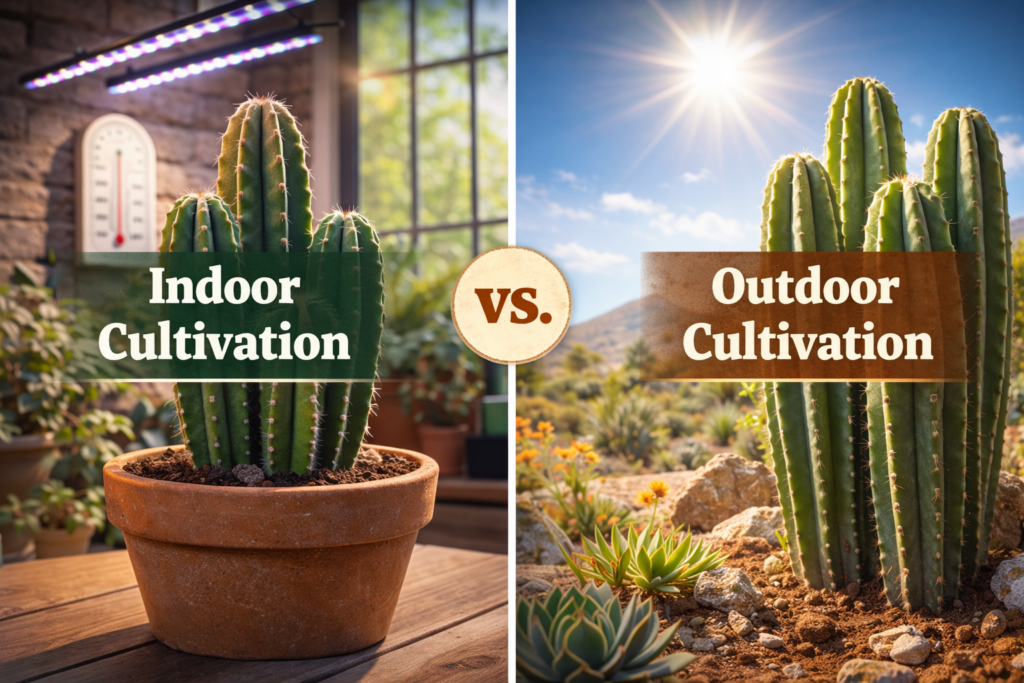
San Pedro cactus can be successfully grown both indoors and outdoors, but each environment presents different advantages and challenges. Choosing the right approach depends on your climate, available space, and the level of control you want over growing conditions.
Outdoor cultivation is generally the most natural and rewarding way to grow San Pedro cactus, especially in regions with mild winters. When planted outdoors, San Pedro benefits from full-spectrum sunlight, natural temperature fluctuations, and unrestricted airflow—all of which promote thicker columns, faster growth, and stronger overall structure.
In suitable climates, outdoor-grown San Pedro often develops a deeper coloration, broader ribs, and more vigorous branching than indoor plants. Ground planting allows roots to spread freely, supporting taller and more stable growth. For best results, outdoor plants should be placed in a location with excellent drainage and plenty of sunlight, ideally with protection from excessive rain during cooler months.
However, outdoor growing requires awareness of seasonal changes. In regions prone to frost or heavy winter rainfall, San Pedro may need protection or relocation to prevent cold damage and rot. Growers in colder climates often prefer container planting outdoors so plants can be moved when conditions become unfavorable.
Indoor cultivation offers greater control over temperature and moisture, making it a practical option for growers in colder or unpredictable climates. While indoor San Pedro typically grows more slowly and may remain smaller, it can still thrive when its needs are met consistently.
The most critical factor for indoor success is lighting. Natural window light alone is often insufficient, especially during winter. Supplemental grow lights are usually necessary to provide the intensity and duration of light San Pedro requires to maintain proper form. Without adequate lighting, indoor plants are more prone to etiolation.
Indoor environments also tend to have reduced airflow, which can increase the risk of pests or fungal issues. Proper ventilation and spacing between plants help mitigate these risks. Watering should be especially conservative indoors, as soil dries more slowly without outdoor heat and airflow.
Both indoor and outdoor cultivation can produce healthy, attractive San Pedro cacti when managed correctly. Outdoor growing generally results in faster growth and larger specimens, while indoor growing offers year-round stability and protection from extreme weather.
Some growers combine both approaches—keeping San Pedro outdoors during warm months and moving it indoors for winter dormancy. This hybrid method allows the plant to benefit from natural sunlight while avoiding cold-related stress.
Understanding the strengths and limitations of each environment allows growers to choose the setup that best matches their conditions and goals, ensuring long-term success regardless of where the cactus is grown.
Winter care is a critical but often misunderstood aspect of growing San Pedro cactus. Unlike tropical plants that grow year-round, San Pedro naturally enters a dormant phase during colder months. Properly managing this dormancy is essential for long-term health, preventing rot, and encouraging strong growth when spring returns.
Dormancy is not a sign of stress—it is a natural survival strategy. In its native Andean habitat, San Pedro experiences cooler temperatures and reduced rainfall during certain parts of the year. By slowing its metabolism, the cactus conserves energy and prepares for renewed growth when conditions improve.
To prepare San Pedro for winter, watering should be gradually reduced as temperatures drop and daylight hours shorten. Once nighttime temperatures consistently fall below about 10°C (50°F), watering should be stopped entirely. Dry soil is crucial during dormancy; moisture combined with cold temperatures dramatically increases the risk of rot.
Temperature plays a key role in successful winter care. Ideally, dormant San Pedro should be kept in a cool but frost-free environment, with temperatures ranging between 4°C and 10°C (40°F to 50°F). At these temperatures, growth stops without causing damage. An unheated garage, basement, or protected greenhouse often works well, provided the plant remains dry.
Light requirements during dormancy are minimal. San Pedro does not need strong light while dormant and can tolerate low-light conditions for several months without issue. However, complete darkness should be avoided if possible. A dimly lit space is sufficient until spring.
It is normal for the cactus to appear slightly dull, less vibrant in color, or mildly shriveled during winter. These changes indicate reduced water content and slowed metabolism, not poor health. As long as the tissue remains firm and dry, the plant is functioning as intended.
As spring approaches and temperatures begin to rise, San Pedro should be reintroduced gradually to warmth, light, and water. Sudden changes can shock the plant. Begin by increasing light exposure, then resume watering only once new growth becomes visible and nighttime temperatures consistently stay above 10°C (50°F).
Proper winter dormancy strengthens San Pedro over time. Plants that experience a true resting period often grow more vigorously during the following season and are more likely to develop strong, balanced growth. By respecting this natural cycle, growers ensure their cactus remains healthy, resilient, and capable of thriving for many years.
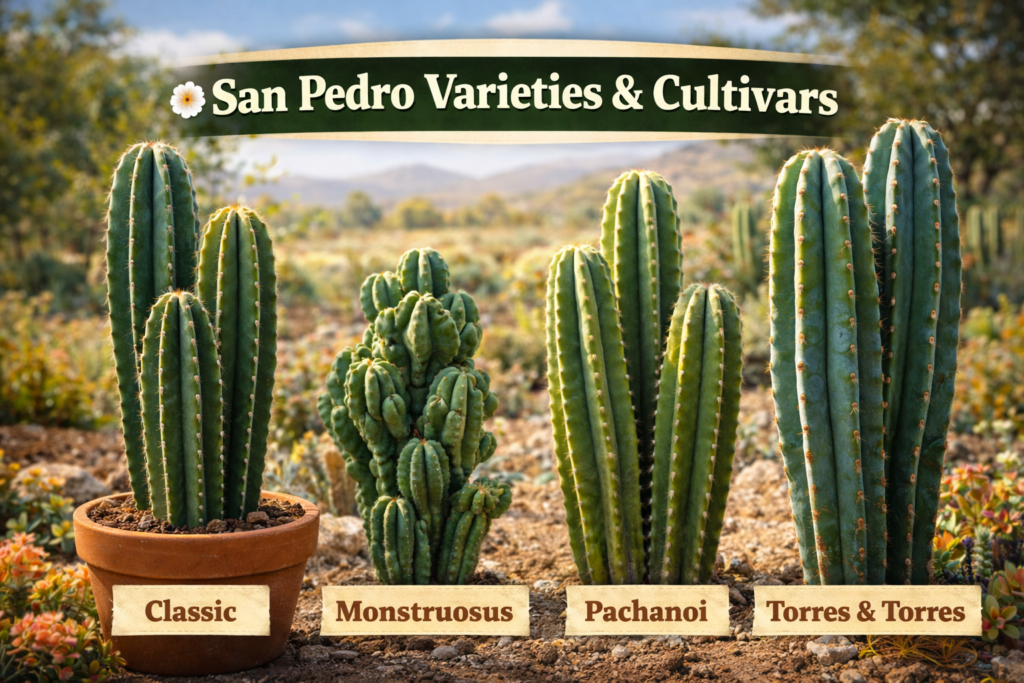
While Echinopsis pachanoi is commonly referred to as “San Pedro cactus,” it represents just one member of a broader group of closely related columnar cacti. Over time, growers and collectors have identified multiple species, cultivars, and growth forms that fall under the informal “San Pedro” umbrella. Understanding these distinctions helps buyers choose plants that best suit their space, aesthetic preferences, and cultivation goals.
The classic San Pedro (Echinopsis pachanoi) is valued for its smooth ribs, relatively short spines, and balanced growth habit. It is often recommended for beginners because it adapts well to a range of conditions and responds predictably to care. Within this species, individual plants can still vary significantly in rib shape, color, and spine density due to genetics and growing environment.
Closely related species are frequently cultivated alongside pachanoi:
Within cultivated San Pedro, growers often refer to PC (Predominant Cultivar) and non-PC forms. PC plants are widely circulated in nurseries and are characterized by consistent rib shapes, short spines, and reliable growth. Non-PC plants may display more variation in rib structure, spine length, and overall appearance, which some collectors value for uniqueness.
In addition to species and cultivars, San Pedro can exhibit rare growth mutations. Crested forms grow in fan-like patterns, while monstrose forms develop irregular, sculptural shapes. These mutations are stable and highly sought after, often commanding higher prices due to their rarity and visual impact.
Choosing the right San Pedro variety depends on your experience level, available space, and personal preference. Beginners often benefit from starting with classic pachanoi or PC varieties, while seasoned collectors may seek out rarer species or unique growth forms. Regardless of variety, all San Pedro types share the same fundamental care principles, making them accessible to growers at every level.
Understanding the legal status of San Pedro cactus is essential for responsible ownership. While the plant itself is widely cultivated and sold, laws can differ depending on country, state, and intended use. Approaching San Pedro as an ornamental and horticultural plant is the safest and most widely accepted legal framework.
In the United States, San Pedro cactus is legal to buy, sell, own, and grow when it is cultivated for ornamental or landscaping purposes. It is commonly available through nurseries, garden centers, and online plant retailers. Problems arise only when intent shifts away from ornamentation. San Pedro naturally contains mescaline, a substance that is regulated under federal law. While the living cactus is legal, extracting, processing, or consuming it in a non-ornamental context may violate local or federal regulations.
This distinction—plant ownership versus intended use—is important. Law enforcement and regulatory bodies typically focus on intent rather than the mere presence of the cactus. Keeping San Pedro as a decorative plant, collector’s specimen, or landscaping feature aligns with how it is legally sold and recognized across most jurisdictions.
Legal treatment of San Pedro also differs from that of peyote. Peyote cactus is subject to much stricter regulations in the United States due to its endangered status and its protected role within Native American religious practices. San Pedro does not fall under the same protections or restrictions, which is why it remains legal to cultivate ornamentally.
Outside the United States, laws vary. Some countries allow unrestricted cultivation, while others regulate possession more tightly or restrict plants that contain controlled substances regardless of intent. For this reason, international buyers should always research local regulations before purchasing or importing San Pedro cactus.
Responsible ownership means:
When purchased and maintained within these guidelines, San Pedro cactus remains a legal, widely accepted ornamental plant with a long history in cultivation. Understanding and respecting these legal boundaries protects both the grower and the cultural legacy of the plant, ensuring it can continue to be appreciated responsibly for its beauty, resilience, and botanical significance.
Choosing where to purchase a San Pedro cactus is just as important as learning how to care for it. Quality, sourcing, and handling all play a major role in how well a cactus adapts to its new environment and how successfully it grows long term. At trippybloom.com, we focus on providing San Pedro cacti that are selected, prepared, and shipped with the same care and respect that this plant has earned over centuries.
Every San Pedro cactus offered through TrippyBloom is chosen for health, stability, and ornamental quality. We prioritize firm, well-established specimens with strong structure, healthy coloration, and no signs of stress, rot, or pest damage. This ensures that customers receive plants that are ready to thrive rather than specimens that require recovery or correction upon arrival.
TrippyBloom is built around an education-first approach. We understand that many buyers—especially first-time cactus owners—have questions about care, climate suitability, and long-term growth. That’s why our San Pedro offerings are supported by clear guidance and transparent information, helping customers make informed decisions before and after purchase. Our goal is not simply to sell plants, but to support successful cultivation.
Shipping is another area where quality matters. San Pedro cactus requires careful handling to prevent damage during transit. At TrippyBloom, plants are packaged securely to protect growing tips, prevent moisture buildup, and minimize stress. This attention to detail helps ensure that your cactus arrives in excellent condition and can acclimate quickly to its new home.
We also recognize that collectors have different needs. Some customers are looking for classic, beginner-friendly San Pedro varieties, while others seek distinctive forms or cultivars to add to an established collection. TrippyBloom aims to offer a curated selection that serves both ends of this spectrum, without compromising on quality or ethics.
Most importantly, TrippyBloom operates within a responsible and legal framework. San Pedro cacti are offered strictly as ornamental plants, and our content emphasizes compliance with local laws and respect for the plant’s cultural heritage. This commitment protects our customers and reinforces trust in the TrippyBloom brand.
When you choose TrippyBloom, you’re not just purchasing a cactus—you’re investing in a carefully sourced ornamental plant, backed by education, transparency, and long-term support. Whether you’re starting your first San Pedro or expanding a growing collection, TrippyBloom provides a reliable, informed, and respectful path forward.
Beginning your journey with San Pedro cactus is an invitation into long-term, rewarding cultivation. Unlike short-lived ornamental plants, San Pedro is a decades-long companion that evolves slowly over time, responding visibly to the care and environment you provide. From a single cutting or young plant, it can mature into a tall, branching specimen that becomes a permanent focal point in your garden or living space.
One of the most satisfying aspects of growing San Pedro is observing its progression. Early growth may seem gradual, but with proper light, drainage, and seasonal care, the cactus soon establishes a strong rhythm—producing steady vertical growth, thickening its ribs, and eventually branching. Each stage reflects the consistency of your care and deepens your understanding of the plant’s natural cycles.
Patience is an essential part of the experience. San Pedro does not rush, and it rewards growers who respect its seasonal dormancy and gradual development. Allowing the plant to rest in winter, resisting overwatering, and maintaining stable conditions are all part of cultivating a specimen that remains healthy for many years.
Whether your goal is to grow a visually striking ornamental cactus, build a diverse collection, or simply care for a plant with deep historical roots, San Pedro offers a uniquely fulfilling path. By starting with a healthy specimen, applying the principles outlined in this guide, and observing how your plant responds over time, you build not only a successful cactus—but a lasting relationship with a remarkable botanical species.
Is San Pedro cactus legal to own?
In many regions, including the United States, San Pedro cactus is legal to buy, sell, and grow when kept strictly as an ornamental plant. Laws can vary by location, so it’s important to understand local regulations.
How fast does San Pedro cactus grow?
Under good conditions, San Pedro is considered fast-growing for a cactus and can add 20–30 centimeters (8–12 inches) per year during the active growing season.
Can San Pedro be grown indoors?
Yes. San Pedro can grow indoors with adequate lighting, typically supplemented by grow lights. Without sufficient light, indoor plants may become etiolated.
How long does it take for San Pedro to flower?
Flowering depends on age, size, and growing conditions. Cuttings may flower after several years, while seed-grown plants often take longer.
Does San Pedro require special soil?
San Pedro needs well-draining soil with a high proportion of inorganic material. Poor drainage is the most common cause of problems.
How often should San Pedro be watered?
During the growing season, watering every one to two weeks is typical, allowing the soil to dry between waterings. Watering should be reduced or stopped during winter dormancy.
Can San Pedro survive cold temperatures?
When kept dry, mature San Pedro plants can tolerate brief cold exposure, but prolonged freezing should be avoided.
Is San Pedro suitable for beginners?
Yes. With basic knowledge of light, drainage, and watering, San Pedro is one of the more forgiving and beginner-friendly columnar cacti.