
As we move through 2025, psilocybin—the psychoactive compound found in certain species of mushrooms—has solidified its position as one of the most promising innovations in modern psychiatry. Once regarded solely as a countercultural curiosity, it is now the centerpiece of a global movement in evidence-based mental-health treatment, supported by data from Phase 2 and Phase 3 clinical trials across multiple continents [1][2][3][4]. psilocybin clinical trials 2025
Major depressive disorder (MDD) and treatment-resistant depression (TRD) continue to represent urgent, unmet needs within public health. Traditional antidepressants such as SSRIs and SNRIs can take weeks to take effect and fail to provide lasting remission for up to one-third of patients [1]. In contrast, psilocybin-assisted therapy is demonstrating rapid, durable, and statistically significant improvements in mood and emotional regulation, often after a single guided session.
Recent data from 2025 show that psilocybin’s efficacy extends well beyond short-term relief. Clinical outcomes highlight reductions in Montgomery–Åsberg Depression Rating Scale (MADRS) scores that persist for months, with growing evidence of safety and minimal risk of dependency or suicidality [3][4]. These results have strengthened psilocybin’s reputation not as a fringe therapy, but as a scientifically validated, carefully controlled medical intervention. psilocybin clinical trials 2025
Beyond its clinical success, psilocybin research reflects a broader paradigm shift in how the scientific community approaches mental health. International collaborations—spanning universities in the United States, Canada, Europe, and Australia—are driving the psychedelic medicine renaissance, aligning modern neurobiology with compassionate, human-centered care.
This blog explores those developments in detail, beginning with the 2025 efficacy data, long-term follow-up results, and the expanding global research network that continues to redefine what’s pos. psilocybin clinical trials 2025
sible in the treatment of depression.
(Infographic suggestion: “From Stigma to Science – The Journey of Psilocybin,” a horizontal timeline showing early research → clinical re-emergence → 2025 global trials.)
Clinical data published in 2025 provide some of the strongest evidence yet that psilocybin-assisted therapy can meaningfully reduce depressive symptoms in patients who have not responded to conventional treatments [1][2][3][4].
The year’s most significant contribution comes from COMP360, a proprietary psilocybin formulation developed by Compass Pathways. In its pivotal Phase 3 clinical trial, a single 25-mg dose administered with psychological support led to a statistically significant reduction in symptom severity among participants with treatment-resistant depression (TRD). The mean difference on the Montgomery–Åsberg Depression Rating Scale (MADRS) was –3.6 points at week 6 compared with placebo, and the improvement remained steady at 12 weeks and beyond. Importantly, no increase in suicidality or serious adverse events was observed [3][4]. psilocybin clinical trials 2025
A complementary Phase 2 trial reinforced these findings, recording a 13-point average decrease on the MADRS following the same 25 mg dose. Over half of participants (54 %) achieved remission within three weeks—far exceeding the remission rates typically seen with SSRIs or SNRIs [2].
Meta-analyses released in early 2025 further validated these outcomes, concluding that a 25 mg dose offers the most consistent therapeutic response for both major depressive disorder (MDD) and TRD. The benefit profile was dose-dependent: higher doses yielded stronger symptom reductions but also produced slightly more transient side effects such as nausea or headache [5]. psilocybin clinical trials 2025
| Study / Source | Population | Dose | Mean MADRS Change | Remission % | Duration of Effect | Notes |
| COMP360 Phase 3 (Compass Pathways) [3][4] | TRD patients (n = 100+) | 25 mg (single) | –3.6 vs placebo | ≈ 45 % | ≥ 12 weeks | No suicidality signal |
| Phase 2 trial (Lindus Health) [2] | MDD / TRD (n = 70) | 25 mg (single) | –13 points | 54 % | 3–12 weeks | Rapid onset ≤ 7 days |
| Meta-analysis (ScienceDirect 2025) [5] | Pooled data > 600 subjects | 20–30 mg range | –10 to –14 points (avg.) | 50–55 % | 3–6 months | Optimal dose ≈ 25 mg |
The consistency of results across independent trials underscores psilocybin’s emerging reliability as a fast-acting antidepressant when combined with structured therapy. Participants frequently describe heightened emotional clarity and a reduction in persistent negative thought loops within days of treatment—effects rarely seen with conventional pharmacotherapy. psilocybin clinical trials 2025
(Infographic suggestion: “Psilocybin vs Traditional Antidepressants – Speed and Remission Rates,” comparing time-to-response, average MADRS improvement, and remission percentages from 2025 datasets.)
One of the most remarkable findings from 2025’s psilocybin research is the durability of therapeutic benefit. Unlike traditional antidepressants that require daily use and often lose efficacy over time, psilocybin appears to induce sustained neurobiological and psychological change after only one or two guided sessions [1][3][6]. psilocybin clinical trials 2025
Longitudinal follow-ups across multiple studies demonstrate that antidepressant effects can last months—and, in some cohorts, years.
A 52-week analysis of the COMP360 Phase 2b trial (COMP004) confirmed that a single 25 mg administration, coupled with psychological support, produced stable MADRS improvements through one year, with no observed increase in suicidality or cognitive decline [3].
Similarly, a five-year observational study tracked participants from earlier psilocybin programs and found that 58 % remained in remission after one year and 67 % after five years, suggesting long-term recalibration of emotional processing and mood regulation [6].
These durable outcomes are believed to result from psilocybin’s impact on neuroplasticity and network connectivity. By promoting new synaptic growth and disrupting rigid depressive pathways, psilocybin may help the brain sustain more flexible, adaptive patterns of thought well after the acute psychedelic experience has ended [1]. psilocybin clinical trials 2025
| Study / Source | Follow-Up Duration | Sustained Remission Rate | Key Findings |
| COMP360 Phase 2b Follow-Up [3] | 52 weeks | ~58 % | Durable antidepressant response through one year; stable safety profile |
| Powers Health Long-Term Cohort [6] | 5 years | 67 % | Persistent mood improvement; minimal relapse indicators |
| GlobalRPH Meta-Review [1] | 1 year (avg.) | 55–60 % | Reinforced durability across pooled global datasets |
The implication is profound: psilocybin may enable remission through psychological restructuring rather than chemical maintenance. Patients often report lasting improvements in self-compassion, emotional openness, and motivation long after dosing has ceased—outcomes rarely achieved through standard antidepressant therapy.
(Infographic suggestion: “Longevity of Response,” a dual-axis line graph showing MADRS score reductions maintained across one- and five-year periods, contrasted with the typical relapse curve of SSRIs.) psilocybin clinical trials 2025
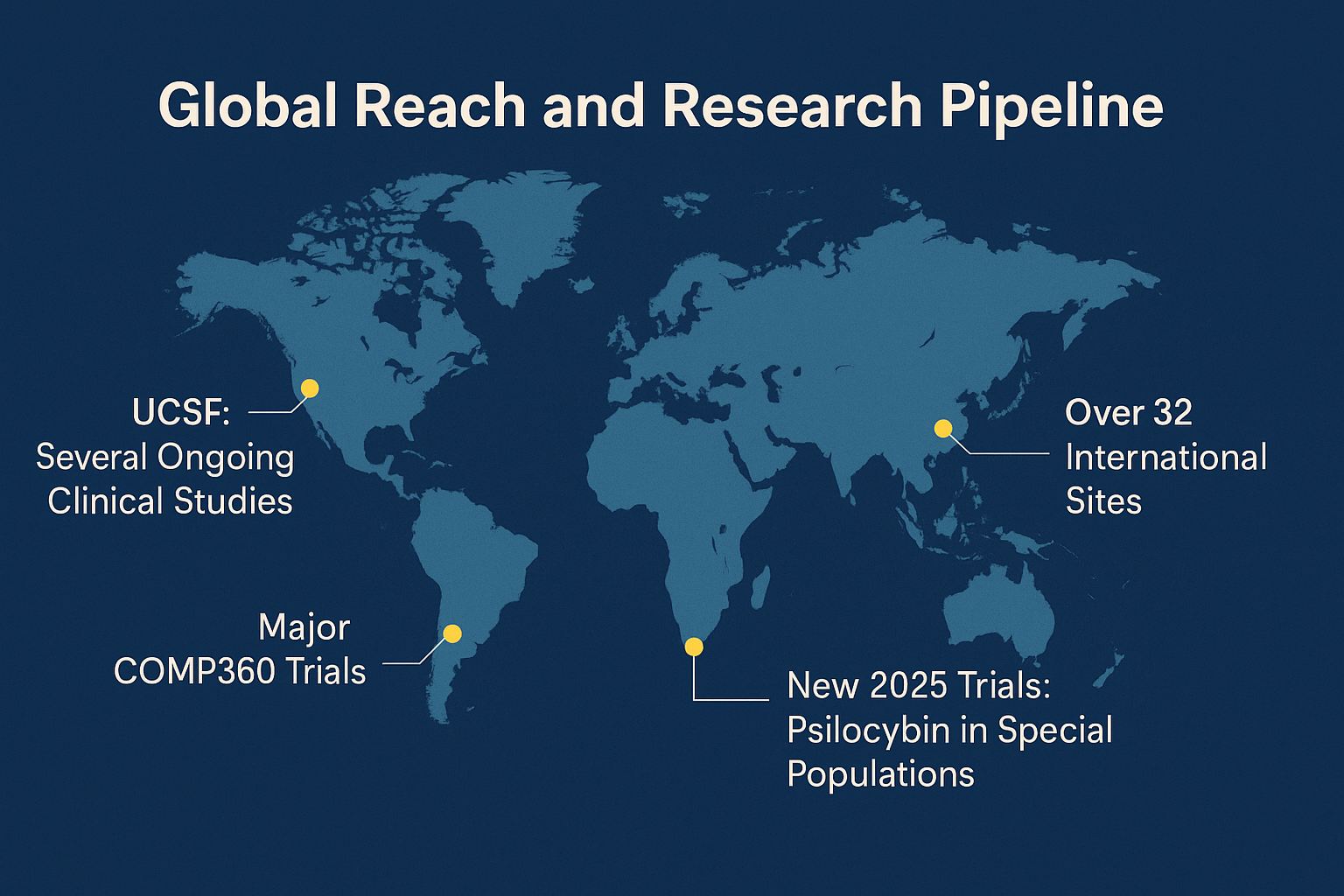
By 2025, psilocybin research has transformed from a small cluster of academic studies into a global clinical enterprise spanning multiple continents, dozens of institutions, and thousands of participants. What began two decades ago as isolated pilot studies has evolved into a coordinated international effort to understand, optimize, and standardize psilocybin-assisted therapy for depression [1][3][7].
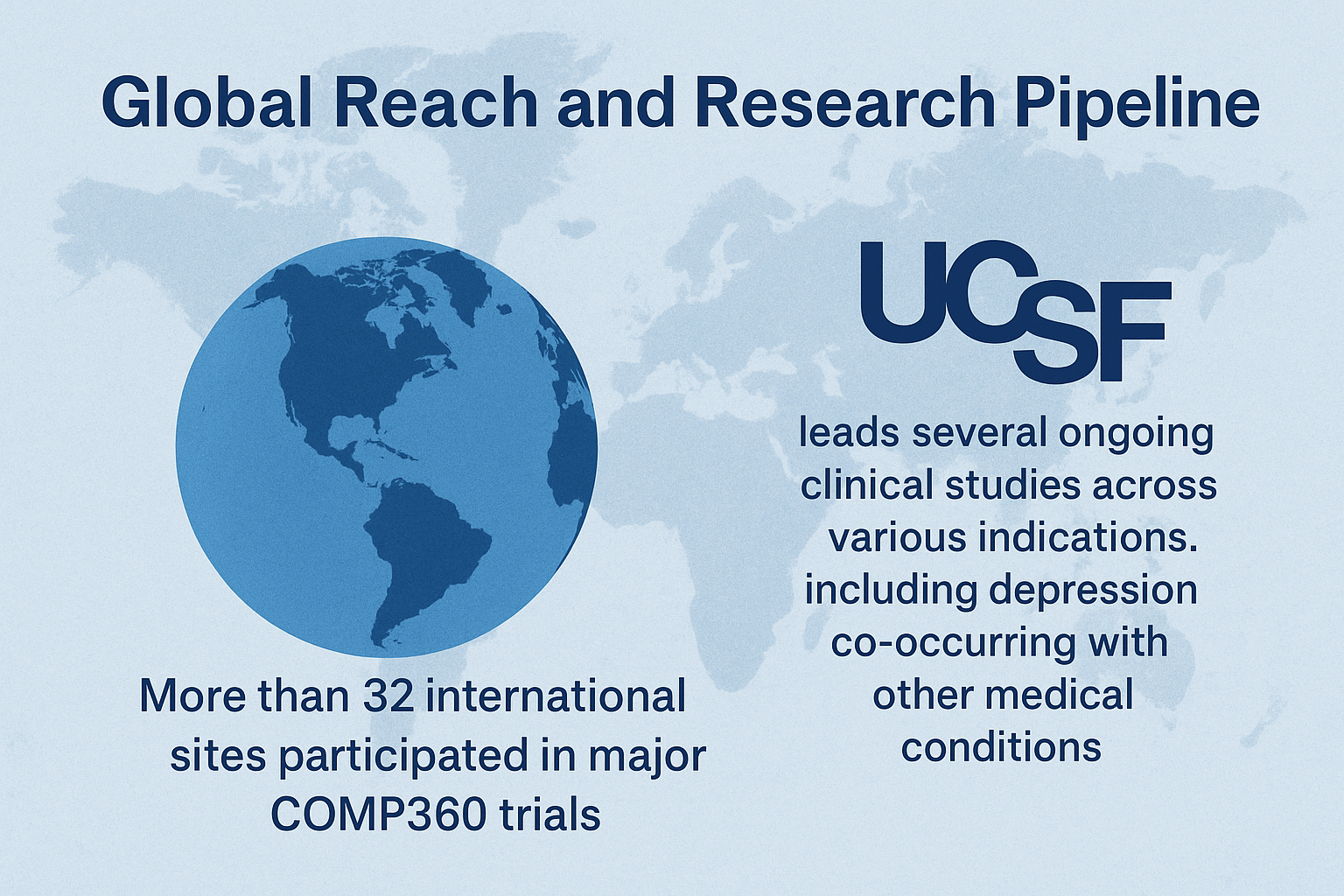
The COMP360 Phase 3 program alone incorporated more than 32 international trial sites, extending from the United States and Canada to the United Kingdom, Germany, and Australia. This multinational design has provided diverse patient populations and cross-cultural data that reinforce psilocybin’s safety and efficacy beyond regional boundaries [3]. psilocybin clinical trials 2025
Beyond COMPASS Pathways’ pivotal work, numerous universities and medical centers are running complementary trials. The University of California, San Francisco (UCSF) leads multiple studies exploring psilocybin for depression associated with other medical conditions such as Parkinson’s disease, chronic pain, and terminal illness [7]. Similar programs are underway at institutions in Europe and the Asia-Pacific region, exploring psilocybin’s impact on trauma-related depression, anxiety, and emotional resilience.
Meanwhile, emerging clinical research networks in the Netherlands, Switzerland, and the Nordic countries are integrating psilocybin protocols into early-stage mental health innovation hubs. In Australia, the 2023 medical rescheduling that allowed psychiatrists to prescribe psilocybin for treatment-resistant depression has accelerated university-backed data collection and patient follow-ups. psilocybin clinical trials 2025
| Region | Key Institutions / Sponsors | Ongoing Trials | Primary Indications | Regulatory Status |
| United States | Johns Hopkins, Yale, Compass Pathways | 10+ | MDD, TRD | FDA “Breakthrough Therapy” designation |
| Canada | University of Toronto, MindBio, Health Canada SAP | 6+ | TRD, palliative depression | Compassionate access via SAP |
| Europe | Imperial College, UMC Utrecht, University of Zurich | 12+ | MDD, anxiety, chronic pain | EMA monitoring; national pilot programs |
| Australia | Monash University, Mind Medicine Australia | 4+ | TRD, PTSD | Legal medical use under psychiatrist supervision |
| Asia-Pacific | Japan, Singapore early-stage collaborations | 3+ | MDD pilot studies | Research phase only |
The 2025 research pipeline reflects a maturing clinical ecosystem: coordinated multi-site trials, standardized dosing, and cross-comparative analyses are now the norm. Collaborative data-sharing between regulatory agencies, biotech firms, and academic labs has accelerated the pace at which psilocybin research is moving toward mainstream medical acceptance.
(Infographic suggestion: “Global Psilocybin Trial Map – 2025,” a world map highlighting major trial hubs, participant numbers, and regulatory progress.) psilocybin clinical trials 2025
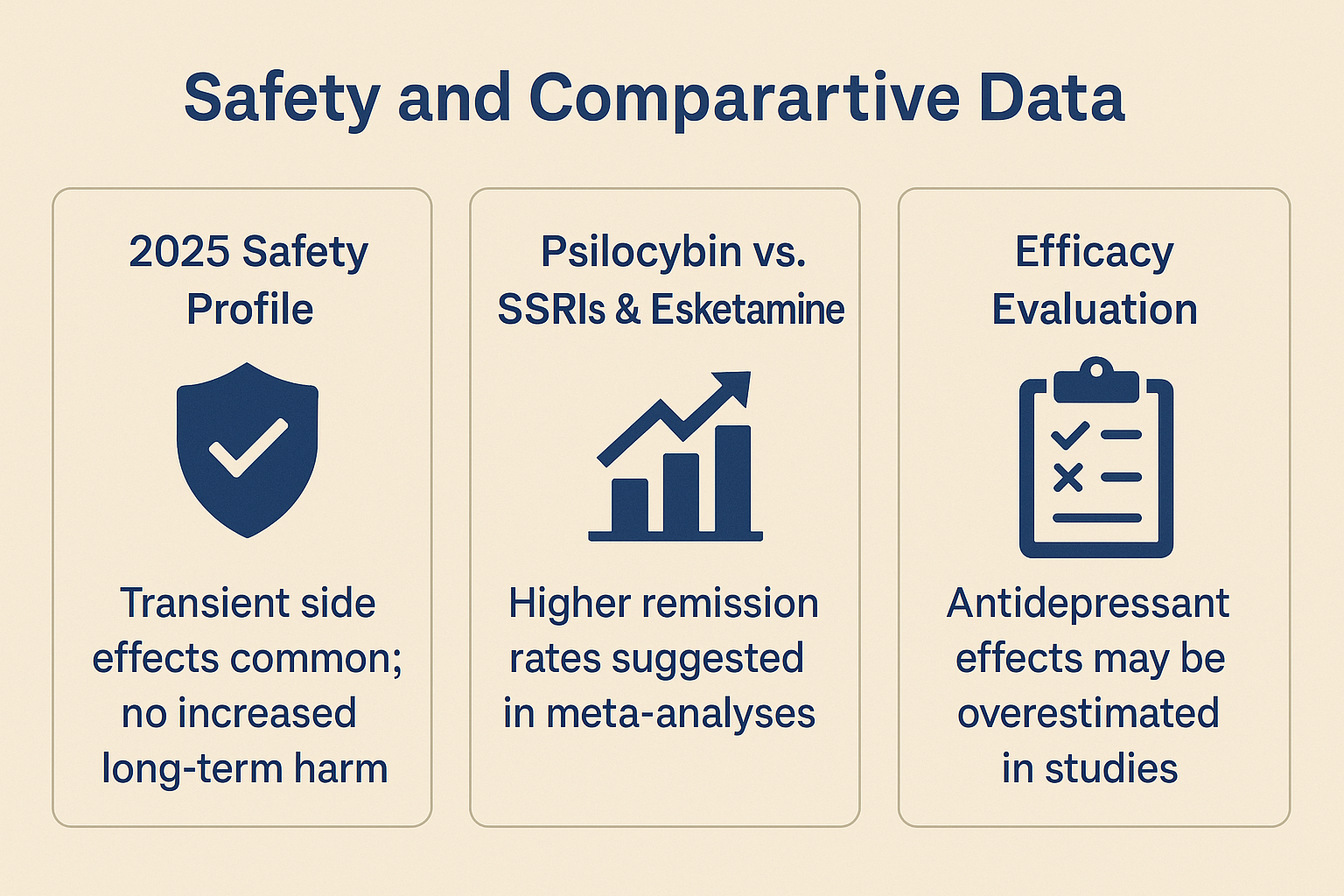
The 2025 global psilocybin trial landscape not only reinforces its antidepressant efficacy but also continues to validate its strong safety profile. Across thousands of participants in Phase 2, Phase 3, and long-term observational studies, psilocybin has shown consistent tolerability, minimal physiological risk, and a remarkably low incidence of severe adverse events [1][3][8].
The most frequently reported side effects are transient nausea, mild headache, and brief anxiety or confusion during the acute psychedelic phase. These typically resolve within hours and are effectively managed through pre-session preparation and the presence of trained facilitators [3]. No long-term neurocognitive deficits or increase in suicidality have been observed in any major 2025 trials—a finding that distinguishes psilocybin from many conventional antidepressants, some of which carry warnings for increased suicidality risk in young adults [1][4]. psilocybin clinical trials 2025
Importantly, clinical researchers emphasize that psilocybin’s safety is context-dependent. Trials uniformly report that a structured environment—commonly described as “set and setting”—is critical for minimizing psychological distress. This includes participant screening, guided dosing, and integration therapy following the session to help patients process the experience safely and productively [3].
When compared to standard antidepressant therapies, psilocybin demonstrates an equally favorable or superior safety-to-efficacy ratio.
Meta-analyses published in 2025 indicate that while psilocybin may produce temporary discomfort (nausea or transient anxiety) more often than SSRIs, it carries lower long-term adverse effects—particularly regarding dependence, sexual dysfunction, and withdrawal symptoms [8]. psilocybin clinical trials 2025
Esketamine, another fast-acting antidepressant, shares psilocybin’s rapid onset but often requires repeated dosing and has a higher rate of cardiovascular side effects. Psilocybin, in contrast, achieves lasting results from one or two sessions, offering a potential shift in both clinical practice and patient experience. psilocybin clinical trials 2025
| Treatment Type | Common Adverse Effects | Serious Adverse Events | Dependency Risk | Long-Term Cognitive Impact |
| Psilocybin (25 mg) | Mild nausea, short-lived anxiety, fatigue | None reported | None | None observed [3][8] |
| SSRIs (e.g., fluoxetine) | Fatigue, insomnia, sexual dysfunction | Low (rare serotonin syndrome) | Moderate (discontinuation effects) | Possible blunting [8] |
| Esketamine (nasal spray) | Dizziness, dissociation, hypertension | Rare cardiovascular events | Low–Moderate | Under study |
| Placebo | Minimal | None | None | None |
The 2025 consensus is clear: psilocybin’s benefit-to-risk ratio surpasses most available antidepressant interventions, particularly when administered under professional supervision. The absence of chronic use patterns or withdrawal syndromes positions it as an innovative alternative for patients seeking lasting relief without long-term pharmacological dependency.
(Infographic suggestion: “Psilocybin vs SSRIs vs Esketamine – Safety Comparison,” using icons for side effects and severity ratings.) psilocybin clinical trials 2025
The question of optimal psilocybin dosage for depression has been a major focus of 2025’s research, and the findings have now converged on a clear consensus: a 25 mg dose—administered with professional psychological support—offers the best balance between efficacy, safety, and tolerability across diverse patient populations [3][5][8].
Multiple systematic reviews and meta-analyses have confirmed that 25 mg is the “sweet spot” for major depressive disorder (MDD) and treatment-resistant depression (TRD). This dosage provides the strongest antidepressant effects while minimizing the risk of adverse reactions such as transient anxiety, dizziness, or nausea. psilocybin clinical trials 2025
Psilocybin’s clinical effect arises primarily through its conversion to psilocin, an active metabolite that acts as a partial agonist at the 5-HT₂A receptor, a critical hub in serotonin signaling and mood regulation [1][3]. This receptor activation leads to:
These neurochemical effects collectively underpin psilocybin’s rapid onset and long-term durability, distinguishing it from the gradual, cumulative mechanisms of traditional antidepressants. psilocybin clinical trials 2025
| Dose (mg) | Mean MADRS Improvement | Adverse Event Frequency | Optimal Use Context | Notes |
| 10–15 | Mild (–5 points avg.) | Minimal | Early pilot or microdose research | Sub-therapeutic for MDD/TRD |
| 25 (Optimal) | Strong (–13 points avg.) | Moderate, transient nausea (20–25%) | Clinical guided therapy | Ideal efficacy-safety balance |
| 30–35 | Strong (–15 points avg.) | Higher transient anxiety (30%) | Research only | No added benefit vs 25 mg |
| 40+ | Severe psychedelic load | Elevated discomfort | Not recommended | Unnecessary risk |
Researchers have also noted that psilocybin’s pharmacokinetics—rapid onset (within 30–60 minutes), peak at 2 hours, and a total duration of 4–6 hours—make it logistically compatible with single-day therapeutic frameworks, unlike traditional pharmacotherapies requiring chronic dosing [3][5]. psilocybin clinical trials 2025
Ongoing trials in 2025 are now investigating individualized dose calibration, where biomarkers such as body weight, baseline serotonin activity, and genetic variations may predict optimal dosing ranges. Additionally, studies exploring microdosing regimens (<1 mg) aim to determine whether sub-perceptual doses can yield cumulative mood benefits without full psychedelic effects.
(Infographic suggestion: “Psilocybin Dose-Response Curve,” plotting efficacy vs. side effect frequency across 10–40 mg range, highlighting 25 mg as optimal therapeutic window.) psilocybin clinical trials 2025
As psilocybin advances through late-stage clinical development, ethical integrity and therapeutic oversight have become central to how researchers and clinicians design, implement, and monitor trials. The 2025 global studies emphasize that psilocybin’s benefits are maximized—and its risks minimized—only when delivered through professionally guided, ethically grounded clinical frameworks [1][3][4][8].
Every major trial published in 2025 integrated psychological support before, during, and after dosing. This tri-phasic approach—preparation, guided session, and integration—has proven essential to ensure safety and sustain antidepressant effects. psilocybin clinical trials 2025
Research consistently shows that without this structured framework, therapeutic outcomes can diminish, and psychological distress may increase. Thus, psilocybin’s effectiveness is inseparable from its delivery model—it is a therapy-assisted process, not a standalone drug intervention. psilocybin clinical trials 2025
Ethical psilocybin trials prioritize informed consent, ensuring participants understand both potential benefits and transient risks such as anxiety, perceptual distortion, or emotional intensity. Screening excludes individuals with:
This careful participant selection has contributed to psilocybin’s strong safety record in 2025 and will remain a cornerstone of any future clinical rollout.
As regulatory approval nears, the conversation around psilocybin is expanding beyond clinical results to questions of access and affordability. Early reports suggest that psilocybin therapy—when delivered through certified clinics—could cost several thousand dollars per treatment course. Ethicists and mental-health advocates are therefore urging policymakers to create frameworks that ensure equitable access, particularly for marginalized or economically disadvantaged populations [1][4]. psilocybin clinical trials 2025
Internationally, institutions such as the World Health Organization (WHO) and the European Medicines Agency (EMA) are beginning to draft ethical guidelines for psychedelic medicine, focused on:
| Category | Ethical Focus | Implementation Example |
| Informed Consent | Transparency and understanding of psychedelic effects | Written and verbal consent pre-session |
| Safety Supervision | Continuous professional monitoring | Minimum of two trained guides per session |
| Integration Therapy | Sustaining long-term benefits | Scheduled follow-up sessions |
| Access & Equity | Fair cost and inclusion | Subsidized public programs under review |
| Data Transparency | Open publication of results | Registered clinical trial reporting |
The ethical foundation of psychedelic therapy ultimately ensures patient dignity, safety, and trust. As this field transitions from research to regulated medicine, adhering to these principles will be essential to maintaining both scientific credibility and societal acceptance.
(Infographic suggestion: “Ethical Framework for Psilocybin Therapy,” a circular diagram showing preparation → supervision → integration → equity → transparency.) psilocybin clinical trials 2025
By 2025, psilocybin has emerged not only as a novel therapeutic compound but also as a disruptive innovation in how clinicians conceptualize and treat depression. The contrast between psilocybin-assisted therapy and conventional antidepressant treatments—such as SSRIs, SNRIs, and esketamine—highlights a fundamental difference: psilocybin promotes psychological transformation, while most standard drugs primarily manage symptoms [1][3][8].
Traditional antidepressants operate through chronic modulation of serotonin reuptake, maintaining elevated neurotransmitter levels to dampen depressive symptoms over weeks or months. Psilocybin, on the other hand, exerts a rapid, high-impact neuropsychological reset by acting as a 5-HT₂A receptor agonist, temporarily disrupting rigid neural networks associated with negative rumination and self-reinforcing mood loops. psilocybin clinical trials 2025
Functional MRI data from 2025 trials show that psilocybin restores connectivity between the prefrontal cortex and limbic regions, areas responsible for emotional regulation and cognitive flexibility [5][8]. The result is an immediate, profound reduction in depressive thinking patterns—often within 24 to 48 hours—compared with the typical four- to six-week onset required for SSRIs.
Across global clinical data, psilocybin demonstrates not only higher remission rates but also longer-lasting outcomes compared to daily pharmacotherapy. Participants in Phase 2 and Phase 3 psilocybin trials reported measurable mood improvements lasting months, while antidepressants typically require continuous use to maintain benefits. psilocybin clinical trials 2025
In particular:
Perhaps the most striking distinction lies in qualitative patient experience. Many patients report that psilocybin fosters a sense of emotional reconnection, clarity, and renewed motivation—effects described as transformative rather than merely palliative. In contrast, SSRIs often blunt both negative and positive emotions, leaving some patients feeling emotionally neutral. psilocybin clinical trials 2025
This emotional “reset” has measurable correlates: increased emotional intelligence scores, improved interpersonal functioning, and greater life satisfaction in psilocybin recipients compared with antidepressant users [5][8]. psilocybin clinical trials 2025
| Feature | Psilocybin-Assisted Therapy | SSRIs / SNRIs | Esketamine |
| Mechanism of Action | 5-HT₂A agonist; neural network reconfiguration | Serotonin reuptake inhibition | NMDA receptor antagonist |
| Onset of Effect | 24–48 hours | 4–6 weeks | 1–3 hours |
| Dosing Frequency | 1–2 supervised sessions | Daily, continuous | Weekly / biweekly |
| Remission Rate (2025) | 45–67% (long-term) | 15–25% | 30–40% |
| Durability | Months to years | Relapse common post-discontinuation | Short-term |
| Side Effects | Transient nausea, anxiety | Fatigue, sexual dysfunction | Dissociation, dizziness |
| Dependency Risk | None reported | Moderate (withdrawal possible) | Low–Moderate |
| Therapeutic Experience | Insightful, emotionally restorative | Symptom management | Sedative relief |
An emerging trend in 2025 clinical design is hybrid treatment models—pairing psilocybin sessions with ongoing cognitive-behavioral therapy (CBT) or acceptance and commitment therapy (ACT). This integration supports the psychological insights gained during psilocybin experiences, enhancing emotional resilience and long-term recovery.
Researchers note that psilocybin’s capacity to heighten neural plasticity creates a “therapeutic window”—a period of enhanced psychological receptivity lasting several days post-session, during which traditional therapy can be particularly effective [3][5].
(Infographic suggestion: “Therapeutic Comparison – Psilocybin vs SSRIs vs Esketamine,” using bars or icons to depict differences in onset time, duration, remission rate, and emotional engagement.) psilocybin clinical trials 2025
The rapid expansion of psilocybin research between 2020 and 2025 has compelled policymakers worldwide to reconsider how psychedelic compounds fit into modern medical frameworks. As Phase 3 trials reach completion and data demonstrate consistent safety and efficacy, a number of countries are moving from prohibition toward controlled medical regulation [1][3][4][7]. psilocybin clinical trials 2025
The United States continues to lead the global regulatory transition. The U.S. Food and Drug Administration (FDA) first granted Breakthrough Therapy status to psilocybin in 2018 for treatment-resistant depression, reaffirming it multiple times as new Phase 2 and Phase 3 data confirmed therapeutic value [3].
As of 2025, the FDA is reviewing submissions for conditional approval of COMP360 psilocybin-assisted therapy, expected by late 2026. If approved, psilocybin sessions would initially be permitted only in certified clinical facilities under the supervision of trained healthcare professionals. psilocybin clinical trials 2025
At the state level, Oregon and Colorado have pioneered regulated psilocybin frameworks, creating state-licensed centers where adults can undergo guided psilocybin experiences for mental health support. While these programs remain distinct from federal medical approval, they represent significant regulatory experimentation that could inform future national policy.
Health Canada’s Special Access Program (SAP)—introduced in 2022—has evolved into one of the world’s most pragmatic psychedelic-access systems. By 2025, hundreds of physicians have been authorized to request psilocybin treatments for patients with terminal illness or treatment-resistant depression when standard medications fail [7].
Canadian regulators are also funding longitudinal safety monitoring and training programs for psychedelic therapists, signaling a pathway toward eventual medical licensing similar to medical cannabis in its early regulatory stages. psilocybin clinical trials 2025
Europe’s psilocybin landscape is complex and rapidly developing.
Australia made history in July 2023, when the Therapeutic Goods Administration (TGA) became the first national regulatory body to authorize psychiatrists to prescribe psilocybin for treatment-resistant depression and MDMA for PTSD [14].
By 2025, Australia’s pilot programs are expanding under rigorous medical supervision, serving as a model for other nations seeking to combine scientific integrity with compassionate patient care. Preliminary outcomes have shown strong remission rates and public support for cautious medical expansion. psilocybin clinical trials 2025
Internationally, institutions such as the World Health Organization (WHO) and United Nations Office on Drugs and Crime (UNODC) are monitoring psilocybin research closely. While psilocybin remains a controlled substance under most international conventions, growing scientific consensus and favorable safety data are motivating calls for reclassification under medical exemptions.
A coordinated global framework would allow for standardized quality control, equitable access, and improved data transparency. Experts anticipate that within the next five years, psilocybin may transition from experimental therapy to approved psychiatric intervention in several major healthcare systems. psilocybin clinical trials 2025
| Region | Regulatory Body | Current Status | Anticipated Next Step |
| United States | FDA | Breakthrough Therapy; Phase 3 under review | Conditional approval (2026) |
| Canada | Health Canada | Special Access Program expanded | Clinical licensing pilot |
| United Kingdom | MHRA | Late-stage review; controlled trials ongoing | Evaluation post-COMP360 |
| European Union | EMA | Drafting therapeutic guidelines | Regional harmonization |
| Australia | TGA | Approved medical use for TRD | Nationwide clinical rollout |
| Switzerland & Germany | National Ethics Boards | Compassionate-use approvals | Hospital integration pilots |
(Infographic suggestion: “Global Psilocybin Regulation Map 2025” — color-coded by stage: approved, under review, or in clinical research.) psilocybin clinical trials 2025
The regulatory transformation underway in 2025 signals the dawn of a new therapeutic era, where psychedelics like psilocybin are integrated into evidence-based mental-health care rather than excluded by outdated stigma.
(Infographic suggestion: timeline of global policy evolution 2018–2030 with major milestones: FDA Breakthrough (2018) → TGA Approval (2023) → Phase 3 Data (2025) → Anticipated Global Rollout (2028–2030).) psilocybin clinical trials 2025
As 2025 draws to a close, psilocybin stands at the intersection of scientific validation, medical innovation, and ethical responsibility. What was once a fringe topic confined to underground therapy circles has now become a serious subject of international medical dialogue — supported by robust data, standardized trials, and global collaboration.
Across continents, Phase 2 and Phase 3 studies have confirmed what early pioneers had hoped: that psilocybin-assisted therapy offers rapid, durable relief for people with depression, especially those for whom standard medications have failed [1][3][4][6][7]. Its unique mechanism — a neuropsychological “reset” that promotes connectivity, neuroplasticity, and emotional processing — has introduced a paradigm shift in psychiatry, moving treatment from chemical suppression toward cognitive and emotional integration. psilocybin clinical trials 2025
The clinical data from COMP360 and other 2025 studies illustrate a consistent narrative:
This combination of efficacy, safety, and sustainability is redefining how clinicians and regulators envision the future of antidepressant treatment. psilocybin clinical trials 2025
The journey from prohibition to clinical acceptance represents a broader transformation in societal attitudes toward mental health and psychedelic research. What makes psilocybin’s story particularly profound is its alignment with both scientific precision and human compassion. Each dose administered in a controlled study does more than alter neurochemistry — it invites patients to confront and reframe their inner experience, often leading to breakthroughs that traditional drugs cannot produce.
As governments and institutions like the FDA, EMA, Health Canada, and Australia’s TGA advance their evaluations, the next five years will determine how psilocybin is integrated into global standards of care. Ethical guidelines, therapist certification programs, and equitable access models will be as vital as the molecule itself in ensuring long-term success. psilocybin clinical trials 2025
By 2030, experts predict that psilocybin-assisted therapy could be:
The future of psilocybin in psychiatry may ultimately reflect a larger truth: that healing the mind is not solely a biochemical process, but a deeply human one. The evidence now supports what intuition and early research have long suggested — depression can be relieved not just by suppressing symptoms, but by reawakening connection, purpose, and perspective.
As the global community continues to refine its understanding, psilocybin’s transformation from controlled substance to controlled medicine marks one of the most important milestones in modern mental-health care. The coming decade may well see it recognized not as a radical alternative, but as a cornerstone of a new, compassionate, evidence-based approach to treating depression. psilocybin clinical trials 2025
(Infographic suggestion: “The Psilocybin Journey – From Discovery to Clinical Integration,” illustrating the timeline from early trials to global regulatory milestones and future adoption pathways.)
Psilocybin-assisted therapy is a clinically supervised treatment in which patients receive controlled doses of psilocybin — the psychoactive compound in certain mushrooms — within a guided therapeutic setting. It combines pharmacological effects (increased brain connectivity, neuroplasticity) with psychological support, helping patients process emotions, trauma, and thought patterns contributing to depression. psilocybin clinical trials 2025
Data from 2025 global Phase 2 and Phase 3 trials show statistically significant improvements in depression severity. A single 25 mg psilocybin dose paired with therapy reduced MADRS scores by 3.6–13 points, with 45–67% of patients achieving remission, often within weeks. These outcomes far exceed traditional antidepressant benchmarks [3][4][5]. psilocybin clinical trials 2025
Long-term follow-up data indicate that psilocybin’s benefits can persist for one to five years in many participants. About 58% of patients remained in remission after one year, and 67% maintained relief at the five-year mark [6]. These effects are sustained without the need for daily medication.
Yes — under professional supervision, psilocybin has a strong safety profile. The most common side effects include transient nausea, anxiety, or fatigue, all of which resolve within hours. Clinical trials report no evidence of increased suicidality or long-term harm, and psilocybin is non-addictive [3][8]. psilocybin clinical trials 2025
SSRIs work by sustaining serotonin levels over time, requiring daily dosing and often leading to emotional blunting or dependency. Psilocybin, in contrast, acts as a 5-HT₂A receptor agonist, promoting neural rewiring and emotional reconnection. Results are achieved rapidly — within 1–3 days — and last for months after only one or two guided sessions [1][5].
Current evidence identifies 25 mg as the optimal clinical dose for major depressive disorder and treatment-resistant depression. This dose balances efficacy with tolerability, providing maximum symptom relief while minimizing transient side effects [5]. psilocybin clinical trials 2025
In 2025, psilocybin research spans over 32 international sites, including major institutions like Johns Hopkins University, Imperial College London, University of Toronto, University of Zurich, Monash University, and UCSF. Each center contributes unique data across cultural, clinical, and demographic contexts [3][7].
Yes — in Australia, psychiatrists can legally prescribe psilocybin for treatment-resistant depression under the Therapeutic Goods Administration (TGA) framework. In the U.S., the FDA is reviewing Phase 3 results for potential approval by 2026. Canada allows psilocybin through the Special Access Program, while the UK and EU are advancing late-stage clinical evaluations [4][7][14]. psilocybin clinical trials 2025
Ethical administration requires informed consent, trained supervision, and post-session integration. Trials mandate two facilitators per session, continuous psychological monitoring, and exclusion of participants with psychosis or bipolar I disorder. Equity and accessibility are also key ethical pillars, with calls for public funding to ensure affordability [1][4][8].
Between 2025 and 2030, psilocybin is expected to transition from experimental therapy to regulated psychiatric intervention. Upcoming studies will refine microdosing protocols, expand use to anxiety and PTSD, and integrate psilocybin into standard mental-health clinics. Global harmonization efforts by the FDA, EMA, and WHO could make psilocybin the first approved psychedelic medicine for depression worldwide [3][7]. psilocybin clinical trials 2025