
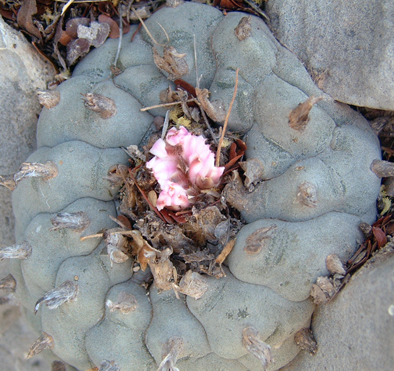
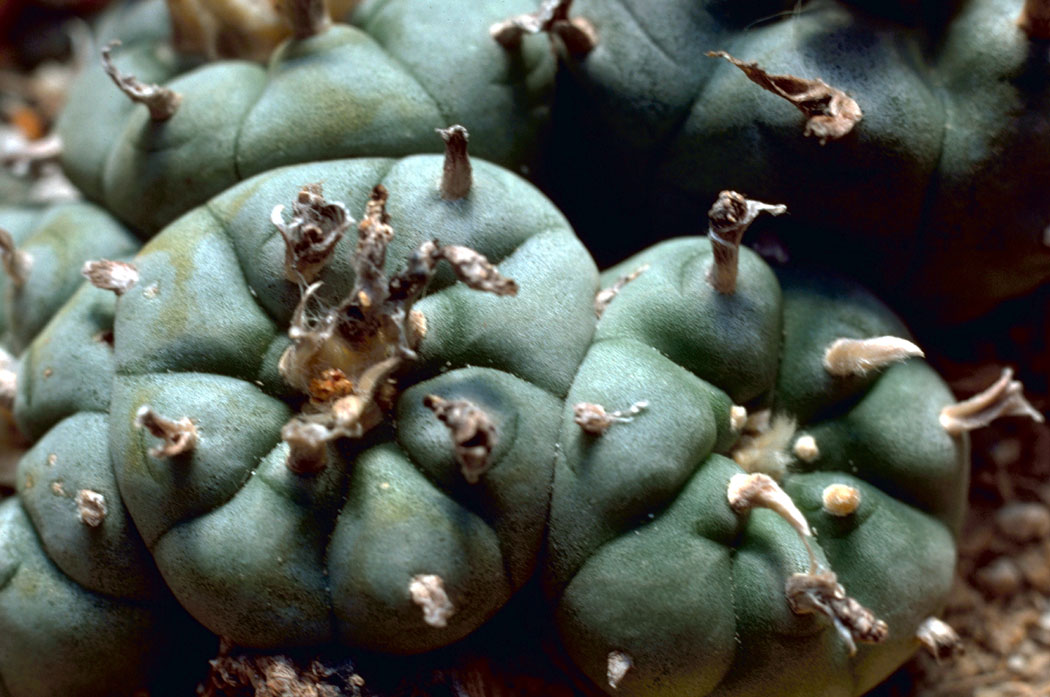
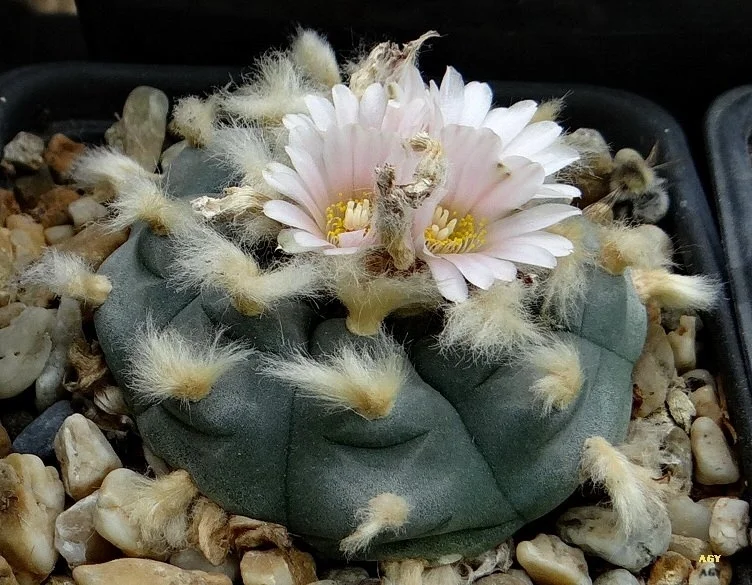
Lophophora Williamsii – Icamole Variety (Nuevo León) is a locality-specific peyote cactus originating from the arid limestone landscapes near Icamole, Nuevo León, Mexico. Valued by advanced collectors for its documented regional lineage, compact growth form, and cultural significance, this variety represents a distinctive expression of Lophophora williamsii. Offered for ornamental display, ethnobotanical study, and long-term conservation-focused collections, the Icamole variety appeals to those who prioritize provenance, ethics, and education.
$19.95 – $29.95Price range: $19.95 through $29.95
Guaranteed delivery
Free Shipping On Donations $300+
Locally sourced
Important legal & educational notice: Lophophora williamsii (peyote) is a cactus with strict and region-dependent legal status. TrippyBloom lists this product only where lawful and exclusively for ornamental, ethnobotanical, educational, and collector purposes. This page does not promote illegal activity or misuse. Buyers are solely responsible for understanding and complying with all local laws and regulations before purchase.
Within the world of peyote collecting and ethnobotanical research, locality-named varieties carry exceptional importance. The Icamole variety of Lophophora williamsii refers to plants historically associated with the semi-arid region surrounding Icamole in Nuevo León, Mexico. This area is known for its limestone soils, extreme temperature shifts, and sparse rainfall—conditions that have shaped peyote populations over generations.
Rather than representing a separate species, the Icamole variety is best understood as a regional expression of Lophophora williamsii. Collectors value such forms for their traceable geographic identity, subtle morphological distinctions, and cultural relevance, making them far more than generic peyote specimens. buy Lophophora williamsii Icamole online
These features define peyote’s unmistakable appearance while highlighting the adaptations that allow it to survive in harsh desert ecosystems.
In ethnobotanical and collector contexts, locality names such as Icamole provide essential information:
For serious collectors, locality data transforms a cactus into a living record of place, ecology, and history. buy Lophophora williamsii Icamole online
Peyote plants associated with Nuevo León—including the Icamole variety—are often described as:
These traits reflect long-term adaptation to limestone soils, limited organic matter, and minimal rainfall. Over decades, these environmental pressures shape peyote into forms that experienced collectors learn to recognize and respect. buy Lophophora williamsii Icamole online
Lophophora williamsii holds deep cultural importance across northern Mexico and parts of the southwestern United States. For centuries, peyote has been intertwined with ceremonial, medicinal, and spiritual traditions among Indigenous communities.
While the Icamole variety itself is discussed today primarily in botanical and collector circles, its cultural backdrop remains essential. TrippyBloom presents this history with:
Understanding this context is fundamental to responsible ownership. buy Lophophora williamsii Icamole online
Wild peyote populations have experienced significant decline due to:
Locality-identified forms like Icamole are especially vulnerable. TrippyBloom strongly advocates:
Owning peyote carries responsibility as well as privilege. buy Lophophora williamsii Icamole online
The legal framework surrounding Lophophora williamsii varies widely:
TrippyBloom lists and ships products only where lawful and may decline orders if compliance cannot be verified. buy Lophophora williamsii Icamole online
Where legally permitted, collectors value the Icamole variety for:
Displayed responsibly, peyote becomes a living teaching tool, not a novelty. buy Lophophora williamsii Icamole online
For general educational context only, peyote is known to:
TrippyBloom avoids providing actionable cultivation instructions where such guidance may conflict with legal restrictions. buy Lophophora williamsii Icamole online
This product is best suited to:
It is not intended for beginners or casual buyers. buy Lophophora williamsii Icamole online
TrippyBloom exists to elevate understanding, not exploitation. buy Lophophora williamsii Icamole online
We do not promote misuse or illegal activity. All content is designed to:
1. What does “Icamole variety” mean?
It refers to a locality-identified form of Lophophora williamsii associated with the Icamole region of Nuevo León.
2. Is this a separate species?
No. It is a regional expression of Lophophora williamsii, not a different species.
3. Is this legal to buy?
Legality depends entirely on your location and local laws. buy Lophophora williamsii Icamole online
4. Does TrippyBloom ship internationally?
Only to regions where sale and possession are lawful.
5. Is this sold for ornamental use?
Yes—ornamental, educational, and ethnobotanical purposes only.
6. Why is locality documentation important?
It supports transparency, conservation, and ethical collecting. buy Lophophora williamsii Icamole online
7. How fast does peyote grow?
Extremely slowly—often taking decades to mature.
8. Does TrippyBloom support conservation?
Yes. Ethical sourcing and education are core priorities. buy Lophophora williamsii Icamole online
9. Is this suitable for beginners?
No. It is best suited for experienced collectors.
10. Will availability change over time?
Possibly, as laws and conservation policies evolve. buy Lophophora williamsii Icamole online
Reviews
There are no reviews yet.