
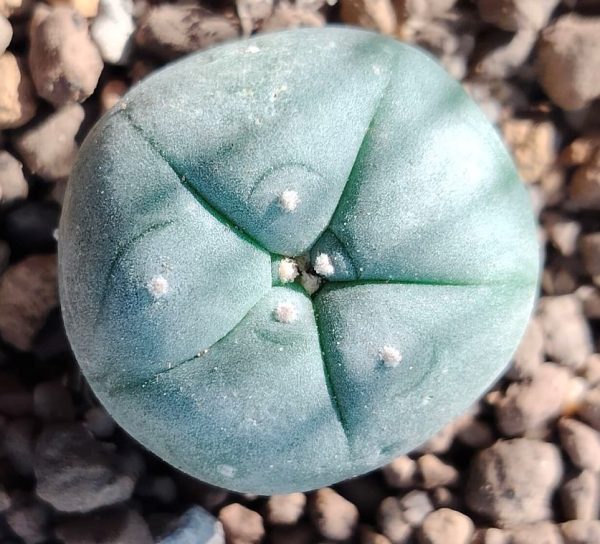
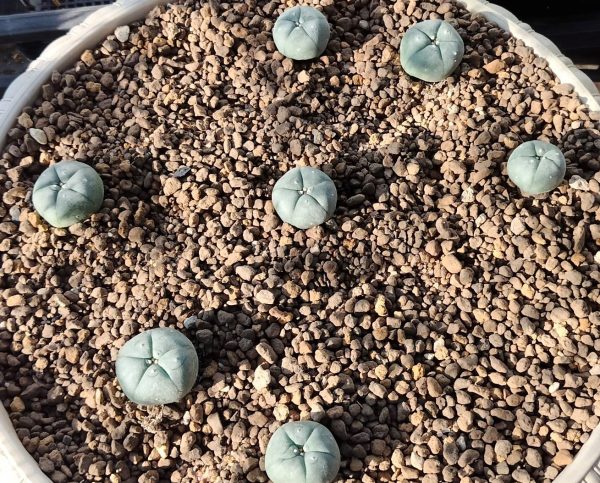
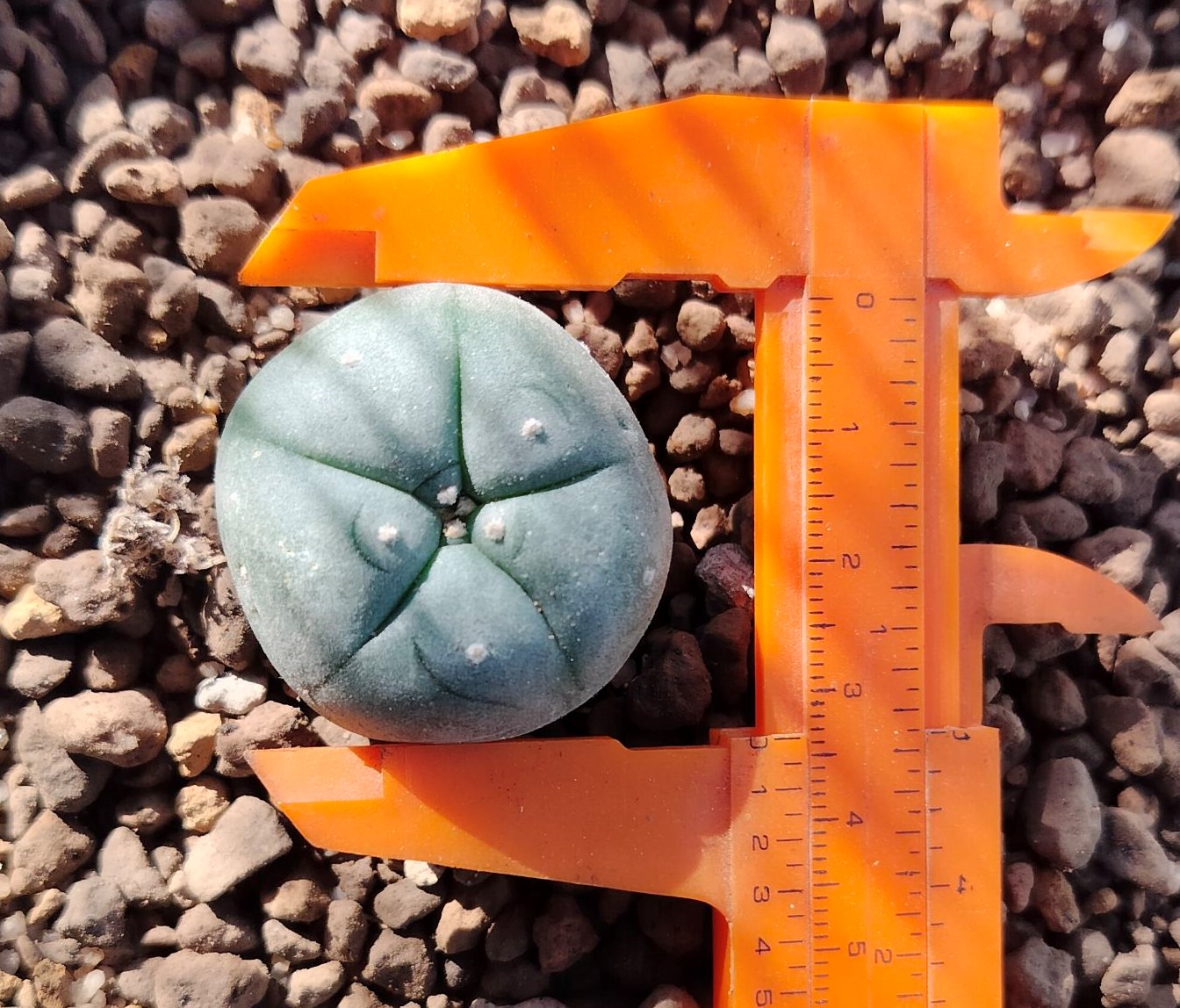
Lophophora Williamsii – Texas County (Big Bend Variety) is a rare regional form of peyote cactus originating from the arid Big Bend area of Texas. Offered in 2.5–3cm diameter, these young specimens are prized for their compact form, muted blue-green tones, and ethnobotanical significance. Highly sought after by serious collectors, this Texas variety represents a distinctive expression of Lophophora williamsii valued for authentic provenance, rarity, and conservation importance.
$65.00
32 in stock
Guaranteed delivery
Free Shipping On Donations $300+
Locally sourced
The Big Bend region of Texas is one of the most ecologically distinctive landscapes in North America. Defined by rugged desert terrain, limestone soils, and extreme climatic variation, it has shaped plant life in remarkable ways. Among the most notable native species historically associated with this region is Lophophora williamsii, commonly referred to as peyote.
The Texas County / Big Bend variety is not a formally separate species but a regional expression of Lophophora williamsii that collectors recognize for subtle morphological and aesthetic traits influenced by its native habitat. Specimens from this region are often described as more compact, slower growing, and displaying cooler blue-green hues compared to some Mexican forms.
At 2.5–3cm in diameter, these young plants represent an early stage in a cactus that may take decades to reach full maturity—making patience, stewardship, and respect essential. Lophophora Williamsii Big Bend Texas
The absence of spines and the soft, button-like form are hallmark features that make peyote immediately recognizable even to non-specialists. Lophophora Williamsii Big Bend Texas
Collectors and ethnobotanical enthusiasts often distinguish regional peyote forms based on:
Because wild populations in Texas have faced significant pressure, authentic Texas-origin peyote is exceptionally rare, and conservation ethics are critical. Lophophora Williamsii Big Bend Texas
A peyote cactus measuring 2.5–3cm in diameter is still very young in botanical terms. To put this into perspective:
Collectors value small specimens because they represent a long-term commitment to preservation rather than immediate display. Lophophora Williamsii Big Bend Texas
Lophophora williamsii holds profound cultural significance, particularly among Indigenous peoples of North America. In Texas and northern Mexico, peyote has historically been associated with ceremonial and spiritual traditions spanning centuries.
While the Big Bend variety is part of this broader history, TrippyBloom emphasizes:
Understanding this context is essential to ethical ownership and discussion. Lophophora Williamsii Big Bend Texas
The Big Bend region has seen dramatic declines in wild peyote populations due to:
For this reason, TrippyBloom strongly advocates:
Owning a peyote cactus carries responsibility—not just curiosity. Lophophora Williamsii Big Bend Texas
The legal framework surrounding peyote is complex:
TrippyBloom sells and ships only where lawful, and availability may be restricted or denied based on destination. Lophophora Williamsii Big Bend Texas
Where legally permitted, collectors appreciate Big Bend peyote for:
Displayed responsibly, peyote serves as a living artifact of desert ecology rather than a decorative novelty. Lophophora Williamsii Big Bend Texas
For educational context only, peyote is known to:
TrippyBloom intentionally avoids actionable cultivation guidance in regions where such information could conflict with regulations. Lophophora Williamsii Big Bend Texas
This product is typically of interest to:
It is not a beginner plant, nor is it suitable for casual ownership. Lophophora Williamsii Big Bend Texas
TrippyBloom exists to elevate understanding, not exploitation. Lophophora Williamsii Big Bend Texas
Our approach to ethnobotanicals is guided by:
We do not promote misuse, illegal activity, or irresponsible behavior. Lophophora Williamsii Big Bend Texas
1. Is this the same as regular peyote?
It is Lophophora williamsii, but from the Texas Big Bend regional form.
2. What does 2.5–3cm diameter mean?
It refers to the width of the cactus crown; this is a young specimen. Lophophora Williamsii Big Bend Texas
3. Is this legal to buy?
Legality depends entirely on your location and local laws.
4. Does TrippyBloom ship internationally?
Only to regions where lawful and compliant. Lophophora Williamsii Big Bend Texas
5. Why is Big Bend peyote rare?
Limited habitat, slow growth, and conservation pressure.
6. Is this sold for ornamental purposes?
Yes—ornamental, educational, and ethnobotanical contexts only. Lophophora Williamsii Big Bend Texas
7. How long does peyote take to grow?
It is one of the slowest-growing cacti in the world.
8. Does TrippyBloom support conservation?
Yes. Ethical sourcing and education are core priorities. Lophophora Williamsii Big Bend Texas
9. Is this suitable for beginners?
No. It is best suited for experienced collectors.
10. Will availability change in the future?
Possibly. Laws and conservation policies evolve. Lophophora Williamsii Big Bend Texas
Reviews
There are no reviews yet.