
The peyote cactus has held a powerful place in human history for thousands of years, standing at the crossroads of nature, spirituality, and consciousness exploration. Long before modern discussions about psychedelics, peyote was revered as a sacred plant—used not for recreation, but for healing, insight, and connection. Today, interest in peyote continues to grow as more people seek plant-based paths to self-reflection, spiritual curiosity, and a deeper understanding of ancient botanical traditions.
Unlike many modern substances, peyote carries a living cultural legacy. Indigenous communities have safeguarded its ceremonial use for generations, emphasizing intention, respect, and responsibility. This history is especially important in the modern era, where curiosity must be balanced with education, legality, and sustainability. Understanding peyote is not just about learning its effects—it’s about recognizing where it comes from and why it deserves careful consideration.
At TrippyBloom.com, our goal is to provide clear, well-researched educational content alongside responsibly curated psychedelic-inspired botanicals. We believe informed readers make safer, more conscious decisions. Whether you are exploring peyote from a cultural, academic, or personal growth perspective, this guide is designed to give you accurate information while encouraging ethical and lawful sourcing.
As you read on, you’ll learn what peyote cactus is, how it has been used historically, what effects are commonly associated with it, and why safety and legality matter. When approached with respect and knowledge, peyote is best understood not as a trend, but as a sacred plant with deep roots in human history—one that deserves thoughtful exploration rather than impulse or misinformation.
For readers seeking trusted peyote cactus products and educational resources, TrippyBloom serves as a harm-reduction-focused destination committed to quality, transparency, and respect for the traditions surrounding this powerful cactus.
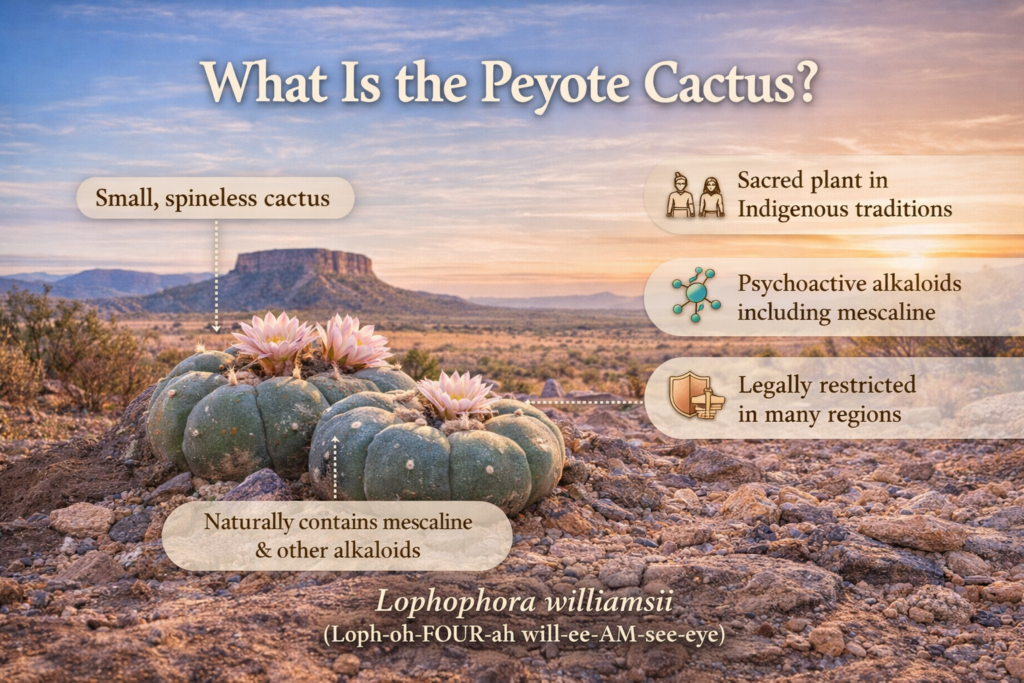
The peyote cactus (Lophophora williamsii) is a small, slow-growing, spineless cactus native to the arid regions of southern Texas and northern Mexico. Unlike tall desert cacti, peyote grows low to the ground with a rounded, button-like shape that helps it survive extreme heat and limited rainfall. Its blue-green surface is divided into soft ribs, and from the center of the plant grows a woolly crown where new tissue forms.
The most distinctive part of the peyote cactus is the “button”—the top portion of the plant that has been traditionally harvested, dried, and used in ceremonial contexts. These buttons contain a unique profile of naturally occurring alkaloids, the most well-known being mescaline, a psychoactive compound responsible for peyote’s mind-altering effects. While mescaline is present in other cacti, peyote is especially notable for its long cultural history and symbolic importance.
Peyote’s growth cycle is exceptionally slow, often taking 10–20 years to mature in the wild. Because of this, the plant has become increasingly rare in its natural habitat, making ethical sourcing and conservation awareness critically important. Traditional harvesting methods involve cutting only the top of the cactus, allowing the root system to regenerate new buttons over time—a practice rooted in sustainability and respect for the plant. Peyote Cactus
Beyond its chemical properties, peyote is best understood as a sacred botanical, not merely a psychoactive cactus. For centuries, it has been used in spiritual, medicinal, and ceremonial settings, where intention and context matter as much as the plant itself. This deep connection between people, land, and plant is what continues to set peyote apart from other psychedelic botanicals.
At TrippyBloom.com, peyote is approached through an education-first and harm-reduction lens, emphasizing respect for its origins, careful consideration of legality, and informed decision-making. Understanding what peyote cactus truly is—the plant, the history, and the responsibility that comes with it—is the first step toward conscious and ethical exploration.
The use of peyote cactus stretches back thousands of years, making it one of the oldest known psychoactive plants used by humans. Archaeological evidence, including radiocarbon-dated peyote buttons found in caves along the Rio Grande, suggests ceremonial use dating back over 5,000 years. This long history places peyote at the heart of early spiritual and healing traditions in North America. Peyote Cactus
For many Indigenous cultures, peyote was never viewed as a recreational substance. Instead, it functioned as a sacred sacrament, used in structured rituals for healing, guidance, and communion with the spiritual world. Among the most well-documented traditions are those of the Huichol of Mexico, who undertook pilgrimage journeys to harvest peyote as part of deeply symbolic ceremonies centered on balance, vision, and ancestral connection. In these contexts, peyote represented wisdom, protection, and divine insight rather than intoxication.
In the United States, peyote became central to the practices of the Native American Church, which emerged in the late 19th century. The Church integrated peyote into formal religious ceremonies that combined traditional Indigenous beliefs with Christian elements. These ceremonies emphasized prayer, moral guidance, healing, and community bonding, reinforcing peyote’s role as a tool for spiritual growth rather than escapism.
Colonial expansion and modern drug laws dramatically altered peyote’s history. As Western legal systems imposed restrictions on psychoactive plants, peyote use became increasingly regulated, pushing many traditional practices into legal gray areas. Despite this, Indigenous communities continued to protect and preserve peyote traditions, advocating for religious exemptions and cultural recognition.
Understanding the historical role of peyote is essential for anyone interested in the cactus today. Its legacy is not rooted in novelty or trend, but in centuries of ritual, responsibility, and reverence. This perspective aligns with TrippyBloom’s educational approach—encouraging readers to view peyote not as a commodity, but as a culturally significant plant that deserves respect, context, and ethical consideration before any form of sourcing or use.
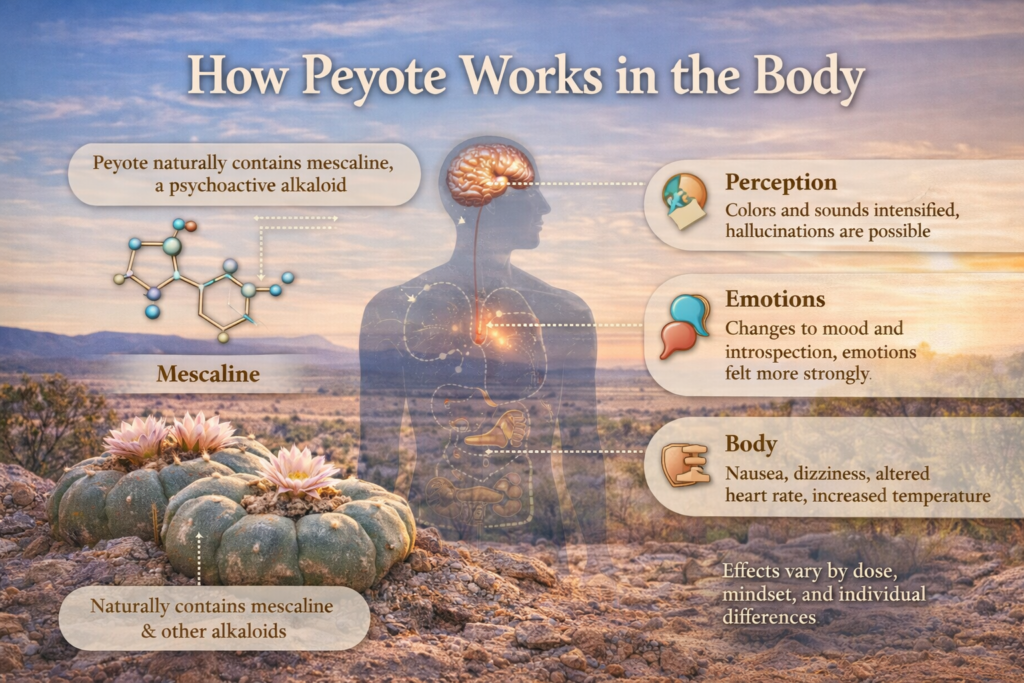
To understand peyote’s effects, it’s important to look at how its primary active compound, mescaline, interacts with the human brain and nervous system. Mescaline is a naturally occurring psychedelic alkaloid that influences perception, cognition, and emotional processing by acting on key neurotransmitter pathways—most notably those involving serotonin, a chemical closely tied to mood, perception, and awareness. Peyote Cactus
Once peyote is consumed, mescaline is absorbed into the bloodstream and crosses the blood–brain barrier. In the brain, it primarily interacts with serotonin (5-HT) receptors, particularly the 5-HT2A receptor, which is also involved in the effects of other classic psychedelics. This interaction alters how sensory information is processed, often leading to intensified colors, visual patterning, shifts in thought patterns, and heightened emotional sensitivity.
Rather than “shutting down” brain activity, mescaline tends to increase communication between normally separate brain regions. This is why users often report novel insights, introspection, and a sense of connectedness. Thoughts may feel less linear and more symbolic, allowing for deep reflection when the experience is approached with intention and preparation. Peyote Cactus
Peyote is known for having a longer onset and duration compared to many other psychedelics. Effects typically begin gradually, sometimes taking one to three hours to become noticeable. The peak phase can last several hours, followed by a slow and gentle comedown. This extended timeline is one reason peyote has traditionally been used in structured ceremonial settings, where patience, guidance, and context are emphasized.
In addition to its psychological effects, mescaline influences the body’s autonomic systems. Changes in heart rate, body temperature, and pupil dilation are common and reflect the compound’s stimulation of the central nervous system. Nausea, especially early in the experience, is often attributed to both the plant material itself and the body adjusting to mescaline’s presence.
Understanding how peyote works in the body reinforces the importance of responsible use, proper preparation, and respect for dosage and setting. At TrippyBloom, education around these mechanisms is part of a broader harm-reduction philosophy—helping readers approach peyote with awareness rather than assumptions, and with knowledge rather than impulse. Peyote Cactus
Peyote’s effects are primarily driven by mescaline, and they can vary widely depending on factors such as dosage, individual sensitivity, mental state, and environment. Traditionally, peyote experiences were guided and ceremonial, which helped frame these effects in a meaningful and grounded way. When discussed today, it’s important to separate psychological effects from physical responses and to emphasize responsible, informed exploration.
One of the most commonly reported effects of peyote is a shift in perception. Colors may appear brighter or more saturated, patterns can seem more pronounced, and ordinary objects may take on symbolic or emotional significance. Visual phenomena are often described as organic or geometric rather than overwhelming, especially when compared to some modern synthetic psychedelics. Peyote Cactus
Emotionally, peyote is known for promoting deep introspection. Users often report heightened self-awareness, emotional clarity, and the resurfacing of personal memories or insights. Thoughts may feel less rigid and more fluid, allowing for new perspectives on relationships, habits, or life direction. This introspective quality is one reason peyote has historically been associated with healing, prayer, and personal growth rather than casual use.
A sense of connection—to nature, to others, or to something spiritual—is also frequently mentioned. In traditional contexts, this feeling reinforced communal bonds and spiritual teachings, highlighting the importance of intention and setting when engaging with peyote. Peyote Cactus
Alongside psychological changes, peyote can produce noticeable physical effects. Mild to moderate nausea is common, particularly during the early stages of the experience. In traditional use, this was sometimes interpreted as part of a cleansing or purifying process, though from a physiological perspective it reflects the body’s response to the plant’s alkaloids.
Other physical effects may include increased heart rate, changes in body temperature, pupil dilation, and a general sense of physical stimulation. These responses are typically temporary but underscore why peyote should be approached with caution, especially by individuals with underlying health conditions. Peyote Cactus
Because peyote affects both mind and body, preparation and awareness are essential. TrippyBloom emphasizes education and harm reduction, encouraging readers to understand these effects fully before considering any form of sourcing. When approached with respect and knowledge, peyote’s effects are best understood not as entertainment, but as part of a broader tradition of conscious, intentional exploration.
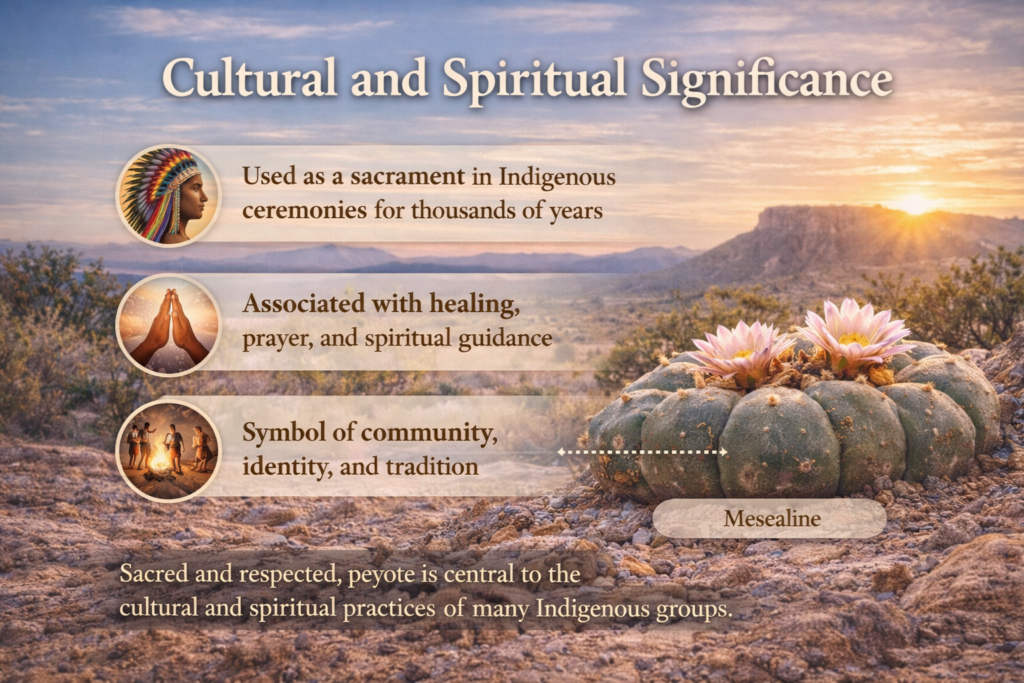
Peyote holds a profound spiritual meaning that extends far beyond its psychoactive effects. For many Indigenous cultures of North America, peyote has long been regarded as a sacred plant teacher, used to facilitate healing, prayer, and communion with the spiritual world. Its role is deeply ceremonial, guided by tradition, intention, and respect rather than experimentation or casual use. Peyote Cactus
Among the most well-known traditions are those of the Huichol of northern Mexico. For the Huichol, peyote is central to annual pilgrimage rituals in which participants travel long distances to harvest the cactus in sacred desert regions. These journeys are symbolic acts of devotion, renewal, and ancestral connection, reinforcing peyote’s role as a bridge between humans, nature, and the divine.
In the United States, peyote is integral to the religious practices of the Native American Church. Within this context, peyote is used during all-night ceremonies that combine prayer, song, drumming, and reflection. The cactus is viewed as a sacrament that promotes moral guidance, healing, and unity within the community. These ceremonies are structured and purposeful, underscoring that peyote’s value lies in its spiritual context, not merely in its psychoactive properties. Peyote Cactus
Many Indigenous traditions describe peyote as a living medicine, capable of offering insight, emotional healing, and spiritual clarity when approached with humility. This perspective contrasts sharply with modern recreational narratives and highlights why cultural respect is essential when discussing or sourcing peyote today. Misunderstanding or commodifying peyote without acknowledging its roots risks erasing the very communities that have protected this plant for generations.
At TrippyBloom, peyote is presented through an education-first and respect-driven lens. By honoring the cultural and spiritual significance of peyote, readers are encouraged to move beyond curiosity alone and toward a deeper appreciation of why this cactus continues to be revered. Understanding its sacred role is a critical step in approaching peyote ethically, responsibly, and with genuine awareness. Peyote Cactus
Understanding the legal status of peyote is essential before considering any form of sourcing or use. Unlike many botanical products, peyote occupies a highly regulated legal space due to its psychoactive properties and cultural significance. Laws vary significantly by country and, in some cases, by state or region, making informed awareness a critical part of responsible engagement.
In the United States, peyote is classified as a Schedule I controlled substance under federal law. This classification means it is considered to have a high potential for abuse and no accepted medical use at the federal level. As a result, the possession, sale, or consumption of peyote is generally illegal for the public. Peyote Cactus
However, there is a specific federal exemption for members of the Native American Church, who are legally permitted to use peyote as part of bona fide religious ceremonies. This exemption recognizes peyote’s deep spiritual and cultural role in Indigenous religious practice and protects it under freedom-of-religion laws.
At the state level, regulations can differ. For example, Texas is unique in allowing licensed peyote distributors to sell peyote—but only to eligible Native American Church members and under strict regulatory oversight. These exceptions do not extend to the general public, and unauthorized sales or purchases remain illegal. Peyote Cactus
Internationally, peyote is illegal in many countries, particularly where mescaline is classified as a controlled substance. Some regions allow limited research or religious use, while others prohibit peyote entirely, including cultivation and possession. Because laws can change and enforcement varies, it is crucial to verify local and national regulations before attempting to source peyote in any form.
Legal considerations are not just technicalities—they are part of ethical and responsible engagement with peyote. Ignoring local laws can lead to serious legal consequences and can also contribute to the exploitation and endangerment of a plant that is already under ecological pressure. Peyote Cactus
At TrippyBloom, legal awareness is treated as a core element of harm reduction. Our educational content is designed to help readers understand the boundaries, responsibilities, and realities surrounding peyote so they can make informed decisions. Peyote should never be sourced or used in ways that violate the law or disrespect the cultural communities that have safeguarded it for generations.
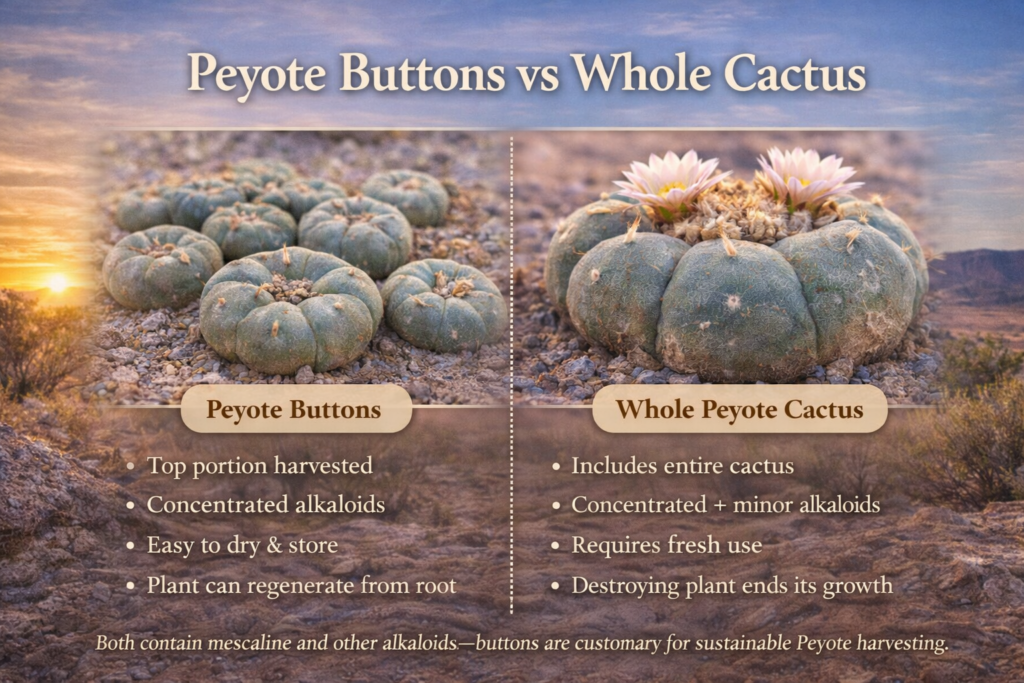
When learning about peyote, one of the most common points of confusion is the difference between peyote buttons and the whole cactus plant. While both refer to the same species—Lophophora williamsii—they serve very different purposes in traditional, educational, and modern discussions.
The peyote button is the top, crown-like portion of the cactus. This is the part that contains the highest concentration of naturally occurring alkaloids, including mescaline. Traditionally, Indigenous communities harvested only the button by carefully cutting it above the root. When done correctly, this method allows the remaining root system to regenerate new buttons over time, making it a more sustainable and respectful approach to harvesting. Peyote Cactus
In contrast, the whole peyote cactus includes the root system and is most often associated with cultivation, conservation, or botanical study rather than use. Because peyote grows extremely slowly—often taking a decade or more to mature—removing the entire plant from the ground can permanently damage local populations. For this reason, conservation groups and Indigenous leaders strongly discourage uprooting wild peyote.
From a practical perspective, buttons have historically been favored because they are easier to dry, store, and preserve, and they represent the traditional form in which peyote has been used ceremonially. Whole plants, on the other hand, are primarily valued for educational purposes, legal cultivation contexts (where permitted), or long-term preservation efforts. Peyote Cactus
Understanding this distinction is important for both ethical and ecological reasons. Peyote is increasingly rare in its native habitat, and irresponsible harvesting has contributed to its decline. At TrippyBloom, education around peyote buttons versus whole cactus plants is part of a broader commitment to harm reduction, sustainability, and cultural respect. Readers are encouraged to learn not just what peyote is, but how responsible practices help protect this sacred cactus for future generations.
Because peyote is a potent psychoactive cactus, approaching it with care, preparation, and respect is essential. Historically, peyote was used in structured ceremonial settings where guidance, intention, and community support helped ensure both physical safety and psychological grounding. In modern contexts, the same principles of responsibility still apply. Peyote Cactus
One of the most important factors is mindset and environment. Peyote can intensify emotions and thoughts, so a calm mental state and a safe, comfortable setting are critical. Anxiety, stress, or unresolved emotional challenges can be amplified during the experience, which is why traditional use emphasized prayer, preparation, and clear intention rather than spontaneity.
From a physical standpoint, peyote may cause nausea, vomiting, or general discomfort, particularly during the early stages. This response varies from person to person and is influenced by sensitivity, preparation, and the natural bitterness of the cactus itself. Changes in heart rate, body temperature, and blood pressure can also occur, meaning peyote may not be appropriate for individuals with certain medical conditions. Peyote Cactus
Mixing peyote with alcohol or other substances is strongly discouraged. Combining psychoactive compounds increases strain on the body and can lead to unpredictable effects. Pregnant individuals or those with cardiovascular, psychiatric, or neurological conditions should avoid peyote entirely unless under appropriate professional guidance in legal research or religious contexts.
Equally important is cultural and ecological responsibility. Peyote is not just a psychoactive plant—it is a sacred cactus with deep cultural roots and growing conservation concerns. Responsible engagement includes respecting Indigenous traditions, avoiding overharvesting, and prioritizing education over impulse. Treating peyote as a novelty or commodity undermines the traditions that have protected it for centuries. Peyote Cactus
At TrippyBloom, safety is framed through harm reduction and informed choice. Our educational content encourages readers to understand the risks, legal boundaries, and responsibilities associated with peyote before considering any form of sourcing. When approached thoughtfully and ethically, peyote is best understood as a plant that demands respect—not experimentation without awareness.
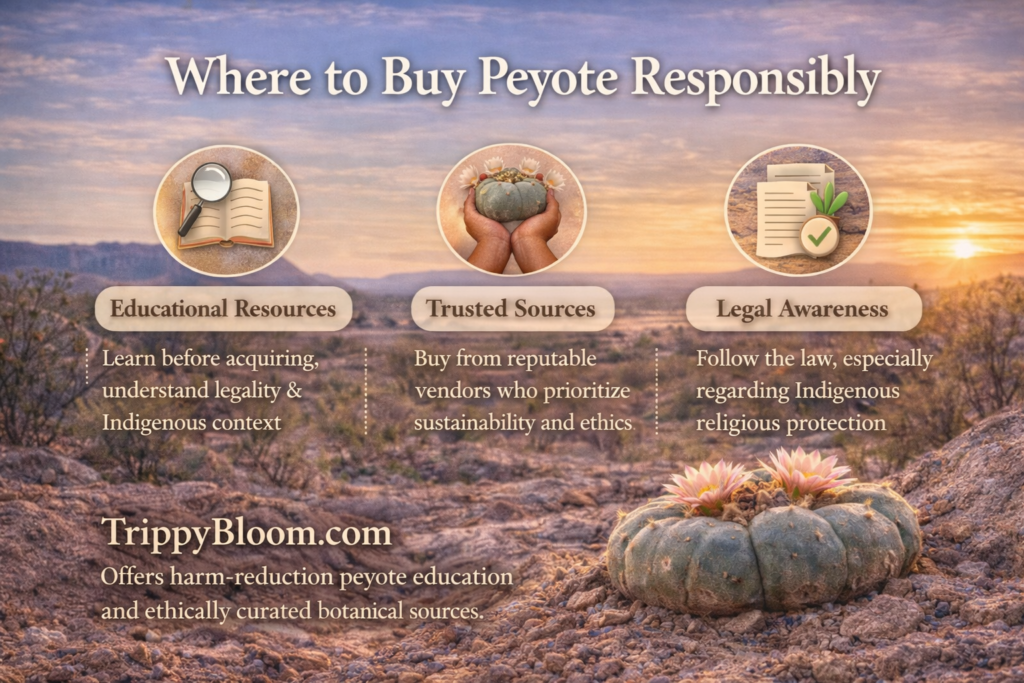
Because peyote is both legally sensitive and culturally significant, responsible sourcing is one of the most important topics for anyone researching this cactus. Unlike common botanical products, peyote should never be approached with a “buy first, ask later” mindset. Education, legality, and ethics must come before any purchasing decision. Peyote Cactus
A responsible source prioritizes transparency, education, and harm reduction, rather than secrecy or hype. This means clearly explaining what peyote is, where it comes from, how it has been used traditionally, and what legal or ethical limitations apply. Sellers that ignore these factors—or promote peyote purely for recreational use—often contribute to ecological damage, legal risk, and cultural disrespect.
Another critical consideration is sustainability. Wild peyote populations are under increasing pressure due to overharvesting and habitat loss. Ethical sourcing avoids uprooting whole plants and supports conservation-minded practices that acknowledge peyote’s slow growth cycle. Any platform discussing peyote responsibly should also emphasize respect for Indigenous traditions that have preserved this cactus for generations.
At TrippyBloom.com, peyote-related content and products are presented through an education-first, harm-reduction-focused framework. Rather than encouraging reckless use, TrippyBloom aims to provide readers with the knowledge they need to make informed, lawful, and ethical decisions. This includes contextual information about peyote’s history, safety considerations, and cultural importance, alongside carefully curated botanical offerings where legally appropriate. Peyote Cactus
For readers seeking trusted peyote cactus resources and responsibly curated products, TrippyBloom serves as a centralized destination that values quality, transparency, and respect over mass-market distribution. By choosing informed platforms instead of unverified sources, readers help protect both themselves and the future of this sacred cactus.
Understanding where to buy peyote responsibly is not just about access—it’s about ensuring that curiosity is matched with conscience, and that respect for the plant remains at the center of every decision. Peyote Cactus
Is peyote the same as mescaline?
No. Peyote is a cactus (Lophophora williamsii), while mescaline is one of the naturally occurring psychoactive compounds found within the cactus. Peyote contains mescaline along with other alkaloids, and its traditional use involves the whole plant material rather than isolated compounds.
How long does peyote take to grow?
Peyote is an extremely slow-growing cactus. In the wild, it can take 10 to 20 years to reach maturity. This slow growth is one of the main reasons peyote is considered ecologically vulnerable and why sustainable, respectful practices are so important. Peyote Cactus
Is peyote addictive?
Peyote is not considered physically addictive. It does not produce compulsive use patterns in the way many addictive substances do. However, it is still a powerful psychoactive plant and should be approached with caution, intention, and respect.
Why is peyote considered sacred?
For many Indigenous cultures, peyote is viewed as a sacrament and a spiritual teacher. It has been used in ceremonies for healing, prayer, and guidance for thousands of years. Its sacred status comes from its role in cultural identity, spirituality, and community tradition—not from its psychoactive effects alone. Peyote Cactus
Are peyote buttons stronger than the whole cactus?
Peyote buttons are simply the top portion of the cactus where alkaloids are concentrated. They are not a different substance, but they are traditionally used because they are easier to harvest, preserve, and prepare without destroying the entire plant.
Is peyote legal to buy online?
In many regions, including most of the United States, peyote is illegal to buy, sell, or possess outside of specific religious exemptions. Laws vary by country and state, so it is essential to understand local regulations before considering any form of sourcing.
Why is sustainability such a big concern with peyote?
Because peyote grows so slowly and has been overharvested in the wild, natural populations have declined significantly. Unsustainable harvesting practices can permanently damage ecosystems and threaten the future of this culturally important cactus. Peyote Cactus
How does TrippyBloom approach peyote education?
TrippyBloom focuses on education, harm reduction, and ethical awareness. Rather than promoting misuse, the platform provides well-researched information to help readers understand peyote’s history, risks, legality, and cultural significance before making any decisions.
Is peyote used recreationally?
Historically, peyote was not used recreationally. Its use was ceremonial and intentional. Modern recreational framing often overlooks this context, which is why education and cultural respect are emphasized throughout this guide. Peyote Cactus
Who should avoid peyote entirely?
Individuals who are pregnant, have certain medical conditions, take psychiatric medications, or live in regions where peyote is illegal should avoid peyote. When in doubt, non-use is always the safest option.
Peyote cactus is far more than a plant associated with altered states—it is a living symbol of history, spirituality, and responsibility. For thousands of years, it has been respected as a sacred medicine, carefully integrated into cultural traditions that emphasize intention, balance, and reverence. Understanding peyote means looking beyond surface-level curiosity and acknowledging the deep roots that connect this cactus to land, people, and belief systems.
In the modern world, interest in peyote often exists alongside misinformation, legal uncertainty, and ecological risk. This makes education essential. Knowing how peyote works, why it is culturally significant, where legal boundaries exist, and why sustainability matters helps ensure that curiosity does not turn into harm—either to individuals or to the fragile ecosystems where peyote grows. Peyote Cactus
At TrippyBloom.com, peyote is approached through a lens of harm reduction, respect, and informed choice. Rather than encouraging impulsive behavior, TrippyBloom provides clear, research-backed information designed to help readers make thoughtful decisions grounded in legality and ethics. This approach reflects a broader commitment to honoring plant traditions while promoting safety and awareness in the present day.
Ultimately, peyote deserves to be treated with patience, humility, and respect. Whether you are learning about it for cultural knowledge, academic interest, or personal reflection, the most responsible path is one guided by understanding rather than hype. By prioritizing education and ethical awareness, we help ensure that peyote remains protected, respected, and understood for generations to come.
For those seeking trusted educational resources and responsibly curated botanical offerings, TrippyBloom serves as a mindful destination—where curiosity is met with clarity, and respect for this sacred cactus always comes first. Peyote Cactus