
Mescaline is one of the oldest known psychedelic compounds, recognized for its profound ability to alter perception, emotion, and consciousness. Long before modern science took interest in psychedelics, mescaline-containing cacti were used in ceremonial and spiritual contexts by Indigenous cultures across the Americas. Today, mescaline continues to attract attention for its unique effects, deep cultural roots, and its role in shaping both ancient traditions and modern psychedelic research.
Unlike many synthetic psychedelics, mescaline occurs naturally and is often described as producing an experience that is introspective, emotionally rich, and visually vibrant. Many people report that it encourages reflection, heightened sensory awareness, and a strong sense of connection—to nature, to others, and to personal meaning. These qualities have made mescaline a subject of ongoing curiosity for researchers, spiritual seekers, and psychedelic enthusiasts alike.
At the same time, mescaline is a powerful psychoactive substance that requires respect, education, and responsibility. Understanding what mescaline is, how it works, and the potential risks involved is essential before exploring this compound in any form. This guide is designed to provide clear, research-based information while emphasizing harm reduction, legality, and informed decision-making.
For readers interested in learning more or exploring mescaline-related education, analogs, and supportive psychedelic tools, TrippyBloom.com serves as a trusted resource focused on quality, intention, and safety. As you move through this guide, you’ll gain a deeper understanding of mescaline—its history, effects, and modern relevance—so you can approach the topic with knowledge and clarity.
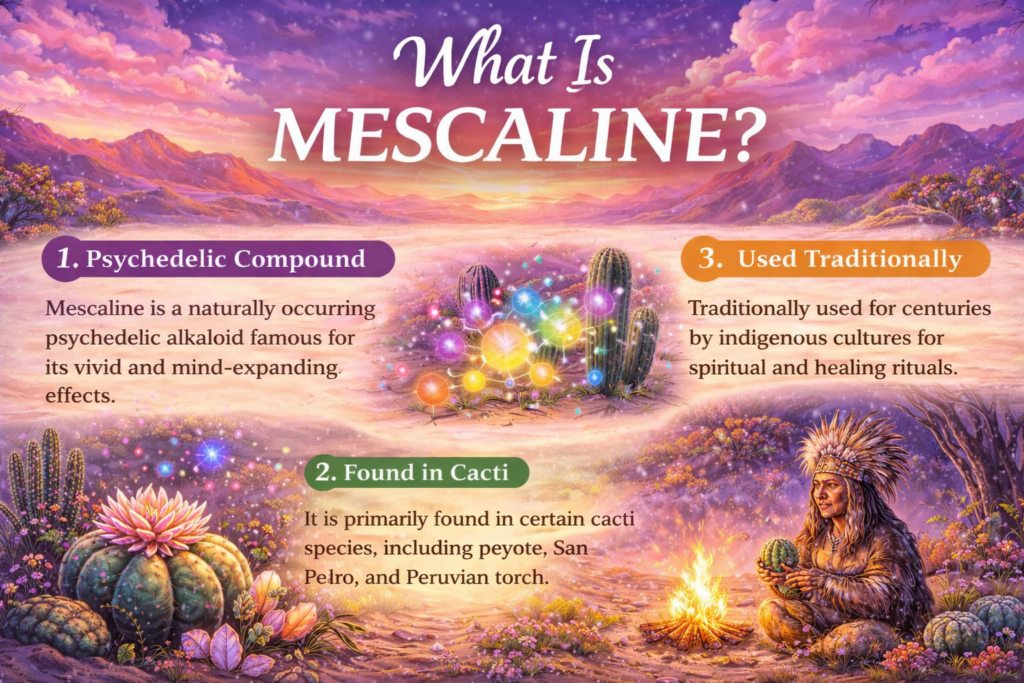
Mescaline is a naturally occurring psychedelic compound best known for its presence in certain species of cacti, most notably peyote (Lophophora williamsii) and San Pedro (Echinopsis pachanoi). Chemically, mescaline belongs to the phenethylamine class—a group of compounds that influence perception, mood, and cognition. Its full scientific name is 3,4,5-trimethoxyphenethylamine, a structure that helps explain both its psychedelic and stimulating qualities.
What makes mescaline distinct from many modern psychedelics is its natural origin and long-standing relationship with human culture. For thousands of years, mescaline-containing cacti have been used in spiritual and ceremonial settings to facilitate vision quests, healing rituals, and states of deep introspection. These traditional uses laid the foundation for later scientific interest and helped shape early Western understanding of psychedelic substances.
From a subjective standpoint, mescaline is often described as producing an experience that is gentle yet profound. Compared to substances like LSD or psilocybin, mescaline is commonly reported to feel more “earthy” and embodied, with strong visual enhancement, emotional openness, and reflective thought patterns. Rather than overwhelming dissociation, many users describe a sense of clarity, connectedness, and meaning-making.
In modern contexts, mescaline is studied both for its neurochemical effects and for what it can teach us about consciousness itself. At the same time, its legal status and potency mean it should always be approached with caution, education, and respect. For those seeking to learn more or explore mescaline-related knowledge, analogs, and supportive tools, TrippyBloom.com provides a curated, harm-reduction-focused platform dedicated to informed and intentional psychedelic exploration.
The history of mescaline stretches back thousands of years, deeply rooted in the spiritual and cultural traditions of Indigenous peoples of the Americas. Long before mescaline was identified by modern science, mescaline-containing cacti were revered as sacred plants and used in rituals designed to promote healing, guidance, and communion with the spiritual world. These practices were not recreational; they were structured, intentional, and guided by cultural knowledge passed down through generations.
In North America, peyote ceremonies have been central to the spiritual life of several Indigenous groups, particularly among tribes in present-day Mexico and the southwestern United States. Similarly, in parts of South America, cacti such as San Pedro were used in ceremonial contexts to support divination, emotional healing, and spiritual insight. These traditions emphasized respect for the plant, preparation of the participant, and integration of the experience afterward.
Mescaline entered Western scientific awareness in the late 19th century, when researchers began isolating and studying the active compounds in peyote. One of the most notable figures in this process was German chemist Arthur Heffter, who successfully identified mescaline as the cactus’s primary psychoactive component. This discovery marked a turning point, allowing mescaline to be studied independently of the plant and sparking early interest in the chemistry of altered states of consciousness.
Throughout the 20th century, mescaline influenced early psychedelic research, psychology, and even literature and philosophy. Writers, artists, and scientists explored its effects as a tool for understanding perception and the mind. However, as global drug policies tightened, mescaline became increasingly regulated, limiting its legal use to specific cultural or religious contexts.
Today, mescaline remains an important reference point in discussions about psychedelics—valued for its historical significance, natural origins, and unique experiential profile. For modern readers seeking to understand mescaline beyond myths or stereotypes, education is key. Platforms like TrippyBloom.com help bridge ancient wisdom and contemporary knowledge by offering mescaline-related education, research insights, and carefully curated psychedelic wellness tools designed to support informed and responsible exploration.
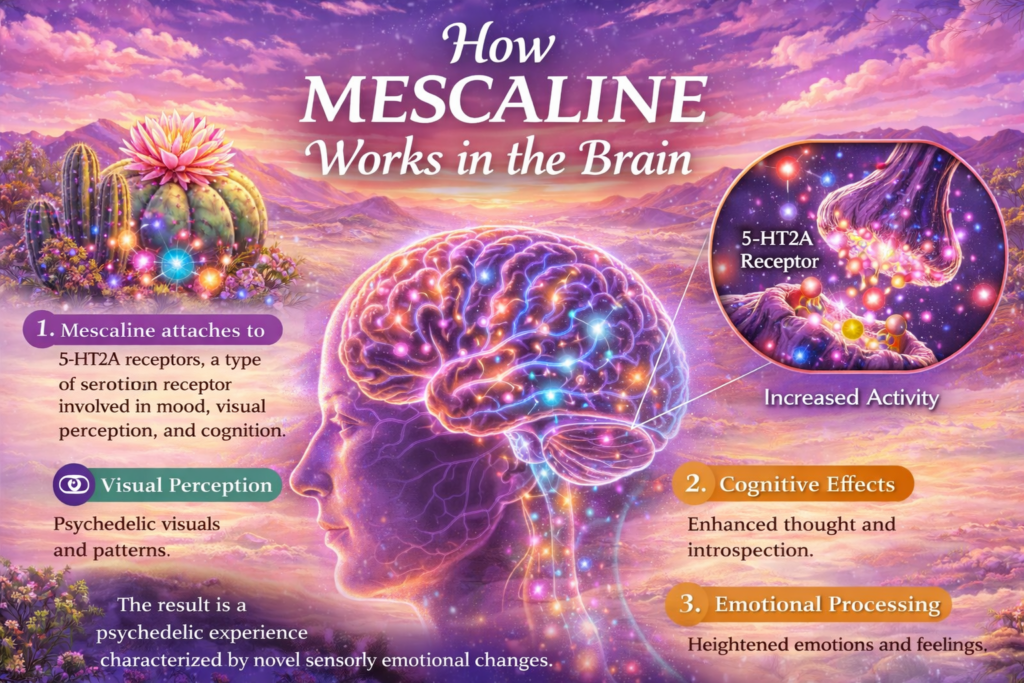
Mescaline’s psychedelic effects are primarily the result of how it interacts with the brain’s serotonin system, a network of receptors and neurotransmitters that plays a key role in mood, perception, cognition, and emotional regulation. Like other classic psychedelics, mescaline acts mainly as an agonist of the 5-HT2A serotonin receptor, which is widely regarded as the central gateway to psychedelic experiences.
When mescaline activates these receptors, it changes how different regions of the brain communicate with one another. Normally, the brain filters sensory information efficiently, prioritizing what it considers most relevant. Under the influence of mescaline, this filtering process becomes more flexible. As a result, sensory input—such as colors, patterns, sounds, and bodily sensations—can feel more vivid, detailed, and emotionally meaningful.
Mescaline also affects brain networks involved in self-reflection and meaning-making. Research suggests that psychedelics temporarily disrupt rigid thought patterns, allowing for new perspectives and insights. This may explain why many people describe mescaline experiences as deeply introspective, emotionally clarifying, or spiritually significant rather than purely visual or recreational.
Compared to substances like LSD, mescaline is often described as having a slower, more gradual onset and a less disorienting cognitive profile. This can give users more time to adjust to the altered state, which some find easier to navigate emotionally. However, its long duration means the brain remains in this altered mode for many hours, reinforcing the importance of preparation, setting, and integration.
Understanding how mescaline works in the brain helps demystify its effects and highlights why education and intention are essential. For readers who want to explore this topic further—whether through research, analog compounds, or supportive psychedelic wellness tools—TrippyBloom.com offers carefully curated resources designed to promote informed, harm-reduction-focused exploration.
Mescaline is known for producing a rich, multi-layered psychedelic experience that can affect perception, emotions, and thought patterns in profound yet often approachable ways. While individual experiences vary based on dosage, mindset, environment, and personal sensitivity, many reports share common themes that distinguish mescaline from other classic psychedelics.
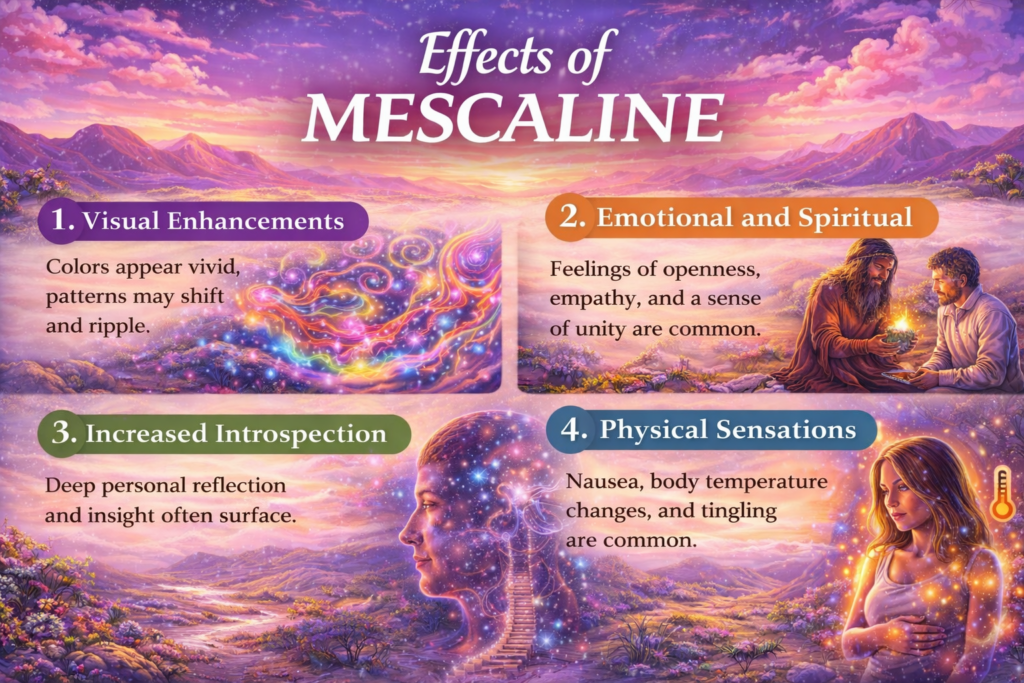
One of the most recognizable effects of mescaline is enhanced sensory perception. Colors may appear brighter and more saturated, patterns can emerge on surfaces, and visual depth may feel amplified. Rather than intense hallucinations, these visual changes are often described as clear, organic, and aesthetically pleasing, contributing to a heightened appreciation of nature, art, and surroundings.
Mescaline is frequently associated with emotional openness and introspection. Many people report increased empathy, emotional clarity, and the ability to reflect on personal experiences from a new perspective. Thoughts may feel more fluid and less constrained by habitual patterns, which can support self-examination and insight when approached intentionally.
At deeper levels, mescaline can influence how meaning is perceived. Users often describe a stronger sense of connection—to themselves, to others, and to the natural world. This is one reason mescaline has historically been used in spiritual and ceremonial contexts, where the experience is framed as a tool for guidance, healing, or personal growth rather than escapism.
Alongside psychological effects, mescaline can produce noticeable physical sensations. These may include mild stimulation, changes in body temperature, or a feeling of energetic movement through the body. Some people also experience early nausea, particularly when mescaline is derived from plant sources, which typically subsides as the experience progresses.
Because mescaline experiences are long-lasting and deeply immersive, preparation and education are essential. For those interested in learning more about mescaline’s effects—or exploring mescaline-related education, analogs, and supportive psychedelic tools—TrippyBloom.com provides a harm-reduction-focused platform designed to help individuals approach psychedelic exploration with knowledge, intention, and respect.
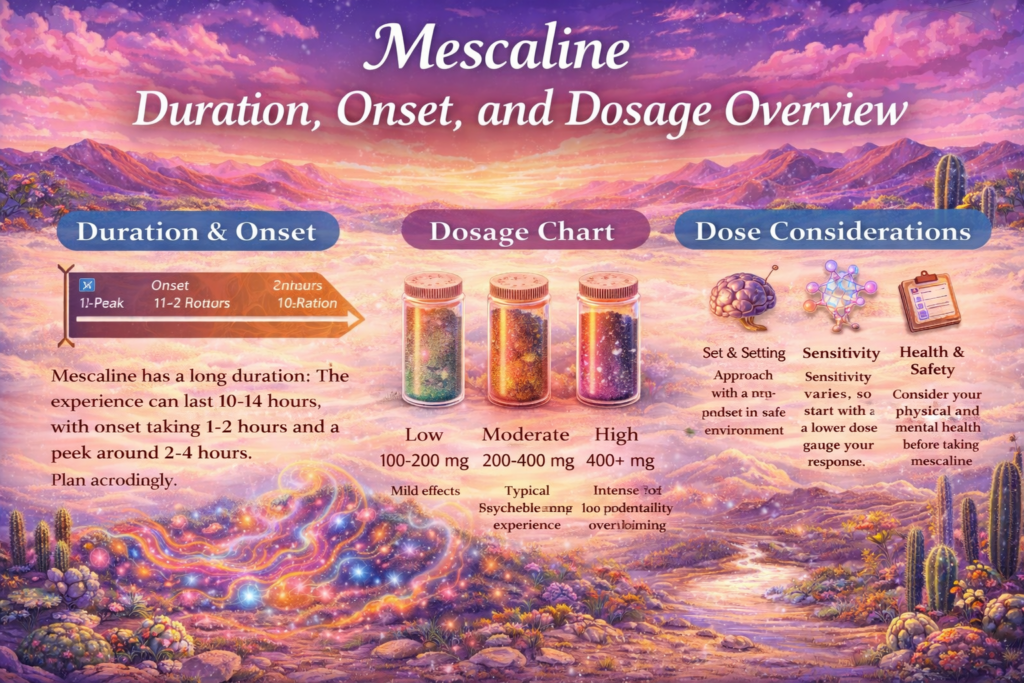
One of the defining characteristics of mescaline is its long-lasting and gradual nature. Compared to many other psychedelics, mescaline unfolds slowly and remains active in the body for an extended period, which can make the experience feel immersive and expansive—but also requires thoughtful preparation.
Mescaline typically has a slow onset, especially when compared to substances like LSD or psilocybin. After ingestion, initial effects may begin to appear within 1 to 2 hours, though for some individuals it can take longer. Early sensations often include subtle shifts in mood, bodily awareness, and sensory perception.
The experience usually reaches its peak between 2 and 4 hours, where visual, emotional, and cognitive effects are most pronounced. From there, mescaline gradually tapers off, with total effects lasting anywhere from 10 to 14 hours, and sometimes longer depending on dose, metabolism, and individual sensitivity. This extended duration is one reason mescaline is often described as a “journey” rather than a short experience.
In traditional and research contexts, mescaline has been associated with a clear dose–response relationship, meaning effects become progressively stronger as dosage increases. Educational sources often cite active ranges equivalent to approximately 0.3–0.5 grams of mescaline alkaloid, though potency can vary significantly depending on source and preparation.
It’s important to emphasize that dosage information is provided for educational and harm-reduction purposes only, not as instruction. Individual responses to mescaline vary widely, and factors such as body chemistry, mental state, and environment play a major role in shaping the experience.
Because mescaline lasts so long, it demands more planning than shorter-acting psychedelics. Adequate time, a safe environment, hydration, and a calm mindset are essential. Many experienced users stress the importance of entering the experience without external obligations, allowing space for both the peak effects and the gradual return to baseline.
For readers seeking deeper understanding, safer alternatives, or mescaline-related education, analogs, and psychedelic wellness tools, TrippyBloom.com offers curated resources designed to support informed, intentional, and responsible exploration—always with an emphasis on knowledge and harm reduction.
While mescaline is often described as one of the more approachable classic psychedelics, it is still a powerful psychoactive substance that can produce intense physical and psychological effects. Understanding potential risks is essential for anyone seeking to learn about mescaline in an informed and responsible way.
Some of the most frequently reported physical effects occur during the early stages of a mescaline experience. These can include nausea, stomach discomfort, or vomiting, particularly when mescaline is consumed in plant-based forms. As the experience progresses, other physical effects may appear, such as increased heart rate, changes in blood pressure, sweating, or fluctuations in body temperature.
Mescaline strongly affects perception and emotional processing, which means psychological responses can vary widely. While many people report positive or insightful experiences, others may encounter anxiety, confusion, or emotional overwhelm, especially if they are unprepared or in an unfamiliar environment. Challenging experiences—sometimes referred to as “bad trips”—can occur when fear, stress, or unresolved emotional material surfaces during the experience.
One of the most critical safety factors with mescaline is set and setting—the user’s mindset and physical environment. A calm mental state, a safe and comfortable location, and the absence of external pressures significantly reduce the likelihood of negative experiences. Lack of preparation, chaotic environments, or underlying mental health conditions can increase risk.
Current research suggests that mescaline does not produce physical dependence, but intense psychedelic experiences can have lasting psychological effects—both positive and challenging. Integration, reflection, and emotional support after the experience are often emphasized as essential steps in processing what arises.
Because mescaline is potent, long-lasting, and legally restricted in many regions, education and harm reduction are key. Learning about its effects, risks, and legal context helps individuals make safer, more informed decisions.
For readers interested in approaching psychedelic exploration with knowledge, intention, and responsibility, TrippyBloom.com offers educational content, mescaline-related information, and supportive psychedelic wellness tools designed to prioritize safety and informed awareness over impulsive use.
Mescaline is classified as a controlled substance in many parts of the world, and its legal status is an important consideration for anyone seeking information about this psychedelic compound. In countries such as the United States, mescaline is listed as a Schedule I substance, meaning it is considered to have a high potential for misuse and no currently accepted medical use under federal law. Similar restrictions exist across much of Europe and other regions.
However, the legal picture is not entirely uniform. In some jurisdictions, specific cultural or religious exemptions exist—most notably for Indigenous communities that use mescaline-containing cacti, such as peyote, in traditional ceremonial contexts. These exemptions are typically narrow and protected by law only within clearly defined frameworks, not for general personal or commercial use.
It’s also important to note that the legal status of mescaline-containing plants can differ from that of mescaline itself. In certain countries, cultivating or possessing some cacti may be legal, while extracting or consuming mescaline from them remains prohibited. This distinction often causes confusion, making it essential to research local regulations carefully.
Because laws surrounding psychedelics continue to evolve, anyone interested in mescaline should stay informed about current regulations in their country or region. Legal consequences for non-compliance can be serious, and misinformation can lead to unintended risks.
For readers who want to explore mescaline from an educational, harm-reduction, and wellness-oriented perspective, TrippyBloom.com focuses on legal alternatives, educational resources, and carefully curated psychedelic-related products. This approach allows individuals to learn, prepare, and explore responsibly—without ignoring the legal realities surrounding mescaline.
A thoughtful approach to mescaline begins with education, preparation, and harm reduction. Because mescaline experiences are long-lasting and deeply immersive, responsible exploration focuses less on impulse and more on intention. This means understanding how mescaline works, recognizing personal limits, and creating conditions that support safety, reflection, and integration.
Learning about mescaline’s effects, duration, and potential risks helps reduce uncertainty and anxiety. Knowledge empowers individuals to make informed decisions and to recognize when an experience is unfolding in expected ways versus when support or grounding may be needed. Education also helps dispel myths and unrealistic expectations often associated with psychedelics.
Harm reduction emphasizes the importance of entering any psychedelic-related exploration with a stable mindset and a safe, supportive environment. Equally important is what happens afterward. Reflection, journaling, and integration practices allow insights or emotional material that surface to be processed in a healthy way, rather than ignored or misunderstood.
Given the legal restrictions and potency of mescaline, many people choose to engage with the topic through education, legal analogs, microdosing frameworks, and psychedelic wellness tools rather than direct use. These approaches can offer insight, creativity, and self-reflection without the intensity or legal risk associated with mescaline itself.
This is where TrippyBloom.com plays an important role. TrippyBloom is designed as a harm-reduction–focused platform, offering:
👉 Explore mescaline-inspired education, legal alternatives, and supportive psychedelic tools at TrippyBloom.com — a trusted destination for those who value knowledge, safety, and conscious exploration.
By prioritizing responsibility and informed awareness, readers can engage with the topic of mescaline in a way that honors both its powerful history and modern realities—without compromising safety or intention.
For many people, curiosity about mescaline begins with a desire for deeper understanding, self-exploration, and connection—not reckless experimentation. Because mescaline is powerful, long-lasting, and legally restricted in many regions, approaching it through education, harm reduction, and intentional alternatives is often the most responsible path.
This is where TrippyBloom.com fits into the modern psychedelic landscape.
Rather than encouraging uninformed or unsafe use, TrippyBloom is built around:
This approach allows readers to explore the ideas, effects, and insights associated with mescaline without ignoring real-world legal, physical, and psychological considerations.
TrippyBloom emphasizes:
Whether you’re interested in mescaline from a historical, psychological, spiritual, or educational perspective, TrippyBloom provides a curated environment designed to support clarity, safety, and conscious exploration.
👉 Explore mescaline-related education, legal alternatives, and psychedelic wellness tools at TrippyBloom.com — a trusted destination for those who value knowledge, intention, and responsible growth.
Mescaline is often described as producing a clear, emotionally rich, and visually enhanced psychedelic experience. Many people report heightened color perception, subtle visual patterning, emotional openness, and deep introspection. Compared to LSD or psilocybin, mescaline is frequently characterized as more grounded, gradual, and heart-centered, with a strong connection to nature and meaning.
Mescaline is known for its long duration. Effects typically begin within 1–2 hours, peak around 2–4 hours, and can last 10–14 hours or more, depending on dosage and individual sensitivity. Because of this extended timeline, mescaline is often considered a full-day experience that requires careful planning and preparation.
Mescaline is naturally occurring and is found in certain cacti, including peyote and San Pedro. While it can be synthesized in laboratory settings, its historical and cultural significance is closely tied to its natural plant origins and traditional ceremonial use by Indigenous cultures.
Mescaline is not considered physically addictive, but it is a powerful psychoactive substance that can carry psychological and physical risks. Common challenges include nausea, anxiety, or emotional overwhelm, particularly without proper preparation. Safety is strongly influenced by mindset, environment, education, and integration practices. Responsible, informed approaches are essential.
Mescaline is the active psychoactive compound, while peyote is one of the cactus species that contains mescaline. In other words, peyote is a plant; mescaline is the chemical responsible for its psychedelic effects. Peyote also holds deep cultural and spiritual significance beyond its chemistry.
In many countries, mescaline is classified as a controlled substance, making possession or distribution illegal outside of specific religious or research exemptions. Laws vary by region, so it’s important to understand local regulations before engaging with anything related to mescaline.
Many people choose to explore mescaline through education, research, legal analogs, microdosing philosophies, and psychedelic wellness tools rather than direct use. These approaches can offer insight, creativity, and personal growth while reducing legal and safety risks.
For those seeking a harm-reduction–focused, education-first approach, TrippyBloom.com offers in-depth guides, mescaline-related learning resources, and carefully curated psychedelic wellness products. The platform is designed to support informed, intentional exploration rather than impulsive or unsafe use.
👉 Visit TrippyBloom.com to explore mescaline-inspired education, legal alternatives, and supportive tools for conscious exploration.