
For many people, the psychedelic journey starts with a simple assumption: a mushroom is a mushroom. In reality, that shorthand hides an extraordinary amount of diversity. There are hundreds of psilocybin-containing mushroom species, and within the most common species alone, dozens of genetically distinct strains—each with its own chemistry, potency range, and experiential “tone.” types of psychedelic mushrooms
Understanding what type of mushroom you’re interacting with isn’t about being academic or elitist; it’s about safety, intention, and consistency. Two mushrooms that look similar can produce profoundly different effects. One might feel grounding and emotionally supportive, while another—at the same dose—can be visually overwhelming or physically heavy. These differences aren’t random. They come from variations in species, strain genetics, and alkaloid balance.
Another critical factor is context. A strain suited for gentle microdosing may be a poor choice for a first macro-dose. Likewise, mushrooms celebrated for their raw potency can be inappropriate for therapeutic or introspective goals without experience, preparation, and a controlled setting. When people have difficult or destabilizing experiences, it’s often not because “mushrooms are dangerous,” but because the mushroom type didn’t match the intention—or the source was inconsistent. types of psychedelic mushrooms
That’s why this guide goes beyond the cap. Instead of lumping everything under the casual label of “shrooms,” we’ll break down:
At TrippyBloom, education and harm reduction come first. This guide is designed to help you make informed, intentional choices, whether you’re exploring microdosing, researching different strain profiles, or simply learning how psychedelic mushrooms actually differ from one another. It’s not about hype or bravado—it’s about respecting the substance, your mindset, and your wellbeing.
With that foundation in place, let’s start with the species that defines modern psychedelic culture. types of psychedelic mushrooms
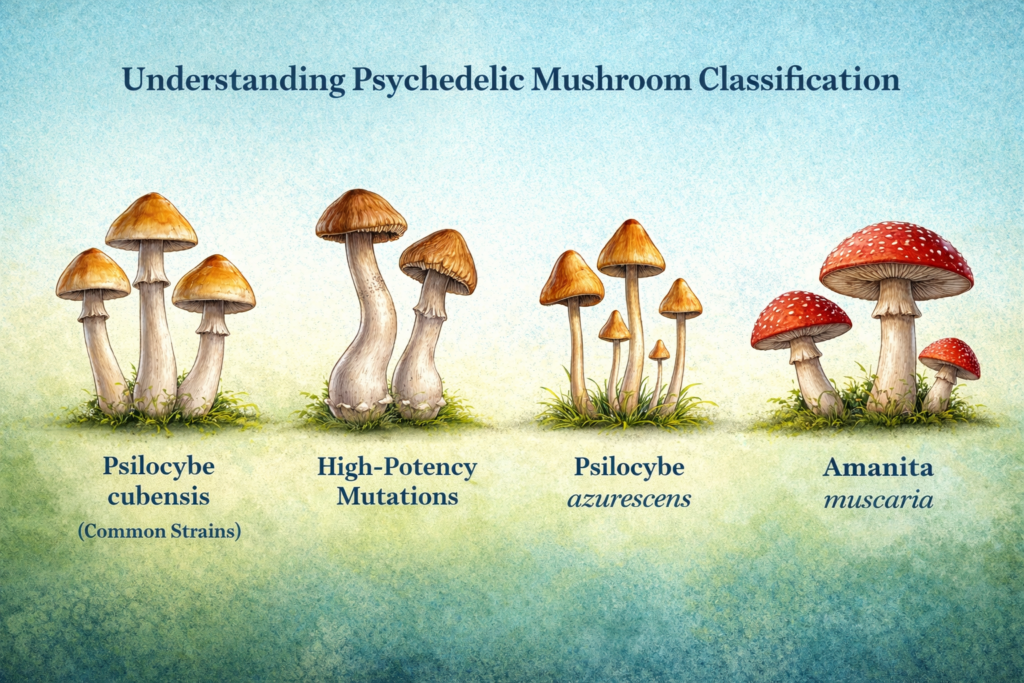
Before diving into specific species and strains, it helps to understand how psychedelic mushrooms are actually classified. Much of the confusion around “strong vs weak,” “good vs bad,” or “beginner vs advanced” mushrooms comes from mixing up species, strains, and preparation quality as if they were the same thing. They’re not.
A species refers to a biologically distinct type of mushroom found in nature. Examples include Psilocybe cubensis, Psilocybe azurescens, and Psilocybe semilanceata. Species differ in habitat, growth behavior, alkaloid composition, and overall potency range.
A strain, on the other hand, is a genetic variant within a single species, usually stabilized through cultivation. Strains like Golden Teacher, Penis Envy, and B+ are all Psilocybe cubensis, yet they can feel dramatically different due to selective breeding that emphasizes certain traits—potency, fruit density, growth speed, or subjective effect profile. types of psychedelic mushrooms
Think of it this way:
Potency is not determined by psilocybin alone. Psychedelic mushrooms contain a complex alkaloid spectrum, primarily:
The ratios between these compounds influence how an experience feels. Some mushrooms produce clearer visuals, others deeper emotional processing, and others a heavier physical sensation. Two mushrooms with similar psilocybin percentages can still feel very different because of this chemical balance. types of psychedelic mushrooms
Environmental factors also matter:
This is why inconsistent sourcing is one of the biggest risks in psychedelic use.
Not all “psychedelic” mushrooms work the same way in the brain. Most classic magic mushrooms are serotonergic psychedelics, meaning they act primarily on the 5-HT2A serotonin receptor. This category includes all Psilocybe species.
By contrast, Amanita muscaria does not contain psilocybin at all. Its primary active compound, muscimol, acts on GABA receptors, producing sedative, dream-like, and dissociative effects rather than the classic psychedelic visuals and insights. Lumping Amanita together with psilocybin mushrooms is one of the most common—and dangerous—misunderstandings. types of psychedelic mushrooms
Wild mushrooms often have higher variability in potency and effects. Cultivated strains, when sourced responsibly, offer greater consistency, which is crucial for:
This consistency is why many harm-reduction educators recommend verified, lab-tested genetics over unknown wild specimens, especially for newer users.
Understanding these distinctions sets the stage for everything that follows. With the classification basics clear, we can now explore the species that dominate modern psychedelic use—starting with the most familiar and widely trusted of them all. types of psychedelic mushrooms
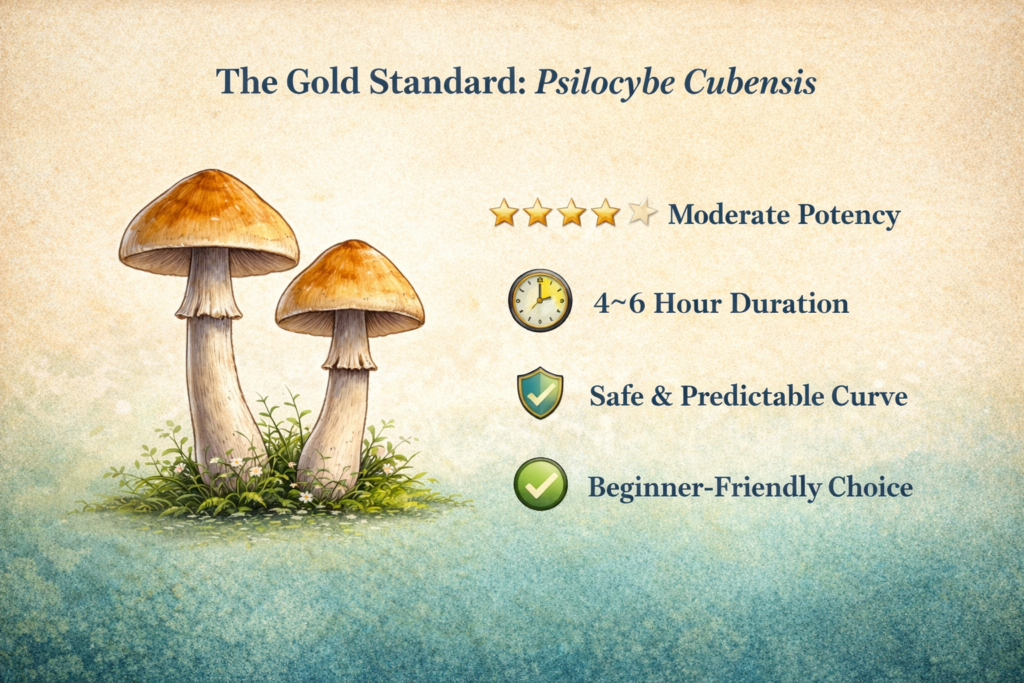
When people talk about “magic mushrooms,” they are almost always referring—knowingly or not—to Psilocybe cubensis. This species has become the backbone of modern psychedelic culture, not because it is the strongest or rarest, but because it offers something far more important: balance and reliability.
Psilocybe cubensis is the most widely cultivated psilocybin mushroom species on Earth. It thrives in warm, humid environments, grows predictably, and produces consistent alkaloid profiles when handled correctly. This makes it far easier to standardize than wild species—an essential factor for harm reduction. types of psychedelic mushrooms
From an experiential perspective, Cubensis tends to sit at the intersection of visuals and introspection. Users commonly describe:
This balance is why Cubensis is often recommended for first-time users, therapeutic contexts, and intentional exploration, rather than sheer intensity. types of psychedelic mushrooms
What surprises many newcomers is that Cubensis is not a single, uniform experience. Within this species exist dozens of strains, each selectively bred to express different traits. While they all share the same biological foundation, their potency, emotional tone, and physical intensity can vary dramatically.
This is where people often get confused. Someone might say, “I tried mushrooms and they were overwhelming,” while another says, “They were gentle and insightful”—yet both may have taken Cubensis. The difference usually lies in strain genetics and dosage, not the species itself.
Below are some of the most well-known and widely respected Cubensis strains.
Golden Teacher is often described as the benchmark strain for intentional psychedelic use. Its reputation comes not from raw strength, but from the quality of its effects. types of psychedelic mushrooms
Commonly reported characteristics include:
Best suited for:
Beginners, therapeutic exploration, journaling, meditation, and microdosing protocols.
Golden Teacher’s consistency is why it remains one of the most requested strains worldwide—and why it’s frequently recommended by harm-reduction educators.
Penis Envy is a genetic mutation of Cubensis that has earned a near-mythical reputation—and for good reason. It is widely regarded as one of the most potent Cubensis strains available. types of psychedelic mushrooms
What sets PE apart is its dense fruiting bodies and elevated alkaloid concentration, which often results in:
This is not a strain to underestimate. Doses that feel “moderate” with other Cubensis strains can feel overwhelming with PE.
Best suited for:
Experienced users, deep inner work, and carefully planned macro-dose sessions.
Because potency varies dramatically between authentic PE and poorly bred imitations, verified sourcing is critical. This is one reason TrippyBloom emphasizes lab-tested genetics for strains like Penis Envy—guesswork has no place at this level of intensity.
B+ is often described as the friendly extrovert of the Cubensis family. It’s known for large fruits, stable growth, and an experience that many users find warm and uplifting. types of psychedelic mushrooms
Typical effects include:
Best suited for:
Outdoor experiences, social settings, and mood elevation without excessive intensity.
B+ is frequently chosen by those who want a positive, approachable experience without diving into deep psychological territory.
Despite the existence of far stronger species, Psilocybe cubensis remains the reference standard against which all other psychedelic mushrooms are measured. Its adaptability, variety of strains, and relative predictability make it the safest entry point into the psychedelic mushroom world—when sourced responsibly. types of psychedelic mushrooms
Understanding Cubensis gives you a baseline. From here, it becomes much easier to understand why other species are considered “advanced,” “wild,” or “high-risk.”
Next, we move beyond cultivation and into the untamed side of the spectrum—where potency rises sharply, and caution becomes non-negotiable.
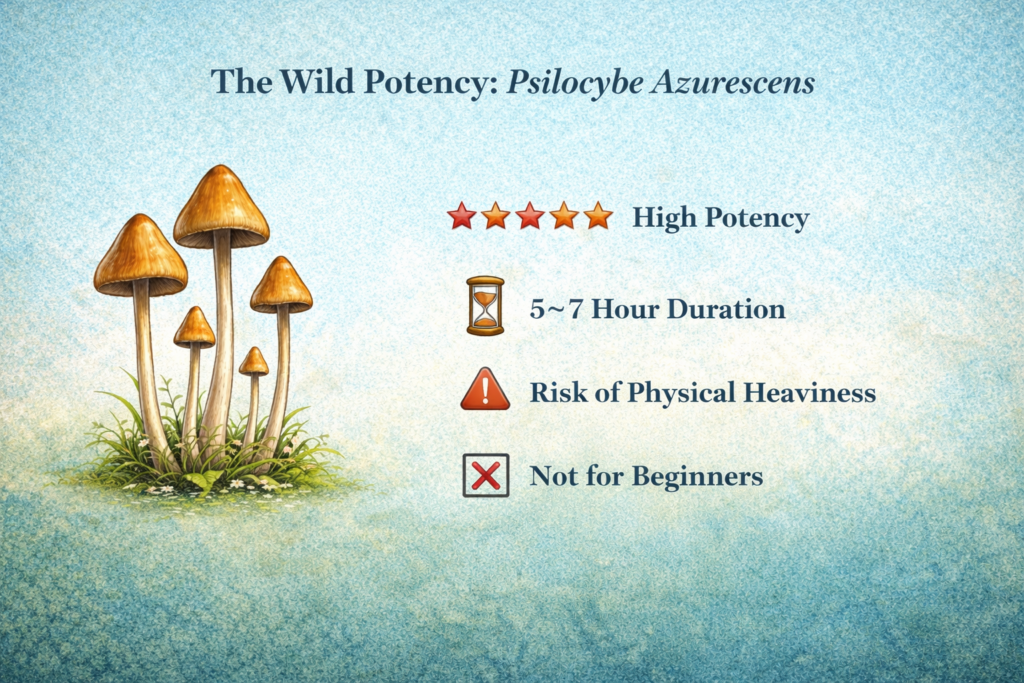
If Psilocybe cubensis represents balance and accessibility, Psilocybe azurescens sits firmly at the other end of the spectrum. This species is widely regarded as one of the most potent naturally occurring psilocybin mushrooms in the world, and it demands a very different level of respect. types of psychedelic mushrooms
Unlike Cubensis, which thrives in controlled cultivation, Azurescens is a wood-loving species. It grows naturally in coastal and riverine regions of the Pacific Northwest, particularly around the Columbia River delta. Its preference for decaying wood rather than dung or soil gives it a distinct alkaloid profile—and a very different physical and psychological impact.
Because it is far more difficult to cultivate consistently, most encounters with Azurescens come from wild or semi-wild sources, which introduces significant variability in potency.
On average, Psilocybe azurescens is estimated to be two to three times stronger than standard Cubensis by dry weight. This is not a marginal increase—it fundamentally changes dosing strategy. types of psychedelic mushrooms
Even small amounts can produce:
For users accustomed to Cubensis, this jump in potency is where many mistakes happen. Applying familiar dose ranges to Azurescens can easily result in an experience that feels overwhelming or disorienting.
One of the most unique aspects of Azurescens is its physical effect profile. Many users report a phenomenon commonly called wood lover’s paralysis—a temporary sensation of heaviness, immobility, or muscular weakness during the peak of the experience.
While typically harmless and temporary, this effect can be alarming if unexpected. It reinforces an important principle of psychedelic use: knowing the species matters just as much as knowing the dose. types of psychedelic mushrooms
This species is not beginner-friendly. It is best approached by individuals who:
For therapeutic or microdosing purposes, Azurescens is rarely recommended due to its intensity and variability. Its strength makes precision difficult, which increases risk rather than benefit in those contexts.
With high-potency species, inconsistency becomes the primary risk factor. Variations in genetics, drying methods, and storage can mean the difference between a profound experience and an unmanageable one. types of psychedelic mushrooms
This is why harm-reduction educators consistently emphasize verified sourcing, accurate labeling, and conservative dosing when discussing species like Psilocybe azurescens. The margin for error is much smaller here than with cultivated Cubensis strains.
Having explored one of the most powerful psilocybin mushrooms on record, the next step is to look at a mushroom that is often grouped with “magic mushrooms” but works in a completely different way—chemically, neurologically, and experientially.
(Not a psilocybin mushroom)
Few mushrooms are as instantly recognizable—or as widely misunderstood—as Amanita muscaria. With its bright red cap and white spots, it’s the archetypal “fairy-tale mushroom,” appearing everywhere from folklore and holiday imagery to video games. But despite being commonly grouped with “magic mushrooms,” Amanita muscaria occupies an entirely different category—chemically, neurologically, and experientially. types of psychedelic mushrooms
Classic psychedelic mushrooms work primarily through psilocybin, which converts to psilocin and activates serotonin (5-HT2A) receptors. Amanita muscaria contains no psilocybin at all.
Instead, its primary active compounds are:
These compounds act mainly on the GABAergic system, the same inhibitory pathway influenced by substances like alcohol, benzodiazepines, and certain sleep medications. The result is not a classic psychedelic state, but something closer to a dream-like, dissociative, or sedative experience. types of psychedelic mushrooms
People expecting vivid visuals or emotional breakthroughs similar to psilocybin mushrooms are often surprised—and sometimes disappointed—by Amanita muscaria. Commonly reported effects include:
Rather than amplifying emotions or visual patterns, Amanita experiences often feel internal, symbolic, and trance-like, sometimes bordering on delirium at higher doses.
Because of this, Amanita muscaria has historically been used in shamanic, ritual, and sleep-oriented contexts, not recreational psychedelic exploration. types of psychedelic mushrooms
One of the most critical distinctions with Amanita muscaria is safety through preparation. Raw Amanita mushrooms contain ibotenic acid, which can cause nausea, confusion, and neurotoxic effects if consumed improperly.
Traditional and modern preparation methods aim to convert ibotenic acid into muscimol, significantly reducing risk. This usually involves controlled drying, heating, or decoction techniques. Consuming raw or incorrectly prepared Amanita—especially from the wild—is strongly discouraged.
This preparation requirement alone sets Amanita muscaria apart from psilocybin mushrooms, which do not require chemical conversion to be active. types of psychedelic mushrooms
Lumping Amanita muscaria together with psilocybin mushrooms is more than just inaccurate—it can be risky. Expecting one type of effect and receiving another can lead to:
For this reason, harm-reduction education consistently stresses clear labeling, education, and intention when discussing Amanita-based products.
Amanita muscaria is not “better” or “worse” than psilocybin mushrooms—it is simply different. It appeals primarily to those interested in:
It is not a substitute for psilocybin mushrooms and should never be treated as such.
With that distinction clear, we can now return to the psilocybin family and explore a species that, despite its small size, has earned legendary status for its strength and history.
Small, unassuming, and easy to overlook, Psilocybe semilanceata has earned a legendary reputation that far outweighs its size. Often called Liberty Caps, these mushrooms are among the most potent by weight of all commonly encountered psilocybin species—and they hold a unique place in psychedelic history. types of psychedelic mushrooms
Long before indoor cultivation and stabilized strains became widespread, Psilocybe semilanceata dominated underground psychedelic culture. Found growing wild in damp grasslands, pastures, and meadows across Europe and parts of North America, Liberty Caps were often the first psychedelic mushrooms people encountered.
Unlike Cubensis, Liberty Caps are not easily cultivated, which means most encounters involve wild specimens. This alone makes them fundamentally different in terms of consistency and risk.
One of the defining traits of Liberty Caps is how deceptively strong they are. Despite their thin stems and tiny, bell-shaped caps, they often contain higher psilocybin concentrations per gram than standard Cubensis. types of psychedelic mushrooms
Commonly reported effects include:
Many users describe Liberty Caps as mentally sharp and energizing rather than emotionally heavy—though at higher doses, they are fully capable of producing deep psychedelic states.
Because Liberty Caps grow wild and resemble several toxic lookalikes, misidentification is one of the most serious risks associated with this species. Even experienced foragers can make mistakes, and improper identification can lead to poisoning.
Additionally, wild growth means:
For these reasons, harm-reduction guidance strongly discourages casual foraging without expert knowledge. types of psychedelic mushrooms
Today, Psilocybe semilanceata is often spoken about with a mix of respect and nostalgia. It represents an earlier era of psychedelic exploration—one rooted in nature rather than cultivation labs.
While many modern users now prefer cultivated strains for consistency and safety, Liberty Caps remain an important reference point when discussing potency, history, and the diversity of psilocybin mushrooms.
With the major species explored, the next step is to bring everything together—comparing these mushrooms side by side and helping readers understand how to choose the right type based on intention, experience level, and safety. types of psychedelic mushrooms
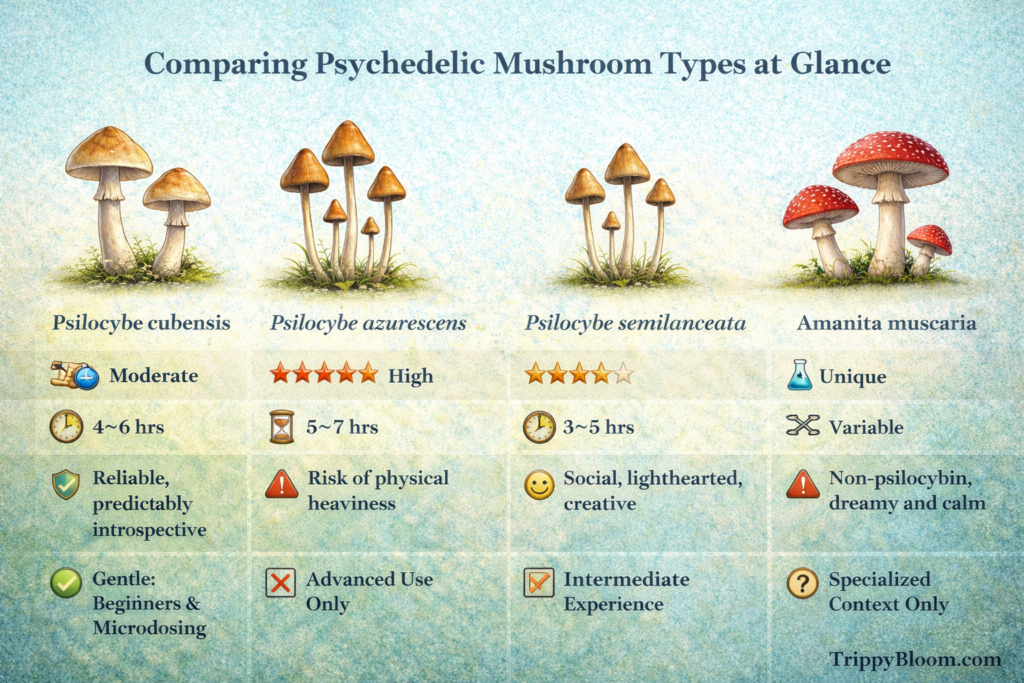
With the major species and strains now mapped out, patterns begin to emerge. While all of these mushrooms are often grouped under the umbrella of “psychedelics,” they differ dramatically in potency, duration, physical effects, and suitability for different intentions. Understanding these differences side by side helps remove guesswork and reduces the risk of mismatched expectations.
Not all psychedelic mushrooms scale evenly with dose. Some increase gradually, while others escalate sharply with very small changes in amount. types of psychedelic mushrooms
Timing is another key differentiator:
Understanding onset timing is especially important for anxiety management and setting control.
Different mushrooms place different emphasis on the body and the mind:
From a harm-reduction perspective:
There is no universally “best” psychedelic mushroom—only the right mushroom for a specific intention, experience level, and setting. Problems arise not from the substances themselves, but from mismatches between expectations and reality.
With this comparative framework in place, the next step is practical: how to choose the right mushroom type based on what you’re actually seeking from the experience—and why sourcing plays a decisive role in that decision.
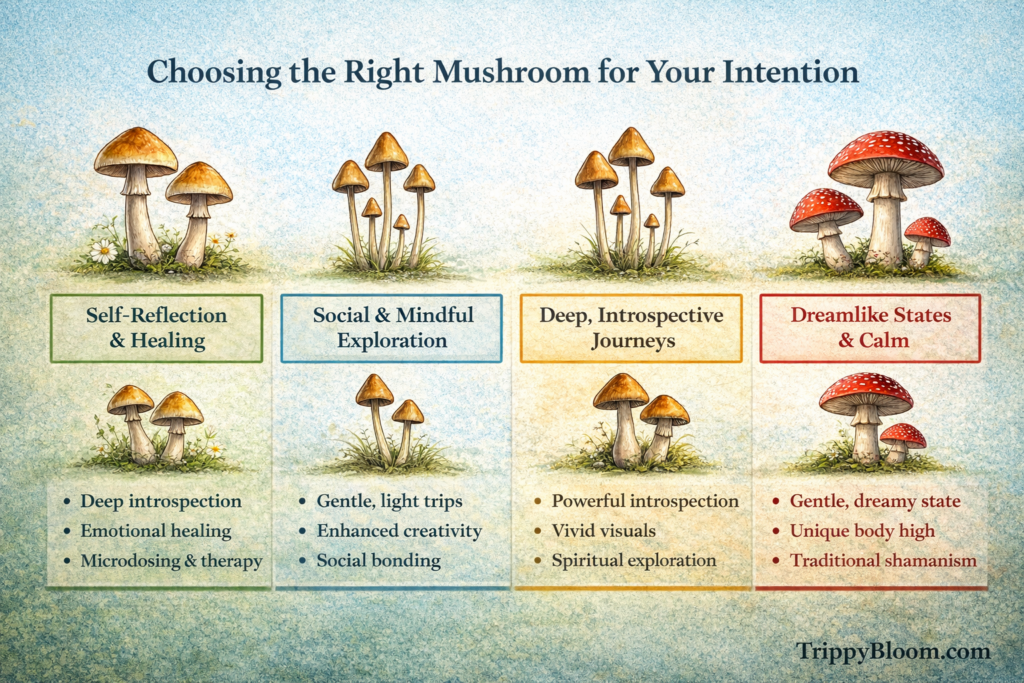
Once you understand how psychedelic mushrooms differ, the most important question becomes why you’re engaging with them in the first place. Psychedelics tend to amplify whatever context they’re placed in—your mindset, your environment, and your expectations. Choosing a mushroom type that aligns with your intention is one of the most effective harm-reduction steps you can take. types of psychedelic mushrooms
Not all mushrooms are equally suited for subtle, day-to-day use.
Trying to microdose a highly potent or variable species is one of the most common mistakes new users make.
For people seeking emotional processing, insight, or personal clarity, clarity matters more than force. types of psychedelic mushrooms
Many users report that balanced mushrooms:
This is why moderate, well-understood mushrooms are often favored in therapeutic or self-guided integration work, rather than species known primarily for visual intensity.
Different settings benefit from different effect profiles.
In these contexts, overly potent or physically immobilizing species can become counterproductive.
Some experienced users intentionally seek high-intensity experiences for spiritual or existential exploration. In these cases, stronger species or mutations may be appropriate—but only when:
High potency does not equal “better.” It simply reduces the margin for error. types of psychedelic mushrooms
Even the most carefully chosen mushroom can become problematic if the source is inconsistent or mislabeled. Variability in potency, improper drying, or inaccurate strain identification can undermine intention entirely.
This is why TrippyBloom emphasizes:
Choosing the right mushroom is not just about species or strain—it’s about matching intention with reliability. types of psychedelic mushrooms
With intention clarified, the final piece of the puzzle becomes obvious: understanding why sourcing, testing, and consistency are just as important as the mushroom itself.
Psychedelic mushrooms are often described as “natural,” but natural does not automatically mean safe, predictable, or appropriate in all contexts. Most negative experiences associated with mushrooms don’t stem from the substance itself—they come from inconsistency, misinformation, or poor preparation.
Harm reduction begins long before ingestion. types of psychedelic mushrooms
Contrary to popular myths, the primary risks around psychedelic mushrooms are rarely about toxicity when dealing with known species. Instead, they usually involve:
A mushroom that is twice as strong as expected doesn’t just “hit harder”—it can fundamentally alter the psychological trajectory of an experience.
Consistency is what allows:
Wild mushrooms and poorly controlled products can vary drastically from batch to batch. Even within the same species, alkaloid content can fluctuate based on genetics, harvest timing, and storage conditions. types of psychedelic mushrooms
This is why harm-reduction educators consistently emphasize known genetics and controlled handling over novelty or raw potency.
Lab testing helps verify:
Without testing, users are forced to rely on guesswork or anecdotal claims—both of which introduce unnecessary risk. For substances that directly affect perception, mood, and cognition, uncertainty is the enemy of safety. types of psychedelic mushrooms
Even with a consistent source, mushrooms should never be treated casually. Harm reduction also includes:
Psychedelic mushrooms tend to amplify what’s already present. Respect, preparation, and moderation matter far more than bravado.
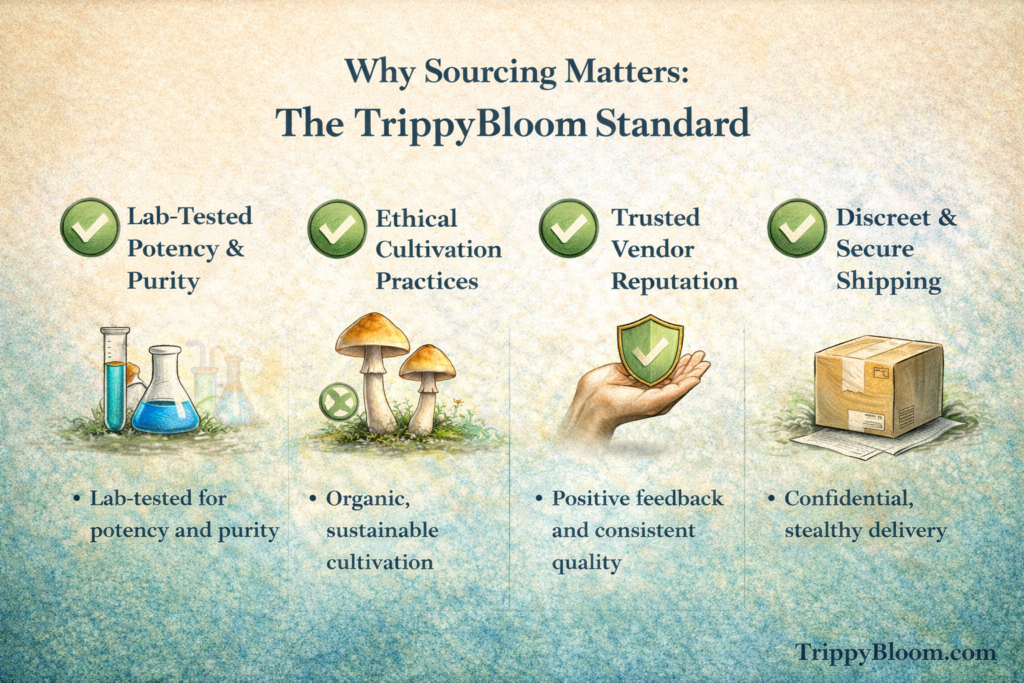
Knowing the difference between mushroom types is only half the equation. The other half is where they come from. types of psychedelic mushrooms
At TrippyBloom, the focus is not on hype or extremes—it’s on education, consistency, and informed choice. That means:
The goal is simple: reduce uncertainty so users can focus on intention, safety, and integration, not damage control.
When people say “mushrooms changed my life,” what they usually mean is that a well-matched, well-prepared experience gave them the space to reflect, heal, or explore. That outcome is never accidental—it’s the result of informed decisions at every step. types of psychedelic mushrooms
Psychedelic mushrooms are not interchangeable. Species, strains, potency, and preparation all shape the experience in meaningful ways. Treating them as identical is one of the most common—and avoidable—mistakes.
By understanding what you’re taking, why you’re taking it, and where it comes from, you move from curiosity to conscious use.
Ready to explore with intention?
Discover TrippyBloom’s curated, education-first approach to psychedelic wellness at https://trippybloom.com. types of psychedelic mushrooms
No. Psychedelic mushrooms vary widely by species, strain, potency, chemistry, and effects. Even mushrooms within the same species can feel very different depending on genetics and preparation.
A species is a biological category found in nature, while a strain is a cultivated genetic variant within a species. Strains are selectively bred for traits like potency, consistency, or growth behavior. types of psychedelic mushrooms
Most harm-reduction educators point beginners toward moderate, predictable mushrooms, especially well-known Psilocybe cubensis strains. These offer a smoother learning curve and more reliable dosing.
Yes. Penis Envy is widely regarded as significantly more potent than average Cubensis strains. This doesn’t make it “better,” but it does mean doses must be approached more cautiously. types of psychedelic mushrooms
No. Amanita muscaria does not contain psilocybin and works through a completely different neurochemical pathway. It should never be treated as a substitute for psilocybin mushrooms.
Variability can come from:
This is why consistency and verified sourcing matter so much. types of psychedelic mushrooms
Sometimes—but they are also far less predictable. Wild mushrooms can vary dramatically in potency and may be misidentified. Cultivated genetics are generally preferred for safety and consistency.
It’s a temporary physical heaviness sometimes reported with wood-loving species like Psilocybe azurescens. While usually harmless, it can be alarming if unexpected. types of psychedelic mushrooms
Yes, but not all mushrooms are suitable. Stable, moderate-potency mushrooms are far better suited for microdosing than highly potent or variable species.
Because mislabeling, contamination, or unexpected potency are among the biggest risk factors in psychedelic use. Reliable sourcing reduces uncertainty and supports safer, more intentional experiences. types of psychedelic mushrooms