
Peyote is a small cactus best known for containing mescaline, a naturally occurring psychedelic compound with a long history of ceremonial and spiritual use. Interest in peyote often comes from curiosity about mescaline’s distinctive effects, its cultural significance, and its reputation for producing deeply introspective experiences. At the same time, peyote is also associated with physical discomfort, long durations, and important legal and ethical considerations.
At TrippyBloom, our goal is education and harm reduction. This guide is designed to help readers understand what peyote is, how mescaline affects the mind and body, and what risks and responsibilities are involved. We believe that clear, science-informed information—combined with respect for cultural traditions—helps people make safer, more thoughtful decisions.
Important disclaimer:
This article is for educational purposes only. It is not medical advice, and it does not encourage or promote illegal activity. TrippyBloom does not sell peyote, does not provide sourcing information, and does not advocate the use of controlled or protected substances. Laws regarding peyote and mescaline vary widely by country, state, and region, and they can change over time. Always check and follow your local laws.
Psychedelic experiences can be psychologically intense and physically demanding, especially with substances like peyote that have long durations and strong bodily effects. Risks may be higher for individuals with certain mental health conditions or when substances are used irresponsibly or without proper preparation.
Throughout this guide, we take a harm-reduction approach—focusing on realistic effects, potential risks, cultural context, and safety considerations—so readers can better understand peyote from an informed, respectful, and cautious perspective.

Peyote is a small, slow-growing cactus scientifically known as Lophophora williamsii. It is native to parts of northern Mexico and the southwestern United States and is recognizable by its round, spineless appearance and blue-green color. Unlike many other cacti, peyote grows close to the ground and can take years—sometimes decades—to mature, which is one reason it is considered ecologically sensitive and culturally significant.
The primary psychoactive compound in peyote is mescaline, a naturally occurring psychedelic alkaloid. Peyote also contains a variety of other alkaloids that may subtly influence the overall experience, contributing to effects that some people describe as more “earthy,” emotional, or physically intense compared to synthetic psychedelics. Because peyote is a whole plant rather than an isolated compound, its effects can be less predictable and more variable from one specimen to another.
Historically, peyote has been used for ceremonial, spiritual, and healing purposes by Indigenous peoples for thousands of years. In North America, it is most closely associated with the traditions of Native American tribes and the Native American Church, where it plays a sacred role in prayer, healing rituals, and communal ceremonies. In these contexts, peyote is not viewed as a recreational substance, but as a sacrament deserving of respect, intention, and discipline.
Peyote differs from many other psychedelics in several key ways:
Understanding what peyote is—both chemically and culturally—is essential before discussing its effects, risks, or legal status. Approaching the topic with respect for Indigenous traditions and awareness of peyote’s unique characteristics is a key part of responsible, harm-reduction-focused education.
Interest in peyote is often rooted in its unique reputation among psychedelics. Unlike substances that are commonly discussed in modern recreational or therapeutic contexts, peyote is frequently associated with spiritual depth, personal meaning, and tradition, which shapes how people perceive and approach it.
One common motivation is spiritual or existential exploration. Mescaline experiences are often described as introspective and emotionally rich, encouraging reflection on personal values, life direction, relationships, and one’s connection to nature or a higher sense of meaning. For some, this inward focus feels more “personal” or grounding than the abstract or fast-paced qualities sometimes attributed to other psychedelics.
Others are drawn to peyote out of interest in its healing symbolism. Historically, peyote has been used in ceremonial settings with intentions related to emotional healing, guidance, or clarity. While modern science does not support medical claims about peyote curing mental health conditions, many people are curious about how mescaline experiences can bring difficult emotions to the surface and promote self-reflection when approached carefully and respectfully.
Curiosity also plays a role. Peyote is chemically distinct from substances like LSD or psilocybin mushrooms, and its effects are often described as:
At the same time, peyote is widely acknowledged to be more physically demanding. Nausea, long durations, and emotional intensity make it less appealing to people seeking lighter or more recreational experiences. This contrast is part of why peyote is often framed as a serious or intentional psychedelic, rather than a casual one.
Importantly, motivations vary widely, and not everyone who is curious about peyote ends up finding it suitable for them. Understanding why people are drawn to peyote helps contextualize both its appeal and its risks—and reinforces why preparation, respect, and harm-reduction principles are essential when discussing this substance.
Peyote’s effects are primarily driven by mescaline, but because it is a whole plant containing multiple alkaloids, the experience can feel broader and less predictable than that of isolated psychedelic compounds. Effects vary significantly based on dose, preparation, mindset, environment, and individual sensitivity.
Many people describe peyote experiences as emotionally deep and introspective, with less emphasis on overwhelming visuals and more focus on meaning, symbolism, and inner reflection. Commonly reported effects include:
The emotional tone of a peyote experience can range from peaceful and reflective to intense and challenging. Some individuals report moments of clarity or personal insight, while others encounter difficult emotions or unresolved psychological material.
Alongside its psychological effects, peyote is known for pronounced physical side effects, especially during the early stages of the experience. These may include:
Psychological risks can include anxiety, paranoia, confusion, or emotional distress—especially in unfamiliar environments or without adequate support. For some people, the long duration and intensity can feel overwhelming rather than enlightening.
While peyote is not considered physically addictive, its effects can be psychologically demanding, and repeated or careless use may increase the likelihood of negative experiences. Individuals with a personal or family history of psychotic disorders, bipolar disorder, or severe anxiety may face higher risks and are generally advised to avoid psychedelic substances altogether.
Understanding both the potential effects and the risks helps set realistic expectations. Peyote is often described as meaningful rather than recreational, and approaching it with caution, respect, and preparation is a central part of a harm-reduction mindset.
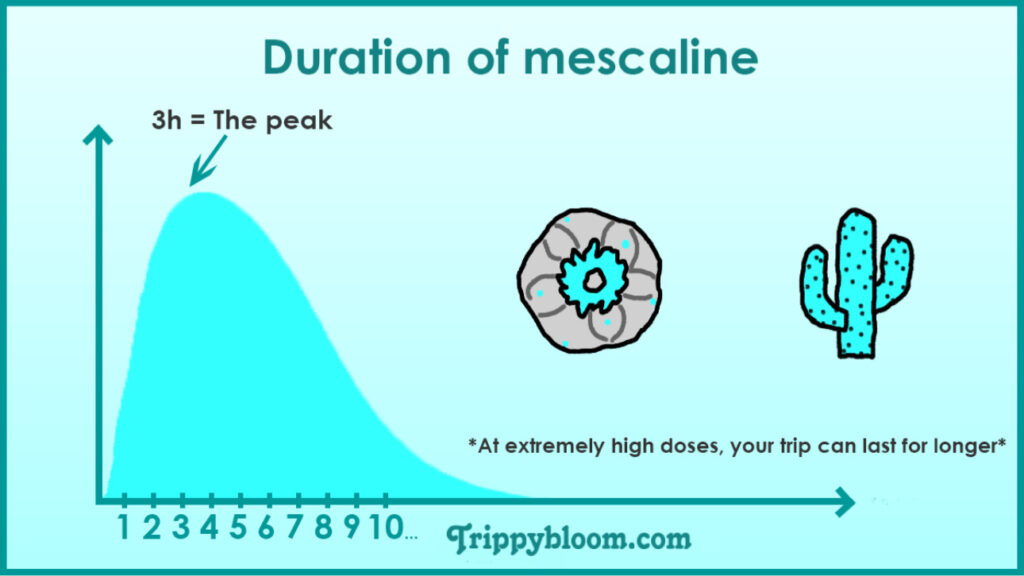
One of the most important aspects of peyote to understand is its long duration. Mescaline experiences typically last much longer than those produced by psilocybin mushrooms and require more physical and mental endurance. This extended timeline is a major factor in both the appeal and the risk profile of peyote.
While individual experiences vary, a commonly reported timeline looks like this:
Because peyote experiences can last 8–12 hours or longer, planning and preparation are especially important. Extended duration means:
For harm reduction, it is generally advised to treat peyote as a full-day commitment, with no responsibilities, driving, or obligations before or after the experience. Understanding the timeline helps set realistic expectations and reduces the likelihood of panic or distress when effects last longer than anticipated.
Recognizing peyote’s extended duration is key to approaching the subject responsibly and underscores why it is often considered a serious and demanding psychedelic rather than a casual one.
Peyote has been consumed in a variety of ways, most often within ceremonial or ritual contexts rather than casual settings. Understanding these traditional forms helps explain why peyote is often described as physically challenging and why its effects can be unpredictable.
Historically and traditionally, peyote is consumed as the whole cactus, not as an isolated compound. Common forms include:
Across all forms, the taste is widely reported as extremely bitter, and gastrointestinal discomfort is considered a typical part of the experience rather than an exception.
One of the biggest challenges with peyote is that potency varies significantly between individual plants. Factors such as age, growing conditions, and genetics influence mescaline content. Estimates often suggest that dried peyote may contain roughly 1–6% mescaline, but this range is broad and unreliable for precise dosing.
Because peyote is a natural plant:
For harm reduction, it is important to recognize that peyote does not allow for the same level of dosing precision as measured substances. This unpredictability is one reason peyote is traditionally approached with patience, intention, and caution, often in guided or ceremonial settings rather than experimental ones.
Understanding how peyote is taken—and the limitations that come with whole-plant use—sets the stage for more realistic expectations around dosing, effects, and safety in the sections that follow.
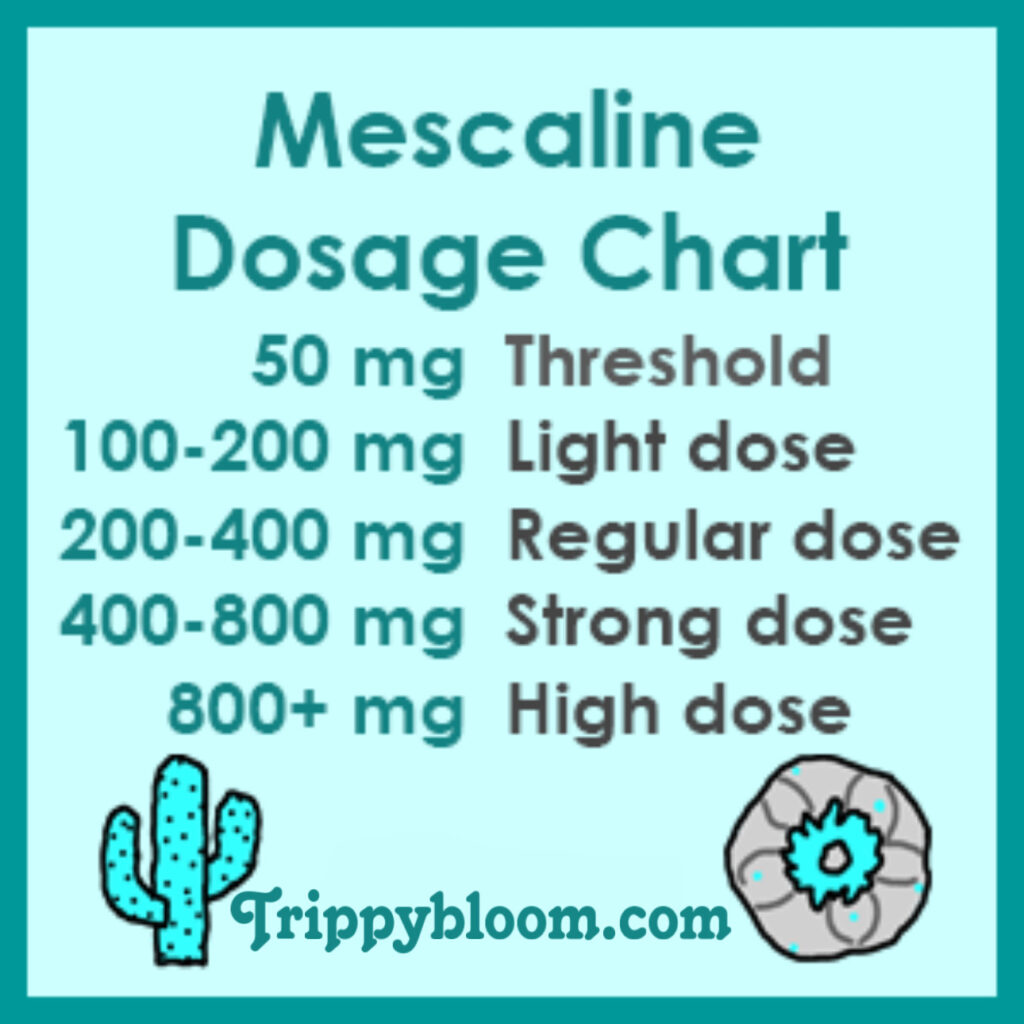
When discussing peyote dosage, it’s important to approach the topic with extra caution. Unlike measured substances, peyote is a living plant, and its mescaline content can vary widely. For this reason, any dosage information should be understood as approximate guidance, not precise instruction.
In research and harm-reduction literature, mescaline experiences are often described using broad ranges:
Because peyote contains mescaline alongside other alkaloids, its effects may feel different—even at similar mescaline levels—than purified mescaline alone.
Translating mescaline amounts into peyote quantities is inherently imprecise. Estimates sometimes suggest that dried peyote may average around 30–40 mg of mescaline per gram, but real-world potency can fall far outside that range. Fresh peyote adds another layer of uncertainty due to water content and plant maturity.
Key harm-reduction points:
People often ask how peyote compares to substances like LSD or psilocybin mushrooms. These comparisons should be understood as intensity references only, not claims of similar effects or experiences.
Because peyote’s onset is slow and its duration is long, increasing dosage too quickly can significantly raise the risk of distress or physical discomfort. From a harm-reduction standpoint, conservatism and patience are especially important when discussing peyote.
Overall, dosage with peyote is less about precision and more about acknowledging uncertainty. Recognizing the limits of control and predictability is central to understanding why peyote has traditionally been approached with restraint, preparation, and respect.
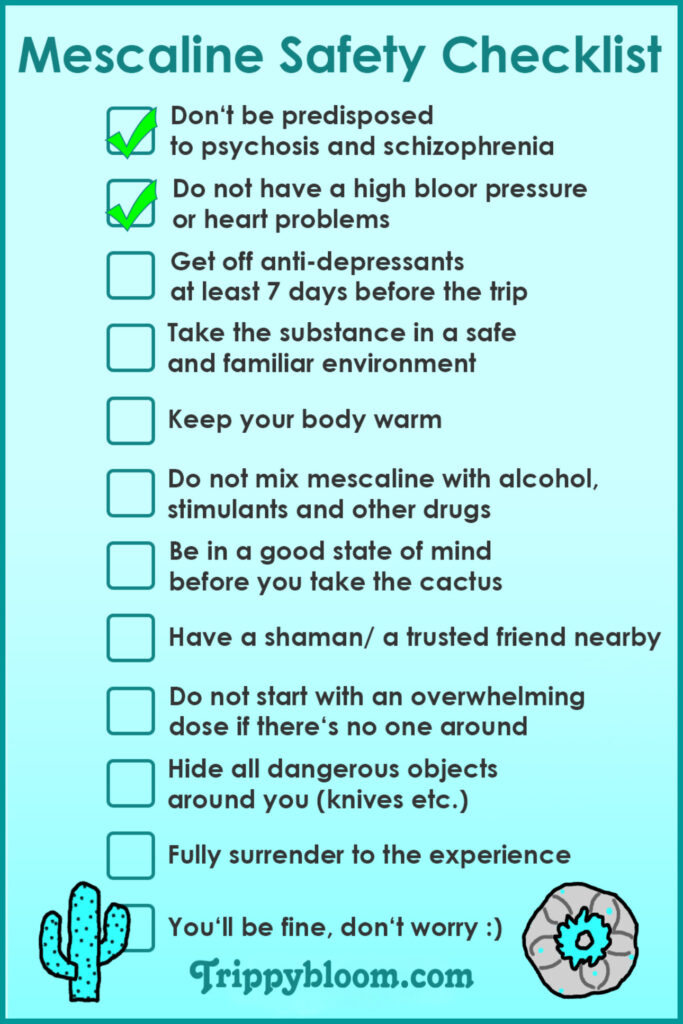
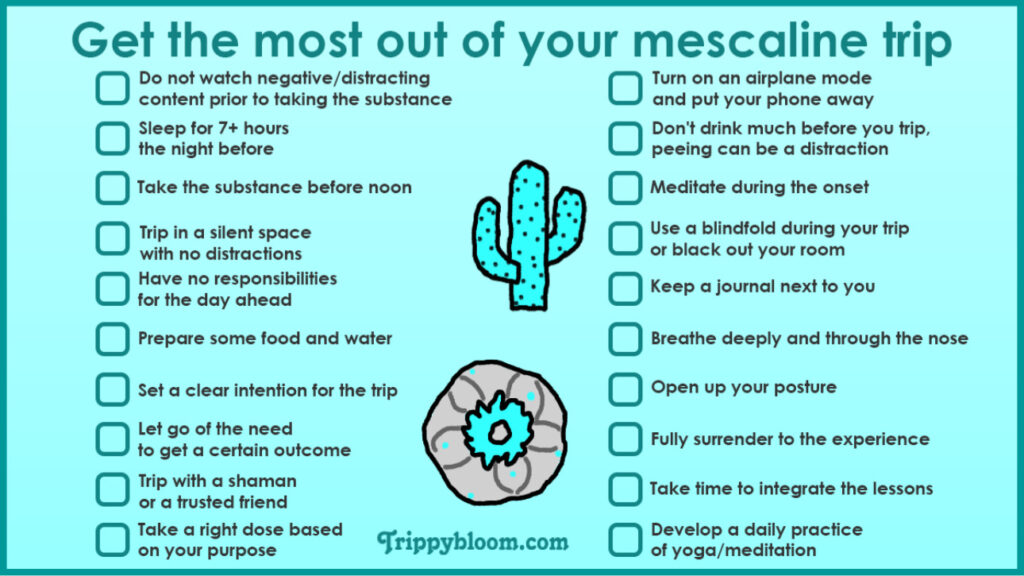
Because peyote experiences can be long, intense, and physically demanding, safety considerations are especially important. A harm-reduction approach focuses on minimizing risk, supporting mental well-being, and preparing for the full duration of the experience rather than assuming everything will “go smoothly.”
From a harm-reduction perspective, preparation is not optional—it is central to safety. The combination of peyote’s slow onset, long duration, and emotional depth makes planning, support, and self-awareness essential. Approaching the experience without these safeguards significantly increases the risk of distress or harm.
Peyote experiences are not always comfortable or easy. Emotional intensity, physical discomfort, and long durations can make some moments feel overwhelming. In harm-reduction language, these are often referred to as challenging experiences rather than “bad trips,” acknowledging that difficulty does not automatically mean harm—while also avoiding the romanticization of distress.
Common challenges may include:
These experiences can feel intense, especially during the come-up or peak, and are more likely when someone is unprepared, in an unfamiliar environment, or lacking support. It’s important to recognize that not every difficult experience is beneficial, and distress should always be taken seriously.
If an experience becomes overwhelming, harm-reduction strategies focus on grounding and reassurance, not force or panic:
Some people mention pharmaceutical “trip-ending” medications, such as benzodiazepines. These should be viewed as last-resort options and only used under medical guidance, as they carry their own risks and interactions.
What happens after a peyote experience can be just as important as the experience itself. Integration refers to the process of reflecting on and understanding what occurred, rather than rushing back into daily life.
Helpful integration practices may include:
Integration does not mean assigning meaning to every sensation or emotion. Sometimes, the most responsible approach is simply acknowledging the experience and giving yourself time to process it gradually.
From a harm-reduction standpoint, both challenging moments and integration deserve care and respect. Peyote can bring powerful experiences, but support, reflection, and patience are what help determine whether those experiences become constructive or overwhelming.
Microdosing refers to taking very small, sub-perceptual amounts of a psychedelic substance on a structured schedule, with the intention of subtle effects rather than a full psychedelic experience. While microdosing is most commonly discussed in relation to LSD or psilocybin, some people are curious about microdosing mescaline, including in the form of peyote.
In theory, a peyote or mescaline microdose is intended to be below the threshold of noticeable intoxication. People who explore this concept often report aiming for effects such as:
Importantly, these effects are self-reported and not well supported by large, controlled scientific studies. Responses vary widely, and some individuals feel no benefit at all.
In harm-reduction discussions, mescaline microdoses are often described as falling in the range of 20–40 mg of mescaline. When translated to peyote, this roughly corresponds to:
These figures are very rough estimates. Because peyote potency varies significantly, even amounts intended to be “micro” can sometimes feel stronger than expected.
Some people reference schedules such as dosing every third day, similar to popular LSD microdosing protocols. However, peyote introduces additional concerns:
For these reasons, microdosing peyote is often considered less practical and less predictable than microdosing other substances.
From a harm-reduction standpoint, it’s important to stress:
Anyone exploring the idea of microdosing peyote should approach the topic with caution, patience, and respect—recognizing both the lack of strong scientific evidence and the unique risks associated with this plant.
Understanding microdosing in this context helps place it within a broader conversation about responsibility, uncertainty, and informed decision-making rather than guaranteed outcomes.
Peyote holds a deep cultural and spiritual significance that sets it apart from many other psychedelics discussed in modern contexts. For thousands of years, Indigenous peoples of North America—particularly in regions that are now northern Mexico and the southwestern United States—have used peyote in ceremonial, religious, and healing practices. In these traditions, peyote is not viewed as a recreational substance, but as a sacred medicine and sacrament.
In the United States, peyote is most closely associated with the Native American Church (NAC), where it plays a central role in prayer meetings and ceremonies. Within these settings, peyote is used with clear structure, intention, and communal support. The experience is guided by ritual, song, and spiritual leadership, emphasizing healing, moral reflection, and connection rather than experimentation or escapism.
These traditions are living practices, not historical artifacts. For many Indigenous communities, peyote remains an essential part of cultural identity and spiritual continuity.
As interest in psychedelics has grown globally, so have concerns about cultural appropriation. Using peyote outside of its traditional context—especially without understanding its significance—can be seen as disrespectful to the cultures that have protected and preserved its use for generations.
A harm-reduction and ethical perspective encourages:
Respecting peyote also means recognizing that curiosity alone does not justify access or use.
Peyote is a slow-growing cactus, often taking 10–15 years or more to reach maturity. Overharvesting, habitat loss, and illegal collection have placed significant pressure on wild peyote populations. In some areas, peyote is considered threatened or at risk.
Because of this:
Understanding peyote’s history, cultural importance, and ecological vulnerability adds crucial context to any discussion about its effects or use. From a harm-reduction standpoint, respect for culture and conservation is not optional—it is a core part of responsible education and ethical awareness.
The legal status of peyote is complex and highly dependent on location. Laws differ not only between countries, but also between states, provinces, and even cities. Because regulations can change, anyone seeking information about peyote must prioritize up-to-date local legal guidance rather than assumptions or second-hand claims.
In the U.S., peyote is generally classified as a controlled substance due to its mescaline content. However, there is a significant religious exemption:
Outside the United States, peyote laws vary widely:
Because of these inconsistencies, legality should never be assumed based on another country or region’s policies.
From a harm-reduction and ethical standpoint:
Important reminder:
TrippyBloom does not provide legal advice, sourcing information, or guidance on obtaining controlled or protected substances. Readers are strongly encouraged to research their local laws, consult official government resources, and avoid any actions that could cause legal, cultural, or ecological harm.
Understanding the legal framework surrounding peyote is essential to responsible education. Respect for the law, Indigenous rights, and conservation efforts is a fundamental part of informed and ethical discussion.
Is peyote safe?
Peyote is not considered physically addictive, but it can be psychologically intense and physically uncomfortable. Risks include nausea, anxiety, emotional distress, and increased heart rate. Safety depends heavily on preparation, mental health, environment, and support.
Can peyote cure depression or anxiety?
There is no scientific evidence that peyote cures mental health conditions. While some people report personal insights or emotional shifts, peyote should not be used as a replacement for professional mental health care.
How does peyote compare to psilocybin mushrooms?
Peyote (mescaline) generally lasts longer and is more physically demanding, with more nausea and a slower onset. Mushrooms tend to have a shorter duration and are often considered more predictable.
Is peyote addictive?
Peyote is not known to cause physical dependence. However, like all powerful psychoactive substances, it can be psychologically challenging and should not be used frequently or casually.
How often can peyote be taken?
Frequent use is discouraged. Peyote experiences are demanding, and repeated use may increase emotional strain. Traditional contexts emphasize infrequent, intentional use rather than regular consumption.
Can peyote cause a “bad trip”?
Yes. Peyote can produce intense or distressing experiences, especially without proper preparation or support. Harm-reduction approaches focus on preparation, a safe environment, and integration afterward.
Is peyote legal where I live?
Legality varies widely by country and region. In the U.S., peyote is generally legal only for members of the Native American Church. Always verify local laws before assuming legality.
Can peyote be grown at home?
In some places, peyote may be legal to grow as an ornamental cactus but illegal to consume or harvest. Additionally, conservation and ethical concerns make casual cultivation a sensitive topic.
How long does a peyote experience last?
Effects commonly last 8–12 hours or longer, with possible after-effects into the following day. This long duration is one of peyote’s defining characteristics.
Why is peyote considered sacred?
For many Indigenous peoples, peyote is a sacrament used in religious ceremonies for healing, prayer, and spiritual guidance. Its sacred status is central to why respect, legality, and conservation are so important.
Thank you for taking the time to explore this peyote (mescaline) guide with care and curiosity. Psychedelic substances—especially culturally significant and ecologically sensitive ones like peyote—deserve thoughtful, informed, and respectful discussion, not hype or misinformation.
At TrippyBloom, our focus is on education, harm reduction, and responsible awareness. We believe that understanding effects, risks, cultural context, and legal realities is essential for making safer decisions and avoiding unnecessary harm—to individuals, communities, and traditions.
We encourage readers to:
If you’re interested in learning more, you may find value in our other educational guides covering:
Exploration begins with knowledge. Responsibility begins with respect.
That balance is at the heart of TrippyBloom’s mission.